
Project procurement has its own vocabulary, and the same word can mean different things on a drawing, in a contract and on a factory’s quotation. This glossary gives short, plain definitions of the terms a developer, contractor or designer meets when sourcing furniture, fixtures, equipment and building materials from China, and links each one to the FBM Sourcing guide that explains it in more depth.
The definitions describe how the terms are used on commercial projects. Several of them, such as OFOI, OFCI and CFCI, are industry and contract terms and not legal definitions, so the project’s own contract and owner standards always govern. Where a term has a rule attached, such as a duty rate or a standard, the linked guide gives the source. If you meet a term not listed here, send it to us with your schedule and we will explain it in the reply.
Which terms describe what is being bought?
FF&E: Furniture, fixtures and equipment: the durable, installed, design-led items of a building interior, such as beds, casegoods, seating, lighting, mirrors and décor. The project documents decide which items are listed. What is FF&E?
OS&E: Operating supplies and equipment: the consumable and operational items a property needs to open and run day to day, such as linens, towels, crockery, glassware, kitchen smallwares, guest amenities and uniforms. FF&E versus OS&E
Casegoods: Fixed and freestanding wood-based furniture, such as headboards, bedside tables, wardrobes, desks, luggage benches, TV panels and minibar cabinets. What a hotel FF&E package includes
Soft goods: Cut-and-sew items such as blackout and sheer drapery, bed bases or skirts, decorative cushions, bed runners and upholstery fabrics. What a hotel FF&E package includes
Millwork and joinery: Custom-built woodwork made to drawings, such as reception counters, bar counters and built-in joinery. It is made by a workshop to millwork drawings and not chosen from a catalogue. Standard versus custom millwork
Key: In hotel projects, a key is one guest room, so “cost per key” means the total procurement cost divided by the number of rooms. Cost per key
Room type and room mix: A room type is a layout repeated across many rooms, such as a king room, a twin room or a suite, each with its own FF&E schedule. The room mix is how many of each type the project has. How quantities start from the room mix
Public areas: Everything outside the guest room that needs furnishing, such as the lobby, food and beverage outlets, corridors and meeting spaces. Public-area pieces can be one-off designs and then carry more of the sampling and approval work. Public-area scope
PIP: Property improvement plan: a brand’s list of upgrades that a franchised hotel must complete on the brand’s schedule. Furniture orders are planned backward from the dates in the plan. Casegoods and PIP deadlines
Which terms describe how items are specified and approved?
FF&E schedule: The project-specific table that lists every specified item, one row per item, with the fields a manufacturer needs to price and build it. In construction documents “schedule” means a table of components and not a calendar. The FF&E schedule explained
Item code: The reference that ties one row of the schedule to its drawing, location, quantity, material and finish. A stable item code lets every quotation, sample and approval point to the same product. Item codes and approval steps
Spec book: The coded specification for every room type and public area. It is the controlling document for everyone downstream, so a substitution goes back to the people who approve the specification. What a spec book should include
Design drawings and shop drawings: Design drawings communicate intent. A factory manufactures from shop drawings, which it prepares against the design set to show real dimensions, sections, hardware positions and material build-up. Shop drawings versus design drawings
Shop drawing approval: The review loop in which the buyer checks and signs the factory’s fabrication drawings before material is cut. Nothing is cut before written approval, so a drawing waiting for review delays the start of production. The approval cycle
Sample and golden sample: A material or finish sample is approved first, then a pre-production sample of each custom item, also called a golden sample, then written sign-off before bulk production. The signed sample becomes the reference that finished goods are compared with. How sample approval works
CFA and strike-off: A CFA, short for cutting for approval, is a piece of fabric cut from the stock the order will come from, sent so the buyer can approve colour and quality. A strike-off is a small sample of a custom fabric, trim or carpet made before production to show colour, pattern or texture. CFA and strike-off
Mock-up room: One fully built room, approved before bulk production, that fixes dimensions, finishes and installation details for every repeated room. For a branded hotel, check the operator agreement for any model-room review it requires. Do you need a mock-up room?
OFOI, OFCI and CFCI: Responsibility codes that record who furnishes and who installs an item: owner furnished, owner installed; owner furnished, contractor installed; contractor furnished, contractor installed. They are contract terms and not legal definitions. OFOI, OFCI and CFCI
Value engineering: Adjusting the specification of individual line items, such as material grade, finish or joinery method, to reduce cost without changing the design intent. It works category by category and not as one percentage cut. Value engineering by category
Attic stock: Spare quantities agreed at order stage, such as drapery panels, cushion covers, upholstery fabric, drawer runners, hinges, headboard panels, matched shades, bulbs and LED drivers. The quantities and item codes go into the purchase orders. Agreeing attic stock
Which terms describe how an order is priced and placed?
BOQ: Bill of quantities: an itemised list of the materials and products a project needs, with quantities, specifications and units, used to obtain accurate quotations. A structured product list in a spreadsheet can serve as a starting BOQ. What is a BOQ?
RFQ package: The set of documents sent with a request for quotation: dimensioned drawings, a quantity schedule by room type or area, material and finish specifications, certification requirements for the destination, the destination port and Incoterm, a target delivery window, and packing and marking requirements. What an RFQ package contains
Factory-level RFQ: A request restated in the specification language of one factory type, such as windows, doors, cabinets, tiles, sanitaryware, lighting, furniture or metalwork. One BOQ is split into several of these and the prices come back onto one quotation. Splitting a BOQ
MOQ: Minimum order quantity: the smallest order a factory accepts. For FBM Sourcing the minimum order is a full container, and goods from different factories on the same project can share containers. MOQs for custom products
Incoterms: FOB, CIF and DDP: Trade terms that divide cost and responsibility between buyer and seller. Under FOB the buyer takes over the shipment once it is loaded at the Chinese port. Under CIF the seller arranges and pays sea freight and insurance to the destination port. Under DDP the goods are delivered to site with freight, duties and clearance paid. FOB, CIF and DDP compared
HS code: The Harmonized System number that classifies a product for customs. The first six digits are the same worldwide and the later digits are national. Classification follows material and function and not the room the product ends up in. HS codes for furniture and building materials
Certificate of origin: A document evidencing where goods were made. It lowers import duty only when it is a preferential certificate issued under a free trade agreement in force between the two countries, the goods meet that agreement’s origin rule, and the importer claims the preference. Certificate of origin and duty
Landed cost: The cost of a shipment delivered to the buyer: goods value, ocean freight, marine insurance, import duty and tariffs, port and terminal charges, customs brokerage and inland delivery, plus any agency fee. How to calculate landed cost
Commission and direct price: The two ways FBM Sourcing charges. For suppliers you nominate, we charge a 5% commission; for products we source for you, we quote a direct price. What our charging arrangements cover
Sourcing agent, agency and company: The three words are used almost interchangeably in China procurement, and no legal or regulatory line separates them. What varies is the scope of work behind the name, so ask each provider to state its scope in the proposal. Agent, agency or company?
Owner’s rep and fiduciary purchasing agent: A purchasing party that acts on the owner’s side of the transaction. Its exact duties, and whether it takes title to goods or adds a margin, are set by its agreement, so read the proposed agreement. Owner’s rep versus sourcing agent
Sourcing this for a commercial project?
FBM Sourcing manages the entire China procurement package for overseas construction projects. We work with Developers · General Contractors · Builders · Commercial Project Owners · Interior Design & Construction Companies · FF&E Solution Providers. Send your BOQ, drawings or product schedule for review.
Which terms describe shipping, handover and after-delivery?
Consolidation: Bringing goods from several factories to one warehouse, repacking where needed, and loading them into shared containers under one loading plan. It is a standard way to ship a package that comes from several factories. Consolidating factories into one container
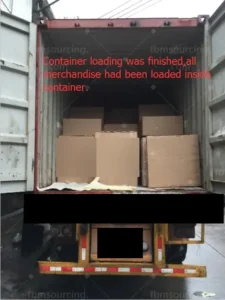
Loading plan and loading report: A loading plan fixes where each item goes in the container. A container loading report records what physically went into the box, in what condition, in what order and how it was secured, with container and seal identifiers and a carton-by-carton reconciliation against the packing list. What a loading report should show
Carton labelling: Project-specific carton codes that tell site crews where each box goes, keyed to the master packing list and the loading plan, so cartons can be sorted to rooms without opening them. Room-by-room labelling
Gross, net and volumetric weight: Net weight is the goods alone. Gross weight is the goods plus their packaging. Tare weight is the empty container. Volumetric weight is a volume converted into a notional weight so a carrier can charge for space. The four weights explained
Pre-shipment inspection: A final quality check after production is complete and goods are packed, before they are loaded. At FBM Sourcing our own team performs one inspection after bulk production is complete and before shipment, and the client’s project team is welcome to attend. Pre-shipment inspection explained
Bill of lading and telex release: Two ways of showing the shipping line at destination that the goods may be handed over, and to whom. The choice decides who controls the cargo and how soon it can be collected. Telex release versus original bill of lading
Demurrage and detention: Charges a shipping line bills when a container overstays its free time: demurrage while the full container is inside the port terminal, and detention after it leaves the port and before the empty container is returned. Avoiding demurrage and detention
Retention and defects liability period: In a construction contract, retention is money held back and the defects liability period is the time after practical completion in which defects must be put right. An international supply order does not carry the same mechanism, so plan the overlap with the contract. Retention and defects liability
Questions about procurement terms
What does FF&E stand for?
FF&E stands for furniture, fixtures and equipment. It covers the durable, installed, design-led items in a building interior, such as beds, seating, lighting, mirrors and décor.
What is the difference between FF&E and OS&E?
FF&E covers the durable interior items. OS&E, short for operating supplies and equipment, covers the consumable and operational items a property needs to run, such as linens, crockery, glassware and uniforms. The two packages are specified, ordered and shipped separately.
What goes into an RFQ package for a China sourcing order?
An RFQ package should include dimensioned drawings, a quantity schedule by room type or area, material and finish specifications with acceptable alternatives stated, certification requirements for the destination country, the destination port and preferred Incoterm, a target delivery window, and packing and marking requirements.
Do these terms have one legal meaning?
No. Terms such as OFOI, OFCI and CFCI are industry and contract terms and not legal definitions. The exact duties behind each term are whatever the owner’s standards and the project contract say, so confirm the wording in your own agreements.
How does FBM Sourcing support an FF&E package from China?
We review the schedule or BOQ, collect comparable quotations and manage the package for the project. For suppliers you nominate, we charge a 5% commission; for products we source for you, we quote a direct price. Our own team performs one inspection after bulk production is complete and before shipment, and the client’s project team is welcome to attend.
FBM Sourcing manages the entire China procurement package for overseas construction projects. We work with Developers · General Contractors · Builders · Commercial Project Owners · Interior Design & Construction Companies · FF&E Solution Providers.