A commercial project package from China is never one HS code. Furniture and lighting sit in Chapter 94, wooden doors in 4418, aluminium doors and windows in 7610.10, steel structures and balustrades in 7308, ceramic tiles in 6907, ceramic sanitary fixtures in 6910, safety glass in 7007, taps and mixers in 8481, carpets in Chapter 57 and curtains in 6303 — and the classification is driven by material and function, not by the room the product ends up in. The first six digits are the same worldwide under the World Customs Organization’s Harmonized System; the last two to four digits are national and are where the duty rate actually lives. This guide sets out the chapters and headings a project package normally touches, the classification rules that decide the borderline cases, the traps that catch project orders, and who is legally responsible when a code turns out to be wrong. As your China sourcing partner, FBM Sourcing manages this end-to-end.
How Is an HS Code Structured?
The Harmonized System is a six-digit international nomenclature maintained by the WCO and used by more than 200 countries and customs unions. It is organised into 21 Sections and 97 Chapters, and it is legally binding to six digits only.
- Digits 1–2: the Chapter, for example 94 for furniture, bedding and luminaires.
- Digits 3–4: the Heading, for example 9403 — other furniture and parts thereof.
- Digits 5–6: the Subheading, for example 9403.40 — wooden furniture of a kind used in the kitchen. Identical in every HS country.
- Digits 7 onward: national. The EU Combined Nomenclature runs to eight digits and TARIC to ten; the United States HTS and China’s tariff both run to ten; Australia uses eight with a two-digit statistical code.
Two practical consequences follow. First, the six-digit code your Chinese supplier declares on export and the ten-digit code your broker declares on import will normally share their first six digits and legitimately differ after that — that is not an error. Second, the HS is revised every five years; the current edition is HS 2022, and the 2017 revision already merged the old ceramic tile headings 6907 and 6908 into a single heading 6907. Old code lists circulating in supplier spreadsheets are a common source of rejected entries.
Which HS Chapters Cover a Typical Project Package?
The table below is the working shortlist for a hotel, apartment, school or office package. Confirm each line with your own customs broker before entry — these are the headings to start from, not a ruling.
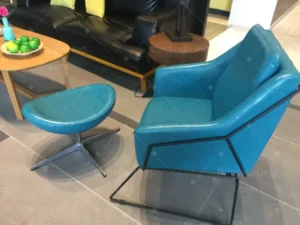
- Chapter 94 — furniture, bedding, luminaires: 9401 seats; 9403 other furniture including 9403.40 kitchen furniture and 9403.30 office furniture; 9404 mattress supports and mattresses; 9405 luminaires and lighting fittings; 9406 prefabricated buildings.
- Chapter 44 — wood: 4411 fibreboard including MDF and HDF; 4412 plywood and veneered panels; 4418 builders’ joinery and carpentry, with 4418.2 covering wooden doors and their frames and thresholds; 4409 mouldings and skirtings.
- Chapter 69 — ceramics: 6907 ceramic flags and paving, hearth or wall tiles; 6910 ceramic sinks, wash basins, baths, water closet pans and similar sanitary fixtures.
- Chapter 70 — glass: 7005 float glass; 7007 safety glass, toughened or laminated; 7008 multiple-walled insulating glass units; 7009 glass mirrors; 7016 glass blocks and paving.
- Chapters 72–73 — iron and steel: 7308 structures and parts of structures, with 7308.30 doors, windows and their frames, and balustrades and railings classified in the same heading; 7324 sanitary ware of iron or steel.
- Chapter 76 — aluminium: 7604 profiles; 7610 aluminium structures, with 7610.10 doors, windows and their frames and thresholds for doors; curtain walling also falls in 7610.
- Chapter 83 — base metal fittings: 8301 locks and padlocks; 8302 mountings and fittings including hinges, door closers, handles and sliding gear.
- Chapter 39 — plastics: 3918 floor coverings of plastics, which is where LVT and SPC normally sit; 3922 baths, shower-baths, sinks and lavatory seats of plastics; 3925 builders’ ware of plastics, with 3925.20 covering uPVC doors and windows and their frames.
- Chapter 57 — carpets: 5702 woven, which covers Axminster and Wilton; 5703 tufted, which covers most broadloom and carpet tile.
- Chapters 63 and 84–85 — the rest: 6303 curtains, drapes and interior blinds; 8481 taps, cocks and mixers; 8536 switches and socket outlets; 8539 lamps and bulbs, which are distinct from the luminaire in 9405.
How Do the Classification Rules Decide Borderline Cases?
Where a product could plausibly sit in two headings, the answer is not a matter of opinion. The General Rules for the Interpretation of the Harmonized System — the GRIs — are applied in strict order, and they are legally binding text, not guidance.
- GRI 1: classification is determined by the terms of the headings and by the relative Section and Chapter Notes. The Notes come before intuition, and for a commercial project package they decide most arguments on their own.
- GRI 2(a): an unassembled or disassembled article is classified as the complete article. A knocked-down wardrobe shipped flat is still furniture; a curtain wall shipped as profiles, gaskets and glass is judged on what it becomes.
- GRI 3(b): composite goods are classified by the component that gives them their essential character. This is the rule that decides an LED bathroom mirror, a stone-topped vanity or a fabric-wrapped acoustic panel.
- GRI 3(c): where essential character cannot be determined, the heading occurring last in numerical order among those equally meriting consideration wins.
- GRI 6: the same logic applies again at subheading level, comparing subheadings only at the same level.
Two Notes matter more than any other on a project order. Chapter 94 Note 2 restricts headings 9401 to 9403 to goods designed for placing on the floor or ground — with an express extension to cupboards, bookcases, other shelved furniture and unit furniture designed to be hung, fixed to the wall or stood one on another. And Section XV Note 2 pulls “parts of general use” — screws, bolts, springs, hinges, chain — out of the finished-article headings and back into their own, however they are packed.
Sourcing this for a commercial project?
FBM Sourcing works with project owners, developers, main contractors and FF&E contractors on hotel, apartment, school, office and other commercial building projects. Send us your BOQ, drawings or product list — our team will review it and get back to you.
Which Classification Traps Catch Project Orders?
Six recur on almost every mixed container we ship, and each one moves a line between headings with different duty consequences.
- The same product in four chapters. A door is 4418.2 in timber, 7610.10 in aluminium, 7308.30 in steel and 3925.20 in uPVC. A door schedule with mixed materials needs mixed codes, and a single blanket code for “doors” will not survive examination — something any door sourcing agent should raise at BOQ stage.
- Lamp versus luminaire. The fitting is 9405; the bulb or tube inside it is 8539. Shipping them together does not merge the codes unless they form a single article as presented.
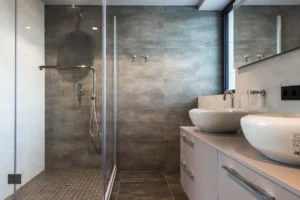
- Shower enclosures and mirrors. A framed shower enclosure is judged on essential character between the glass of 7007 and the aluminium of 7610; an LED mirror is judged between 7009 and 9405. Both are GRI 3(b) decisions and both are routinely got wrong.
- Fitted joinery versus furniture. Wall-hung wardrobes and vanity units generally remain furniture in 9403 under Chapter 94 Note 2, while a fixed timber partition or a stair balustrade is builders’ joinery or a structure. The distinction is what the item is designed to be, not where the drawing puts it.
- Parts. Parts of seats fall in 9401.9, parts of other furniture in 9403.9 — but hinges, screws, springs and other parts of general use go to Chapter 73 or 83 regardless, under Section XV Note 2.
- Sets. A project package is not a retail set. Each line is classified on its own merits; the GRI 3(b) set rule applies only to goods put up for retail sale together, which a container of unassembled joinery is not.
These decisions are not academic on US-bound cargo, where anti-dumping and countervailing orders reach product families common in commercial interior packages — and where the scope of an order is defined by the written product description, with the tariff codes listed for reference only. Getting the code right does not remove a product from scope, and getting it wrong does not put it outside one. Origin is the other half of that question, covered in our note on certificates of origin and FTA basics.
Who Is Legally Responsible for the HS Code?
The importer of record is — in almost every market, and regardless of what the supplier wrote on the proforma. On a project import that is normally the owner, the developer or the contractor, and the duty of reasonable care sits with them and their licensed broker. A Chinese factory’s export code is a starting point, not a defence.
Where the classification is genuinely arguable and the money is material, every major market provides a way to fix it in advance, and the ruling binds customs:
- United States: a CBP ruling under 19 CFR Part 177, requested through the eRulings portal; existing rulings are searchable in CROSS.
- European Union: Binding Tariff Information, valid for three years and binding on all EU customs authorities.
- United Kingdom: an Advance Tariff Ruling, also valid for three years.
- Australia: a Tariff Advice from the Australian Border Force.
On a large or repeating package — a chain rollout, a multi-tower residential scheme, a hotel group standard — a ruling on the two or three contentious lines is cheap insurance, because the same classification will be used on every subsequent container.
How Do You Build an HS Schedule for a Project Package?
Treat classification as a deliverable of the procurement package, produced at the same time as the BOQ rather than at the port.
- One row per line item, carrying the BOQ reference, a plain description, the constituent material, the function, the six-digit HS code and the destination national code from your broker.
- Describe by material and function, not by trade name: “wall-hung vanity unit, MDF carcass with acrylic front, 900 mm” classifies; “Model V-900” does not.
- Send it to the destination broker before production, together with photographs or drawings of the borderline items, and get the duty estimate back in writing so it lands in the budget rather than in a variation.
- Keep the schedule aligned with the commercial invoice, packing list and any certificate of origin — the codes must agree across all of them, or a preference claim fails and an entry is queried.
- Carry it forward into the shipping and customs document set and into your landed cost model, so duty is priced against the same rows the quantity surveyor is using.
Tariff classification is only half the picture on a United States project, because trade remedy orders are written around product descriptions rather than around code numbers. If your package includes guestroom casegoods, see how the antidumping order on wooden bedroom furniture from China (A-570-890) reads against a hotel FF&E schedule item by item.
How FBM Sourcing Handles Classification on a Project Order
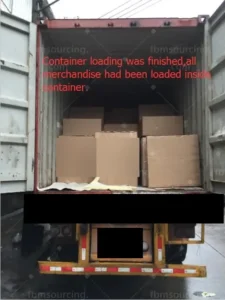
FBM Sourcing manages the entire China procurement package for overseas construction projects. On a hotel, apartment, school, office or retail package we build the HS schedule alongside the BOQ: each line described by material, construction and function so that your broker can classify it without a round of questions, with the borderline items — mirrors with integrated lighting, framed shower enclosures, stone-topped joinery, knocked-down curtain walling — flagged for a ruling before production rather than after arrival. Because we handle multiple product categories from multiple factories in one programme, the codes, the commercial invoice, the packing list and the origin documents are prepared as one consistent set rather than assembled from separate supplier paperwork at the last minute. Duty rates for US-bound cargo are set out in our breakdown of US import duty on furniture and building materials from China. Duty rates, entry and clearance in the destination country remain with your own broker and importer of record; what we guarantee is that the documents leaving China agree with each other. All quotations, invoices and shipping documents are issued by FBM Sourcing — you deal with us, and we carry the responsibility. For suppliers you nominate, we charge a 5% commission; for products we source for you, we quote a direct price. Sometimes, on a large project, the tiles alone fill full containers; sometimes the tiles share containers with the other product categories of the same project; and sometimes, in one batch, we combine a dozen or more product categories from several projects of the same client into a few containers — always full containers, and for us this is routine, well-practised work. For the wider service, see our guide to working with a China sourcing agent on FF&E and building material packages.
If you are pricing a container-scale package and need the classification and duty position mapped before you commit, send us the BOQ or product list, the destination port and the required-on-site dates. Our team will review it and set out a quotation — use the quote button above or WhatsApp +86 135 6007 5057.