
A fiduciary FF&E purchasing agent and a China-based sourcing agent and sourcing partner are not competitors — they are different layers of the same supply chain, and many large hotel projects use both. The fiduciary purchasing agent (often acting as the owner’s rep, with firms such as Benjamin West and The Parker Company being well-known public examples of the model) sits on the owner’s side: it manages the FF&E budget, runs competitive bids, coordinates brand approvals and issues purchase orders in the owner’s name, without taking title to goods or adding a margin. A China-based sourcing agent — also called an FF&E sourcing agent when the scope is furniture and fixtures — works the factory side: finding and qualifying manufacturers, managing sampling and production, inspecting goods before shipment, and consolidating containers, typically for a 5% commission for suppliers you nominate (products we source for you are quoted at a direct price). Which one your project needs — or whether it needs both — depends on where your risk actually sits.
What does a fiduciary FF&E purchasing agent (owner’s rep) actually do?
The fiduciary model exists because a full-service hotel FF&E program is a financial management problem before it is a logistics problem. Hundreds of purchase orders, dozens of vendors across casegoods, seating, lighting, drapery, artwork and OS&E, brand design standards that every item must clear, and a budget the lender expects to be defended line by line. A fiduciary FF&E purchasing agent is hired to own that problem on the owner’s behalf.
In practice, the scope usually covers budget development against the brand’s design package, vendor bidding and award, purchase order issuance in the owner’s name, payment scheduling, freight and warehouse coordination, and installation sequencing toward the opening date. Two features define the model. First, the agent is a fiduciary: it acts in the owner’s financial interest. Second, it is paid a project service fee for professional management, not a percentage skimmed off vendor invoices it controls.
The budget stakes explain why brands and lenders like the model: casegoods alone are usually the largest single line in a hotel FF&E package, so a single badly-run bid on guestroom furniture can move the whole program. On branded flagships and multi-property rollouts, a fiduciary purchasing agent is often effectively non-negotiable — and for good reason. This is the honest starting point for the comparison: the fiduciary model is not a problem a China sourcing agent solves. It solves a different problem.
What does a China-based sourcing agent do differently?
A china sourcing agent starts where the purchase order meets the factory floor. Its job is not budget governance; it is manufacturing-side execution in a market the owner’s team cannot supervise from another continent: identifying which factories can actually build to the spec, negotiating at factory level, managing shop drawings and sampling, monitoring production, and getting finished goods onto the water intact and on schedule.
At FBM Sourcing the factory-side scope for a hotel package typically runs like this:
- Sourcing and qualification — matching each FF&E category (casegoods, seating, stone, lighting, joinery) to factories with a real track record in that product, not one showroom covering everything.
- Shop drawings and sampling — sample and finish approval loops run before mass production is released.
- Production management — custom hotel casegoods go into production after shop drawing and sample sign-off, and the lead time is confirmed by the factory in writing for each order.
- Quality control — goods are inspected before shipment by our own team, with photo and video records shared with the client.
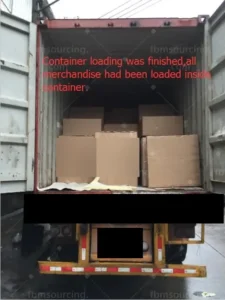
- Consolidation and export — multi-factory orders are consolidated into containers with export documentation handled in one flow.
The commercial structure matters as much as the scope. A China sourcing agent such as FBM Sourcing works differently: it issues all quotations, invoices and shipping documents in its own name and carries the responsibility for the goods — a 5% commission for suppliers you nominate, a direct price for products it sources. We break down exactly what that fee covers in what a China sourcing agent fee includes, and the title-and-margin distinction in more depth in sourcing agent vs trading company.
Fiduciary FF&E purchasing agent vs China sourcing agent: side by side
We compared the broader landscape — procurement companies, furniture suppliers and agents in general — in FF&E procurement company vs furniture supplier vs sourcing agent. This table narrows to the specific question hotel owners ask: the fiduciary owner’s-rep model against the China-based factory-side model.
| Dimension | Fiduciary FF&E purchasing agent (owner’s rep) | China-based sourcing agent |
|---|---|---|
| Core role | Budget governance, competitive bidding, PO administration, brand and design coordination | Factory identification, sampling, production management, pre-shipment inspection, consolidation |
| Where they sit | Owner’s side of the table, usually in the owner’s home market | Factory side, on the ground in China’s manufacturing clusters |
| Contracts and documents | Purchase orders in the owner’s name; fiduciary duty, no resale margin | Quotations, invoices and shipping documents in FBM Sourcing’s name |
| Fee model | Project-based professional service fee, scoped per engagement | A 5% commission for suppliers you nominate; a direct price for products it sources |
| Scope of goods | Full FF&E/OS&E program across all vendor geographies | Packages manufactured in China — FF&E plus building materials (doors, windows, tiles, sanitaryware, joinery) |
| Best fit | Branded flagships, lender-driven projects, multi-property rollouts | Franchise owner self-procurement, midscale and boutique projects, mixed materials + FF&E packages, or as factory-side executor under a fiduciary agent |
Note what the table does not show: a quality ranking. Both models leave the margin structure transparent, and both exist because unmanaged procurement fails in predictable ways — one guards the budget, the other guards the production. The right question is which failure mode your specific project is most exposed to.
Sourcing this for a commercial project?
FBM Sourcing works with project owners, developers, main contractors and FF&E contractors on hotel, apartment, school, office and other commercial building projects. Send us your BOQ, drawings or product list — our team will review it and get back to you.
When is one of them enough?
When a fiduciary purchasing agent should lead
If you are building a branded flagship — a full-service property under a major flag, with a design package that runs to hundreds of specified items and a lender watching the FF&E draw schedule — the fiduciary model should lead. The value is concentrated exactly where that project’s risk is: defending a budget where casegoods, seating and lighting each carry their own bid dynamics, keeping hundreds of POs reconciled, and navigating brand approval chains that can reject a finish sample weeks into the process. An owner’s rep who has run that gauntlet across many properties is worth their service fee, and a factory-side agent is not a substitute for that governance layer.
When a China-based sourcing agent alone covers it
Three project profiles routinely skip the owner’s-rep layer and go factory-direct through a sourcing agent:
Franchise owners self-procuring. A franchisee fitting out a midscale property against published brand standards often manages its own budget and simply needs the China side executed: factories that can genuinely build to the brand’s specification sheets, samples approved, production held to schedule. We covered how Chinese factories handle this compliance work in Chinese factories and hotel brand standards.
Boutique and midscale independents. A 40-80 key boutique hotel rarely carries the PO volume that justifies a dedicated fiduciary engagement; the owner or interior designer holds the budget, and the gap is factory-side. The workflow for that profile is laid out in our guide to boutique hotel FF&E procurement from China.
Mixed building materials + FF&E packages. Fiduciary FF&E agents are furniture-and-equipment specialists; they generally do not buy your aluminium windows, doors, tiles or kitchen joinery. Developers sourcing a combined package — common on apartment, school and mixed-use projects as well as hotels — work with a china sourcing agent covering building materials and FF&E in one consolidated flow, because a building material sourcing agent and furniture sourcing agent scope can share factories, containers and inspection trips. Consolidation is where the economics show up: filling a 40 ft high-cube across categories beats shipping half-empty containers per vendor, and mixed packages make that much easier to achieve.
Do I need both an owner’s rep and a sourcing agent?
On large branded projects, frequently yes — and the division of labour is clean when both sides respect it. The fiduciary purchasing agent owns specification, budget and award: it decides what gets bought, at what target cost, from which shortlisted vendors. The China sourcing agent owns execution for the packages awarded into China: it turns the approved spec into shop drawings, samples, production schedules and loaded containers. The owner gets fiduciary governance over the money and native-language supervision over the manufacturing, without either party marking up the goods.
The coordination points that make the combination work:
- Spec handoff — the fiduciary agent’s approved design package becomes the factory brief; deviations route back through the owner’s rep, not around it.
- Sampling gates — finish and prototype approvals are sequenced so the sampling loop lands before the production slot, not inside it.
- Inspection evidence — goods are inspected before shipment by our own team, with photo and video records that flow into the owner’s rep’s expediting reports.
- Logistics alignment — ocean transit time is confirmed by the carrier at booking, so container release dates are planned backward from the warehouse-and-install calendar the owner’s rep controls.
One practical detail worth agreeing on early when both parties are involved: attic stock. Hotel FF&E programs commonly specify a small allowance of extra upholstered goods, fabric and other damage-prone items as replacement stock, agreed at order stage, and it is far cheaper to produce and ship that overage inside the original container plan than to reorder a handful of chairs from China a year later. The owner’s rep sets the attic stock policy; the sourcing agent makes sure it is actually cut, produced and loaded with the main order rather than treated as an afterthought.
Seen this way, the question in this article’s title has a straightforward answer. If your project’s dominant risk is budget governance across a sprawling branded FF&E program, hire the fiduciary agent — and let it decide where China manufacturing fits. If your dominant risk is factory-side (will the goods match the spec, will they survive the voyage, will four factories’ output land as one clean container flow), a China-based sourcing agent at a 5% commission for suppliers you nominate (products we source for you are quoted at a direct price) is the direct answer. And if you face both risks at flagship scale, use both: they were never competing for the same seat at the table.
FBM Furniture
If your package is mainly hotel guestroom furniture, see hotel guestroom furniture on fbmfurniture.com, the site of FBM Furniture, the furniture sourcing line of FBM Sourcing Limited.
Get a China Procurement Quote for Your Project
If your hotel, apartment or commercial building project has FF&E or building material packages headed for Chinese factories — whether you are working under an owner’s rep or procuring directly — FBM Sourcing can price the factory-side scope: sourcing, sampling, production management, inspection before shipment by our own team with photo and video records, and consolidated export. Submit your drawings, quantities, destination port and timeline, and our team will review the package and come back to you with a factory-side plan.
For how this buyer-side, fiduciary model compares specifically with a one-stop showroom supplier that sells from its own catalogue, see our companion breakdown of one-stop showroom supplier vs owner-side procurement agent.