Fasteners and anchors are the cheapest items on a building materials BOQ and the most expensive to run out of: a facade crew waiting on anchor bolts costs more per day than the whole anchor order. Projects that already source steelwork, curtain wall or building materials from China increasingly add the fixing package to the same order — the volumes are large, the products are standardised, and the freight is nearly free inside containers already booked. Fasteners and anchors sourcing from China gives commercial projects chemical anchors, expansion bolts, self-drilling screws and facade fixings from the factories that run the production lines, at project quantities, and FBM Sourcing manages the scope as a building material sourcing agent and sourcing partner — with the grade documentation that structural fixings must carry to be usable on site at all.
Types of Fasteners and Anchors and Specifications for Commercial Projects
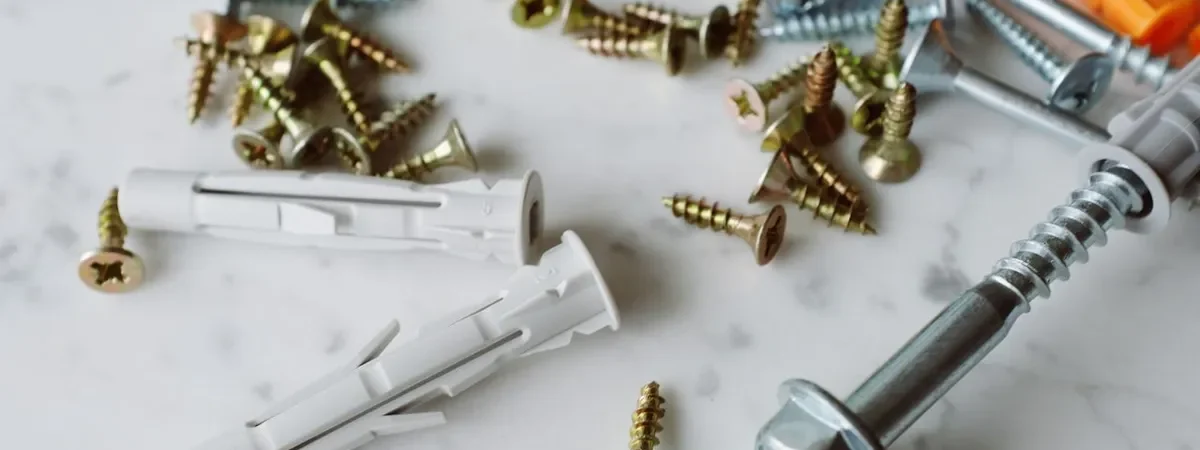
A project fixing package typically draws on five families:
- Chemical anchors — injection systems in vinylester and pure epoxy with threaded rod and internally threaded sleeves, for heavy connections and cracked-concrete applications
- Mechanical expansion anchors — through-bolt (wedge) anchors, heavy-duty sleeve anchors and drop-in anchors for plant, railings and secondary steel
- Self-drilling and self-tapping screws — for metal roofing, cladding, drywall framing and fit-out trades, with bonded EPDM washers for weathered fixings
- Structural bolting — hex bolt assemblies with nuts and washers for steel-to-steel connections
- Facade and curtain wall fixings — cast-in channels, adjustable brackets, T-bolts and serrated connection plates
Specification is a paperwork exercise as much as a product choice. Carbon steel bolts are graded to ISO 898-1 — 8.8 as the structural workhorse, 10.9 where the engineer calls for it — and stainless fixings to A2-70 for general exterior work or A4-70/A4-80 for coastal and pool environments. Corrosion protection must be stated, not assumed: hot-dip galvanizing to ISO 1461 for exterior structural fixings, zinc plating only for dry interiors. Chemical and expansion anchors for structural use should be specified with published load data from recognised assessment regimes (European Technical Assessments for EU-referenced projects, with seismic categories C1/C2 where the design requires them), and every batch of structural fixings should ship with mill certificates and batch traceability — an unmarked anchor is scrap on a documented project, whatever it cost.
How Does Fastener and Anchor Sourcing from China Work?
The order starts from the engineer’s fixing schedule or the trade packages’ BOQs: type, size, grade, coating and quantity per application. FBM Sourcing prices the schedule factory-direct — different families come from different specialised mills, which is precisely why the category benefits from an agent rather than a dozen small orders — and returns samples with their test documentation for approval. For chemical anchors, shelf life and site temperature range are confirmed at this stage, because resin that expires in the container is a real and avoidable loss.
Production and packing run 15–25 days for standard items, longer where non-standard sizes are rolled to order. Fixings are packed by application and labelled to the schedule, with 5% overage on consumable items as standard. They almost never ship alone: the cartons and drums ride in the containers carrying the project’s steel structures, curtain wall packages, metal stairs or general building materials — the consolidation pattern covered in our full container consolidation guide — so the fixings for each trade land with the materials they fix.
Quality Standards and Inspection
Fixings are checked on paper and in the hand. FBM Sourcing’s own inspection team verifies the documentation first — mill certificates, grade head-markings, assessment documents for structural anchors, batch numbers on resin cartridges with usable shelf life remaining — then physically samples the batches: thread gauging, coating coverage and thickness spot-checks, washer bonding on roofing screws, and count-per-carton verification against the schedule. Packing is checked for the humidity exposure of sea freight, with desiccant in stainless and plated cartons. Every inspection stage is recorded in photos and video and delivered to the client’s project team along with the full certificate file.
Why Source Fasteners and Anchors Through FBM Sourcing
No project buys fixings for their own sake — they exist to serve the steel, facade and fit-out scopes around them. That is the argument for buying them inside the same pipeline: one fixing schedule priced across specialised mills, one documentation file, one inspection regime, and freight that piggybacks on containers already moving — all on a 5% commission for suppliers you nominate (products we source for you are quoted at a direct price). The certification logic that governs the rest of the material order applies here too, as our guide to certifications when importing building materials from China sets out: the paperwork is part of the product.
Sourcing this for a commercial project?
FBM Sourcing works with project owners, developers, main contractors and FF&E contractors on hotel, apartment, school, office and other commercial building projects. Send us your BOQ, drawings or product list — our team will review it and get back to you.
Get a Quote for Your Project
Send us your fixing schedule or trade BOQs, grades and coatings, documentation requirements, destination port and programme dates. FBM Sourcing will return one quotation by family, sample and certificate packages for approval, and a consolidation plan with your wider material order — start on our project inquiry page.