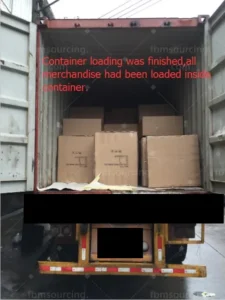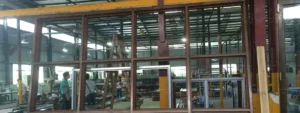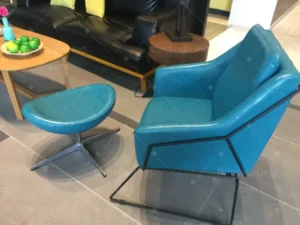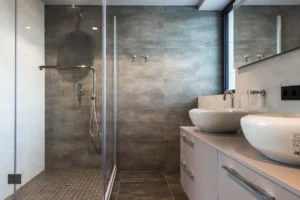
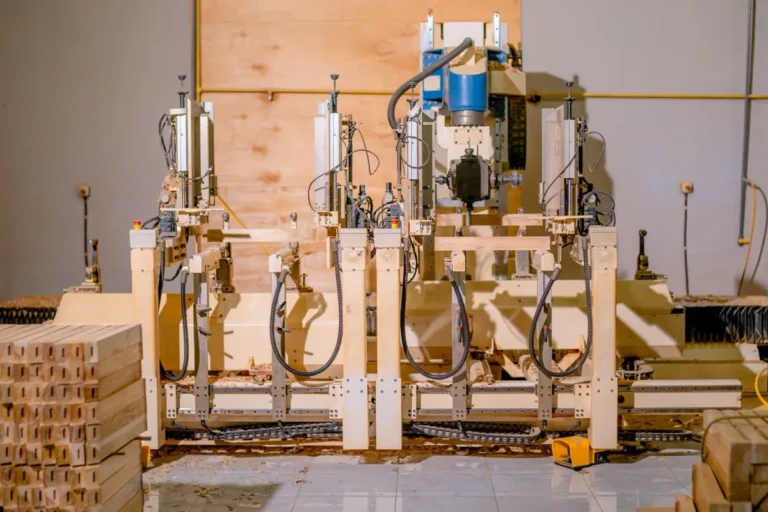
For custom commercial products, Chinese factory MOQs typically start around 30–50 rooms for hotel casegoods, 50–100 pieces per SKU for seating, 30–50 sets for kitchen cabinets, 300–500 m² for custom aluminum window systems and 800–1,200 m² per SKU for made-to-order tiles. Commercial building projects clear these thresholds far more easily than most buyers expect, because a single apartment block or hotel multiplies every product by its unit count. The practical MOQ questions are about SKU fragmentation — many finishes and sizes inside one category — not total volume. This is the kind of scope a sourcing partner such as FBM Sourcing takes on.
Typical custom-production MOQs by category:
- Hotel casegoods (custom): 30–50 room sets
- Loose seating / chairs: 50–100 pcs per model and finish
- Kitchen cabinets / wardrobes: 30–50 unit sets in one finish programme
- Aluminum windows & doors (custom profile/finish): 300–500 m²
- Tiles (custom size/face): 800–1,200 m² per SKU; stock designs often by pallet
- Custom decorative lighting: 50–100 units per design; statement one-offs quoted case by case
Why Do Chinese Factories Set MOQs for Custom Products?
An MOQ is the point where a production run stops losing money on setup. Every custom order carries fixed costs that don’t scale down: a spray line has to be purged and recalibrated for your paint code, an extrusion die has to be mounted for your window profile, a tile press needs a mould change for your face pattern, and fabric mills sell contract upholstery by the roll, not the metre. Below the MOQ those setup costs would exceed the margin on the goods, so the factory either declines or quotes a price that makes no commercial sense.
That is also why MOQ is negotiated per SKU, not per order value. A factory will happily run 60 identical guest-room desks; it will resist 60 desks split across five finishes and three sizes, because that is five spray-line setups and multiple tooling changes inside one small order. Specification discipline — fewer finishes, repeated dimensions — moves you under the factory’s real constraint faster than bargaining does.
How Do Commercial Projects Naturally Clear MOQ?
Project mathematics work in the buyer’s favour. A 120-room hotel needs 120 beds, 120 desks, 240 nightstands and roughly 3,000–4,000 m² of floor covering — every one of those lines clears its category MOQ in a single unit type. A 40-unit apartment development specifies 40 kitchens in one or two finish programmes and clears cabinet MOQ on its own; the same project’s apartment procurement package logic applies across wardrobes, doors and sanitary ware.
Where projects trip is the tail of the BOQ: public-area one-offs, a reception desk, six lobby lounge chairs in a special fabric, a single statement pendant. Those lines sit far below any custom MOQ on their own. The standard solutions are grouping them with the main order at the same factory, switching the one-offs to a factory’s existing stock finishes, or placing them with workshops that specialise in low-volume custom furniture production for projects — each of which a furniture sourcing agent can price against the others before you commit.
Sourcing this for a commercial project?
FBM Sourcing works with project owners, developers, main contractors and FF&E contractors on hotel, apartment, school, office and other commercial building projects. Send us your BOQ, drawings or product list — our team will review it and get back to you.
What If Your Quantity Is Below MOQ?
Four routes exist, in rough order of preference:
- Switch to stock finishes and standard dimensions — stock programmes often carry no MOQ at all beyond carton quantities, and lead time drops with it
- Pay a below-MOQ surcharge or tooling fee — factories will often run short quantities if the setup cost is covered explicitly; sensible for signature items
- Group SKUs into one production programme — same finish across more room types, or combining phase 1 and phase 2 quantities into a single run with staged delivery, holding the later phase as attic stock
- Move the line to a low-volume specialist — smaller workshops run smaller batches; unit cost is higher, but for six lobby chairs that is the right trade
What rarely works is pushing a volume factory to break its MOQ on price alone — the quote that comes back is a polite refusal expressed in numbers.
How Does a Sourcing Agent Negotiate MOQ Across a Project BOQ?
MOQ negotiation is portfolio work. A china sourcing agent holding the whole BOQ can offer a factory the guest-room casegoods run — comfortably above MOQ — on condition it also produces the below-MOQ public-area pieces in the same finish programme; the factory prices the package, not the fragments. The agent also decides which lines genuinely need custom production and which can move to stock programmes after sample approval confirms the stock finish reads correctly on site.
At FBM Sourcing this BOQ-level structuring is part of the standard service on our a 5% commission for suppliers you nominate (products we source for you are quoted at a direct price) — the aim is that no line in a commercial package ever pays a custom-run premium it didn’t need to pay, and no below-MOQ item silently disappears from the schedule because a factory declined it late.
Get a China Procurement Quote for Your Project
Send us your BOQ, drawings or product schedule with quantities, destination port and timeline. We will map every line against realistic factory MOQs, flag the below-threshold items early, and return a consolidated sourcing plan with budget support: China building materials & FF&E procurement.
Related reading: who pays for samples, molds and tooling.