A complete hotel FF&E package from China covers six scopes: casegoods, seating, soft goods, lighting, and artwork & accessories for the guest rooms, plus a public-area scope for the lobby, F&B outlets, corridors and meeting spaces. In volume terms, guest room furniture runs about 4.5–6 m³ per key, so a 100-room property ships in roughly 8–10 forty-foot high-cube containers once public areas are added. No single factory in China produces all of it — a complete package is consolidated by a sourcing agent and sourcing partner from typically 8–15 specialized factories into one spec book, one production schedule and one shipping plan.
FBM Sourcing has assembled FF&E packages of this kind for hotel, apartment and mixed-use projects across the US, Australia, Europe and the Caribbean. This guide breaks down exactly what sits inside the package, how quantities are calculated from the room count, and the hard numbers you need for container and budget planning.
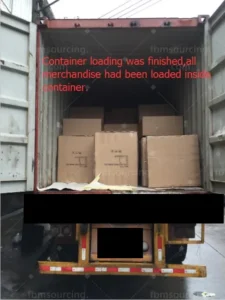
- Guest room furniture occupies 4.5–6 m³ per key when packed for export; a 40HQ container loads 65–68 m³ in practice.
- Soft goods (drapery, bedding, upholstery fabric) should include a 2–3% attic stock allowance for damage and future replacement.
- A complete package is typically produced by 8–15 specialized factories running in parallel over 8–11 weeks.
- A professional sourcing agent charges a a 5% commission for suppliers you nominate (products we source for you are quoted at a direct price) to consolidate the entire package under one contract.
What Product Categories Make Up a Hotel FF&E Package?
Hotel FF&E is conventionally organized into five guest-room product families. Each family is produced by a different type of factory in China, which is precisely why consolidation matters.
Casegoods are the fixed and freestanding wood-based pieces: headboards, bedside tables, wardrobes or closet units, desks, luggage benches, TV panels and minibar cabinets. Casegoods are the largest single line in the package — on a typical mid-scale to upscale project they represent 35–45% of the guest-room FF&E volume. They are made by hotel furniture factories concentrated in Guangdong and Zhejiang, usually to project-specific shop drawings rather than catalog designs.
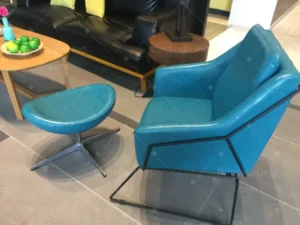
Seating covers desk chairs, lounge chairs, ottomans, sofas in suites, and banquette or dining seating in F&B areas. Upholstered seating comes from dedicated upholstery workshops, often separate from the casegoods factory, because frame-making, foaming and fabric work are different trades.
Soft goods include blackout and sheer drapery, bed skirts or bases, decorative cushions, bed runners and upholstery fabrics. These are cut-and-sew products with their own lead times and their own quality risks — shading, pattern repeat and flame-retardancy certification all sit in this category.
Lighting means the decorative layer: bedside lamps, desk lamps, floor lamps, and decorative pendants or wall sconces. For US projects every fixture must be wired and labeled for 120V; for Australia and Europe, certified for 220–240V with the correct approval marks. Getting electrical certification right at specification stage prevents the single most common customs and installation problem in hotel packages.
Artwork & accessories round out the room: framed artwork, mirrors, decorative objects and greenery. Individually small, they matter because they ship late, get lost easily, and are the items a brand reviewer photographs first.
What About Public Areas?
The sixth scope is everything outside the guest room: lobby lounge furniture, reception desk millwork, restaurant tables and chairs, bar stools, banquet chairs and folding tables, corridor console tables, and pool or terrace furniture in outdoor-rated materials. Public-area FF&E typically adds 20–30% on top of the guest-room volume for a full-service hotel, and much less for a select-service property. It is also where custom millwork enters the package — reception counters, bar counters and feature joinery are built to millwork drawings and need the longest coordination time of any FF&E line.
Because public-area pieces are one-off designs rather than repeated room types, they carry a disproportionate share of the sampling and approval workload. Plan for that in the schedule rather than discovering it in month four.
How Do You Calculate FF&E Quantities From the Room Count?
Quantity take-off starts from the room mix, not the total key count. A 120-key hotel might be 100 standard kings, 12 twins and 8 suites — three different room types with three different FF&E schedules. The math is then mechanical: items per room type, multiplied by room count, plus public areas, plus attic stock.
As a working rule, one guest room of an upscale hotel contains 18–25 FF&E line items, and the furniture for one key packs into 4.5–6 m³ of container space. Twin rooms run slightly higher than kings (two headboards, two bedside pairs), and suites can double the volume of a standard room. From these numbers you can estimate container count before a single factory is contacted: a 100-room hotel at 5 m³ per key is 500 m³ of guest-room product — about 7.5 forty-foot high-cubes at a realistic 65–68 m³ per container — before public areas.
Quantities should always be locked against the interior designer’s FF&E schedule, not against a factory’s interpretation of it. When a China FF&E procurement services team takes over a project, the first deliverable is a consolidated quantity matrix that reconciles the designer’s schedule, the room mix and the purchase orders — because every quantity error found at this stage costs nothing, and every one found at the port costs a change order.
Sourcing this for a commercial project?
FBM Sourcing works with project owners, developers, main contractors and FF&E contractors on hotel, apartment, school, office and other commercial building projects. Send us your BOQ, drawings or product list — our team will review it and get back to you.
How Should the Spec Book Be Organized?
The spec book is the single document that makes or breaks a multi-factory package. A usable hotel FF&E spec book is organized by item code, not by room photo. Each line item carries: a unique code (e.g. CG-101 for casegoods, SE-201 for seating, LT-401 for lighting), the room types it appears in, quantity per room type, overall dimensions, materials and finishes with reference standards, fabric or leather specification with flame-retardancy requirement, electrical specification where relevant, and the approval status of its sample.
Three practices separate a professional spec book from a decorated PDF. First, every finish gets a physical control sample — a wood stain chip, a fabric cutting, a metal plating swatch — signed and split between client, agent and factory. Second, revisions are versioned; factories must only ever hold the current revision, and superseded pages are withdrawn in writing. Third, the spec book codes flow through to cartons and packing lists, so that container CG-101/Cartons 1–40 can be directed to floors 3–5 on site without opening a box. On a 100-key project that discipline alone saves the install crew roughly a week of sorting time.
Where Does FF&E Stop and OS&E Begin?
FF&E is the durable, largely non-consumable layer of the fit-out: furniture, fixtures and equipment with a multi-year life. OS&E — operating supplies and equipment — is the operational layer: linens and terry, tableware, glassware, kitchen smallwares, housekeeping carts, luggage trolleys, in-room amenities trays and kettles. The practical boundary: if the general manager’s operations budget replaces it in the normal course of business, it is OS&E; if replacing it is a capital project, it is FF&E.
The distinction matters for procurement because the two scopes run on different cycles. FF&E is specified once, sampled, and produced over 8–11 weeks; OS&E is bought closer to opening, often in a compressed 6–8 week window, from an entirely different set of factories. Mixing the two into one undifferentiated shopping list is the fastest way to delay both. For a full breakdown of how the scopes split and who buys what, see our guide to FF&E vs OS&E in hotel procurement.
How Does a Sourcing Agent Consolidate the Package From Multiple Factories?
China’s furniture industry is deeply specialized: the factory that excels at casegoods does not sew drapery, and the lighting workshop does not upholster sofas. A complete hotel package therefore means orchestrating 8–15 factories — matching each product family to the right workshop, negotiating on project volume, and locking all of them to one delivery date.
This is the core job of a china sourcing agent on a hotel project. FBM Sourcing runs it in five moves: factory matching and quotation against the spec book; sampling and finish approval; parallel production across all factories on a synchronized schedule; quality control at each factory — all inspections performed by FBM Sourcing’s own QC team at the factory, documented in photos and video; and consolidation of every line into shared containers at a bonded warehouse so the project ships as one coordinated flow rather than fifteen separate shipments. For suppliers you nominate, we charge a 5% commission; for products we source for you, we quote a direct price. Either way the buyer gets one contract, one point of responsibility and one loading plan. The full sequence and durations are laid out in our hotel FF&E procurement timeline.
Consolidation is also where the container math pays off. Because one agent controls all cartons, containers can be loaded by floor or by room type — mixed loads that let the installation crew work top-down as containers arrive, instead of warehousing an entire hotel’s furniture before the first room can be set.
How Much Attic Stock Should a Hotel Order?
Every category needs a spares allowance, and soft goods need the most. The working standard is 2–3% attic stock on soft goods — drapery panels, cushion covers, bed runners and upholstery fabric by the meter — because these are the items that stain, tear and fade first, and because re-ordering a 50-meter fabric run two years later rarely matches the original dye lot. For casegoods and seating, 1–2% spares on high-wear components (chair legs, drawer runners, headboard panels) is sufficient; for lighting, order 3–5% spare shades and a stock of matched bulbs or drivers.
Attic stock is cheap insurance at production time and expensive misery afterwards: adding 3% to a fabric run during production costs the marginal meters only, while a standalone re-order later carries minimum-order quantities, new freight and a dye-lot risk. Write the attic stock into the original purchase orders and ship it in the same containers, labeled and coded for the hotel’s storage room.
Container Planning: The Hard Numbers
Budgeting freight for a hotel FF&E package comes down to a few reliable figures. A 40-foot high-cube container has a nominal capacity of 76 m³ but loads 65–68 m³ of furniture in practice once carton geometry and protective packing are accounted for. Guest-room furniture runs 4.5–6 m³ per key depending on room size and whether closets ship flat-packed or assembled. Public areas add 20–30% to the guest-room volume for a full-service property.
Worked example: a 100-key upscale hotel at 5.5 m³ per key is 550 m³ of guest-room product; adding 25% for public areas brings the package to about 690 m³, which loads into 10–11 forty-foot high-cubes. That container count, multiplied by current freight rates to your port, gives a defensible logistics line for the development budget months before final pricing. For the full cost structure — what share of budget goes to product, freight, and fees — see our breakdown of the cost to furnish a 100-room hotel, and for product-level guidance our hotel furniture sourcing page.
FF&E Scope by Hotel Area
The same package reads differently depending on which part of the hotel it is being bought for. Below is the scope area by area: what the category list actually contains, and what has to be specified before a factory can quote it. A furniture-type view of the same ground, with materials and specification detail per item, is in our complete hotel FF&E list by area.
01 Guest rooms and suites
Scope. Casegoods: wardrobes and open hanging units, TV consoles and media walls, minibar and pantry units, nightstands, writing desks, luggage racks, headboards and bed bases. Seating: desk chairs, lounge chairs, ottomans, sofa beds in suites. Tables: coffee, side and dining tables in suites. Soft goods: mattresses and toppers, upholstery, decorative cushions and throws, curtains, sheers and blackout treatments, rugs. Lighting: bedside and desk lighting, floor and wall fittings, reading lights integrated into headboards. Accessories: mirrors, artwork, trays, wastebins, safes, kettles and mini-refrigerators where they sit in the FF&E budget rather than in OS&E.
Specify. Room type matrix and the count of each type; handing and left/right configuration; stone or laminate top material; cable routing and power module type with the destination plug standard; finish codes; fabric grade and abrasion rating; and the fire performance standard the destination market applies to upholstery and mattresses.
02 Corridors, lift lobbies and circulation
Scope. Corridor carpet or hard flooring, wall protection and corner guards, console and niche furniture, mirrors, artwork and wayfinding substrates, corridor and lift lobby lighting, ice and vending alcove joinery, service door finishes.
Specify. Carpet construction and backing, pattern repeat and roll width against corridor setout, flame spread class to the destination code, and the level-by-level quantities including make-up for pattern matching.
03 Lobby, reception and lounge
Scope. Reception and concierge counters built as joinery with stone tops, integrated lighting and cable management; lobby and lounge seating including sofas, armchairs, benches and feature pieces; coffee and occasional tables; decorative and architectural lighting; planters; rugs; artwork and feature wall treatments; luggage storage joinery.
Specify. Counter heights including any accessibility requirement of the destination market, stone type and edge profile, joinery substrate and finish, seating frame material and foam density, fabric grade for a high-traffic public area, and how the piece will be transported and assembled on site.
04 Food and beverage: restaurant, bar, café and banqueting
Scope. Dining chairs and bar stools, banquette and booth seating, dining and bar tables with bases and tops, host and service stations, bar joinery and back-bar units, buffet and display counters, decorative lighting, and outdoor terrace furniture where the outlet spills outside.
Specify. Seat height against counter and bar height, frame material and joint construction for commercial use, fabric or vinyl grade with cleanability requirement, table top material and base weight, banquette module lengths against the floor setout, and the fire performance standard for contract seating in the destination market.
05 Meeting, conference and ballroom
Scope. Stacking and banquet chairs, folding and modular tables, trolleys and storage carts, lecterns, staging, dance floor, pipe and drape, ballroom carpet, chandeliers and dimmable lighting, prefunction furniture, and mobile partition finishes.
Specify. Stack height and trolley capacity, chair weight, table top construction and edge, carpet pattern against the ballroom grid, and the storage volume available — the storage room dimension is a procurement constraint that is regularly discovered after delivery.
06 Wellness, pool and outdoor
Scope. Sun loungers and daybeds, outdoor dining sets, umbrellas and bases, cabanas and pergolas, pool-side side tables, spa treatment beds and joinery, changing room lockers and benches, gym flooring and mirrors, outdoor lighting and planters.
Specify. Frame material against the climate, UV and salt exposure; sling, rope or cushion construction with an outdoor-rated fabric; drainage in cushion cores; weight for wind exposure; and whether the pieces are stored seasonally, because storage changes the construction that makes sense. See aluminium against teak against rope outdoor furniture.
07 Back of house and staff areas
Scope. Staff canteen furniture, lockers and benches, office desks and task seating, housekeeping and linen room joinery, trolleys and racking, and the durable finishes in service corridors.
Specify. Durability over appearance, standard sizes wherever possible so that replacement is easy, and the local requirement for staff facilities, which varies by jurisdiction and is frequently missed at budget stage.
What normally sits outside the package
Fixed building services, commercial kitchen equipment as fitted plant, lifts, life-safety systems, and anything installed by the main contractor as part of the building fabric. OS&E — linen, crockery, glassware, cutlery, kitchen smallwares, amenities and housekeeping supplies — is a separate budget with a separate procurement clock. Lead time planning across these scopes is covered in our hotel FF&E procurement timeline.
Frequently Asked Questions
What is the difference between FF&E and OS&E on a hotel project?
FF&E covers the durable, capitalised items that make the building operational – casegoods, seating, tables, lighting, soft goods, artwork, and the fixed joinery that is bought rather than built. OS&E covers the operating supplies and equipment an operator replaces as consumables: linen, crockery, glassware, cutlery, kitchen smallwares, housekeeping trolleys, amenities. They are usually budgeted, procured and shipped on different clocks, which is why the boundary has to be drawn in the schedule and not left to the supplier.
Which hotel areas sit inside an FF&E package?
Guest rooms and suites, circulation and corridors, the lobby and lounge, food and beverage outlets, meeting and ballroom spaces, wellness, pool and outdoor areas, and the front-facing parts of back of house. The building fabric – structure, services, kitchens as fitted equipment, and anything fixed by the main contractor – normally sits outside it.
How many factories does a complete hotel FF&E package involve?
Typically eight to fifteen. Casegoods, upholstered seating, mattresses, carpet, lighting, decorative metalwork, mirrors and artwork are made in different Chinese clusters by specialised producers, so a complete package is assembled from several factories and consolidated into a single shipping plan rather than bought from one supplier.
Is a mock-up room needed before bulk production?
On a project where the room type repeats it is the single most useful control there is. The mock-up sets the reference that every later unit is measured against, and it is the last point at which a finish, a dimension or a hardware choice can be corrected before the error repeats at key count.
Does an FF&E package include installation on site?
Installation is normally contracted locally rather than supplied with the goods, because it is labour on the destination site. What the package can carry is the information installation needs: cartons labelled by room type, level and item code, assembly instructions, and a loading sequence that matches the order the floors are handed over in.
Get a China Procurement Quote for Your Project
If you are budgeting or specifying an FF&E package for a hotel, apartment or mixed-use project, FBM Sourcing can turn your schedule into factory-level pricing and a container plan. Submit your drawings or FF&E schedule, room count and mix, destination port and target timeline, and our team will review your requirements and get back to you.
Related reading: Blackout curtains vs roller blinds vs motorized shades for hotels