Cost-per-key value engineering when sourcing from China means adjusting the specification of individual FF&E and building material line items — material grade, finish, joinery method, factory tier — without changing the guest-facing design intent, so the total procurement cost divided by the number of keys (rooms) comes down without the room reading as a downgrade. It works category by category, not as an across-the-board percentage cut, because different categories carry very different ratios of cost-to-visual-impact.
Why Cost-per-Key Is the Right Unit for Value Engineering Decisions
Cost-per-key normalizes procurement spend against the one number every stakeholder on a hotel project already tracks — developer, operator, and lender all think in cost-per-key when comparing a project against its comp set or against its own pro forma. Value engineering decisions made against absolute budget numbers can look reasonable in isolation and still miss the target once divided across the actual room count; a small per-unit saving on a nightstand line item barely moves a 40-key boutique property’s cost-per-key, but the same saving compounds meaningfully across a 400-key full-service hotel. Framing every VE decision in cost-per-key terms keeps the comparison honest across project scale.
Which FF&E Categories Actually Move Cost-per-Key?
Not every category carries the same leverage. Ranked roughly by typical share of the guestroom FF&E budget, the categories worth reviewing first are:
- Casegoods (beds, headboards, desks, wardrobes) — usually the single largest guestroom line item; veneer choice, hardware grade and joinery method (dowel/cam vs. mortise-and-tenon) all move cost without changing the visual footprint
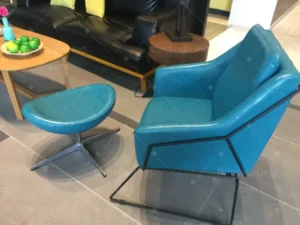
- Soft seating and upholstery — fabric grade (Crypton, vinyl, or standard contract fabric) and foam density drive both cost and durability, which affects replacement cycle cost, not just upfront spend
- Bathroom fixtures — vanity material (engineered stone vs. natural stone vs. laminate) and fixture brand tier
- Lighting — fixture count per room and finish grade (plated brass vs. powder-coat)
- Flooring and wall covering — tile size and origin, LVT vs. engineered wood, wallcovering grade
Structural building materials — aluminum windows, doors, railings — carry less room for cost-per-key adjustment without a compliance or performance trade-off, since these are usually locked to a code or performance spec rather than a design preference.
What’s the Difference Between Value Engineering and Cutting Corners?
Value engineering changes how a spec is achieved, not what the spec delivers. A veneer alternative that matches the approved finish sample and passes the same wear-testing standard is value engineering; substituting a lower-durability material that will fail inspection or wear out inside the first refurbishment cycle is a false economy dressed up as VE. The distinction that matters on a China-sourced project specifically is factory tier: moving a casegoods order from a factory that primarily serves five-star international brands to a factory that primarily serves limited-service domestic chains changes far more than price — it can change tolerance control, finish consistency across a large room count, and the factory’s familiarity with export QC documentation. Cost-per-key VE should be evaluated material-by-material and factory-by-factory, not by defaulting to the cheapest quote in a bid stack.
Sourcing this for a commercial project?
FBM Sourcing works with project owners, developers, main contractors and FF&E contractors on hotel, apartment, school, office and other commercial building projects. Send us your BOQ, drawings or product list — our team will review it and get back to you.
When Should Cost-per-Key VE Happen in the Project Timeline?
The earlier VE happens relative to sample approval, the less it costs in schedule terms. Reviewing cost-per-key options at BOQ or spec-development stage — before drawings are finalized and before a factory has cut a sample — lets alternate materials or finishes get evaluated without re-tooling. VE requested after sample approval, once a factory has already committed tooling or ordered raw material to the original spec, tends to slip the production schedule as well as add cost for sample rework, which usually erodes some or all of the intended saving.
How Factory Selection Itself Is a Value Engineering Lever
Two factories quoting against the identical spec sheet can differ by a meaningful percentage on price without either one cutting the spec — the difference usually comes down to factory scale, current order book (a factory with open capacity in your production window will often price more competitively than one running near capacity), and whether the factory already tools for the finish or joinery method you specified versus needing to develop it from scratch. This is a lever that has nothing to do with the material spec itself, which is why comparing multiple factory quotes against one fixed spec — rather than asking one factory to lower its price on the same spec, or comparing quotes that are quietly different specs — is the more reliable way to find real savings.
How FBM Sourcing Approaches Cost-per-Key Value Engineering
As your sourcing partner, FBM Sourcing reviews a BOQ category by category against cost-per-key targets before production starts, flags where a material or finish substitution genuinely holds the design intent versus where it would compromise durability or code compliance, and runs comparative quotes across factories on a fixed spec so the comparison is apples-to-apples. For products you have specified yourself we charge a 5% commission; for products we source for you against a brief, we quote a direct price — either way, the VE recommendation is separated from the commission structure, since our incentive is a durable, on-spec package, not the highest possible line-item total.
Sourcing this for a commercial project?
FBM Sourcing works with project owners, developers, main contractors and FF&E contractors on hotel, apartment, school, office and other commercial building projects. Send us your BOQ, drawings or product list — our team will review it and get back to you.
Frequently Asked Questions
What is cost-per-key value engineering?
It is adjusting the specification of FF&E and building material line items — material, finish, joinery, factory tier — so total procurement cost divided by room count decreases without changing the guest-facing design intent.
Which categories offer the most cost-per-key leverage?
Casegoods, soft seating and upholstery, and bathroom fixtures typically offer the most room for VE because they carry the largest share of the guestroom budget and the widest range of material and finish tiers available at the same factory.
Does value engineering mean using cheaper materials?
Not necessarily. Genuine VE finds an alternate way to achieve the same approved spec and wear-testing standard; substituting a lower-durability material that will fail inspection or wear out early is a false economy, not value engineering.
When in the project timeline should cost-per-key VE happen?
As early as possible — ideally at BOQ or spec-development stage, before a factory has cut a sample or committed tooling to the original spec, since VE requested after sample approval usually slips the schedule and erodes part of the intended saving.
Related Reading
Related Guides on Whole-Hotel Sourcing
Value engineering only works when it is done inside a defined scope. The package itself is set out in what a whole-hotel FF&E and building materials package covers, the responsibility for it in who manages the entire package under one contract, and the delivery side in synchronised multi-category delivery and building a procurement schedule around construction milestones.