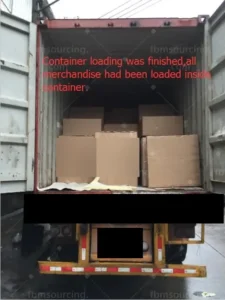
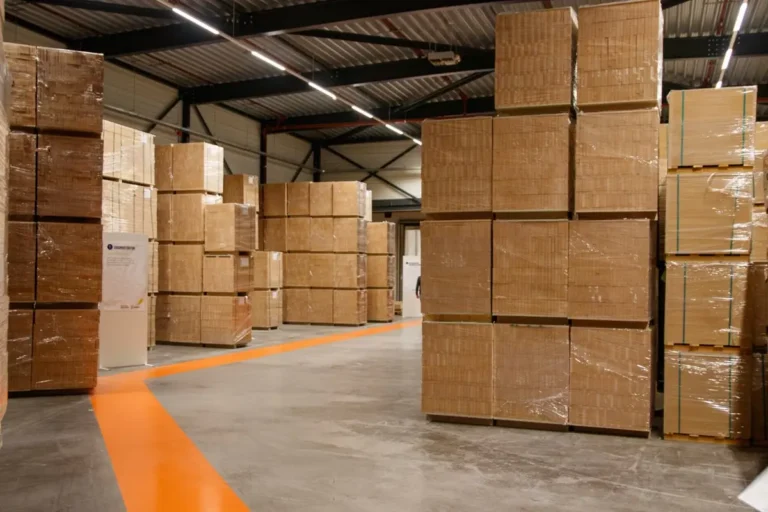
Hotel FF&E shipments are labeled with a project-specific carton code that tells site crews exactly where each box goes: every carton carries the project code, the room number or room-type code, the floor or zone, the item code from the FF&E specification book, a carton X-of-Y count, weight and dimensions, and standard handling marks. These labels are keyed to a master packing list and to the container loading plan, so containers can be stuffed in reverse of the installation sequence and unloaded straight to the correct floor. Done properly, labeling turns a container of 400 anonymous brown boxes into a self-sorting delivery that installers can distribute without opening a single carton. This is the kind of scope a sourcing partner such as FBM Sourcing takes on.
For hotel developers, general contractors and FF&E contractors, the label system is not a packing detail — it is the difference between an install crew that fits out rooms on day one and a crew that spends its first week cutting open cartons in a loading bay trying to work out what is inside. This guide covers the full labeling data set, room-type versus room-number strategies, color-coding, the master packing list, and how a China sourcing agent applies and verifies labels before the containers ever leave the factory.
What Information Goes on Every FF&E Carton Label?
A complete hotel FF&E carton label carries a fixed data set, printed large enough to read from a few meters away and applied to at least two faces of the carton — one side face and one end face, so the label stays visible however the carton is stacked. The core fields are:
- Project code — a short identifier for the hotel project (e.g. RIV-24), so cartons are never confused with other cargo in a shared warehouse or on a mixed delivery.
- Room number or room-type code — either the exact guestroom (Room 312) or the typology (King Standard, Type K1), depending on the labeling strategy chosen.
- Floor / zone code — the level or installation zone, usually paired with a color band so crews can sort visually.
- Item code from the FF&E spec book — the same code used on the specification sheets and installation drawings (e.g. CG-04 for the dresser), so the label, the spec book and the drawings all speak one language.
- Carton X of Y, gross weight and dimensions — a bed set packed in 4 cartons reads 1/4 through 4/4, and weight is stated so crews know which cartons need two people or mechanical handling.
Handling marks — fragile, this-way-up, keep-dry, stacking limits — follow the pictorial symbols standardized in ISO 780, which are recognized by port and warehouse handlers worldwide without any text. As a working rule, cartons intended for manual carry through corridors and stairwells are kept under roughly 25 kg gross; anything heavier is flagged on the label for trolley or two-person handling.
Room-Number vs Room-Type Labeling: Which Strategy Fits Your Hotel?
There are two workable strategies, and choosing the wrong one either wastes factory labor or slows the site crew. A typical 150-room select-service hotel runs only 4–6 guestroom typologies — king, double-queen, accessible king, one or two suite types — which is why typology-based labeling is the default for this class of property.
| Strategy | How it works | Best for | Watch out for |
|---|---|---|---|
| Room-type labeling | Cartons carry a typology code (K1, QQ2, ADA-K). Site team assigns cartons to any room of that type as floors are released. | Select-service and midscale hotels where dozens of rooms are identical; serviced apartments with repeated unit plans. | Site must control counts per floor — the label alone does not say which room the carton ends up in. |
| Room-number labeling | Every carton is pre-assigned to an exact room (312) at the packing stage. | Boutique and luxury properties where floors or individual rooms differ; custom joinery cut to individual room dimensions. | More factory-side administration; late room-mix changes mean relabeling before loading. |
| Hybrid | Typology codes for standard floors, room numbers for suites, ADA rooms and custom floors. | Most full-service hotels — the majority of rooms are standard typologies and the rest are one-offs. | The packing list must state clearly which items follow which rule. |
On boutique hotel FF&E projects, where a 40-key property can have 15 or more distinct room designs, room-number labeling is effectively mandatory — a headboard sized for Room 204’s wall cannot be swapped into Room 305. For repeated typologies, room-type labeling also lets the factory pack in efficient production runs rather than assembling per-room kits.
Color-Coding by Floor and Zone
Printed text only works if the person reading it reads English. Container unloading crews at the destination often do not, which is why mature FF&E labeling systems add a color band per floor or zone: a 100 mm colored stripe or corner flash on every carton — for example blue for Level 2, green for Level 3, orange for public areas. A crew member can sort an entire container by color alone, and a supervisor can spot a wrong-floor carton from across the loading dock.
Six to eight strong, visually distinct colors cover most hotel projects; buildings with more floors repeat the palette with a large printed floor numeral inside the band. Zone codes extend the same logic horizontally — lobby, restaurant, gym, corridors — so public-area FF&E is never mixed into guestroom stacks. The color key is printed on the first page of the master packing list and on an A3 sheet posted at the unloading point, so the sorting rule travels with the cargo rather than living in one person’s head.
Sourcing this for a commercial project?
FBM Sourcing works with project owners, developers, main contractors and FF&E contractors on hotel, apartment, school, office and other commercial building projects. Send us your BOQ, drawings or product list — our team will review it and get back to you.
The Master Packing List and the Container Loading Plan
Labels only deliver their value when they are keyed to a master packing list — a single spreadsheet where every carton number appears once, with its item code, room or typology assignment, floor, dimensions, gross and net weight, and the container it was loaded into. A 40 ft high-cube carries hundreds of FF&E cartons, more when the load is flat-packed casegoods than assembled seating, so a multi-container hotel project means a packing list of thousands of lines that must reconcile exactly against the FF&E specification quantities.
The same document drives the container loading plan, and here sequence matters: containers are stuffed in reverse of the installation sequence, so the first-install floors or zones come out of the door first. If the install plan runs top floor down, the top-floor cartons are loaded last and unloaded first; if public areas install ahead of guestrooms, lobby and restaurant FF&E rides at the door end of an early container. On projects where the site cannot absorb all containers at once, the loading plan is also the basis for staggered production and delivery scheduling, releasing containers floor-by-floor as the building is ready.
The packing list serves one more function that owners tend to appreciate only after something goes wrong: it is the document a marine insurer works from when a carton arrives crushed or missing. Carton-level identification is what turns “some furniture is damaged” into a specific, valued claim line — one of several reasons to have marine cargo insurance on project shipments arranged before the vessel sails.
How Do Labels Connect to Installation Drawings and Assembly Documents?
The item code on the carton is the thread that runs through the entire document set. The FF&E spec book defines CG-04 as the three-drawer dresser; the room installation drawing places CG-04 on the wall elevation; the assembly instructions inside carton CG-04 2/3 show how its parts bolt together; and the packing list says 150 rooms need 150 units in 450 cartons. When all four documents use the same code, an installer holding a carton can find its wall position and its assembly steps in under a minute.
This is why labeling should be designed at the same time as the installation drawings and assembly documents, not improvised at the packing bench in the final week of production. Flat-packed casegoods make the linkage critical: a single guestroom generates many cartons across casegoods, seating, lighting, mirrors, drapery and accessories, and several of those cartons are meaningless on their own — carton 3/4 of a bed set contains only rails and hardware. The label system is what keeps multi-carton items together and matched to the right drawing.
What Goes Wrong When FF&E Shipments Arrive Unlabeled?
The failure mode is predictable. A hotel project generates thousands of cartons across its containers; if those cartons arrive with nothing but a factory SKU sticker in Chinese, the site team has to open, identify, re-mark and re-sort them by hand. Crews that should be installing spend days running a temporary warehouse operation in the ballroom, hoisting cartons to the wrong floors and back, and the FF&E installation slips while labor costs run.
The second failure is worse because it surfaces later: missing-item claims become impossible to trace. Without carton numbering and a reconciled packing list, nobody can prove whether the 12 missing nightstands were never produced, never loaded, lost in transit, or delivered to the wrong floor and buried in a storeroom. Factories deny, forwarders point at the terminal, and the owner ends up reordering items — with a fresh production run and another ocean transit — to hit an opening date. Unlabeled or badly labeled cargo also multiplies handling, and every extra touch raises damage exposure on exactly the goods with the longest replacement lead time.
How FBM Sourcing Manages Labeling During Export Packing and Loading
Labeling is only as good as its enforcement at the packing bench, which is why FBM Sourcing treats it as part of quality control rather than paperwork. FBM Sourcing manages the entire China procurement package for overseas construction projects. Our team builds the label scheme with the client at order stage — room-type or room-number strategy, floor colors, item codes matched to the spec book — then applies and verifies the labels during export packing, and supervises container stuffing against the agreed loading plan. Every carton label and every loading step is photographed, and the full pre-shipment inspection record, with photos and video, is delivered to the client before shipment, together with the final master packing list and container-by-container manifest.
That record set means the receiving team knows, before the vessel sails, exactly which container holds which floors and in what door-to-nose order — so the crane, the elevator bookings and the install crew schedule can all be planned against real data. As a China sourcing agent for building materials and FF&E, we run this same system whether the project is a 40-key boutique property in the Caribbean or a 300-room business hotel in the Middle East. For suppliers you nominate, we charge a 5% commission; for products we source for you, we quote a direct price.
Get a China Procurement Quote for Your Project
If you are planning a hotel, serviced apartment or other commercial FF&E package from China, send us your drawings, BOQ or FF&E specification book along with room counts and typologies, destination port and target installation timeline. We will structure the procurement — factories, production schedule, labeling and loading plan, and pre-shipment inspection — around your install sequence.
Use the quote button above or message us on WhatsApp with your project outline. The earlier the labeling and loading plan is designed into the order, the smoother your room-by-room delivery will run on site.