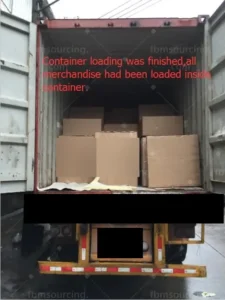
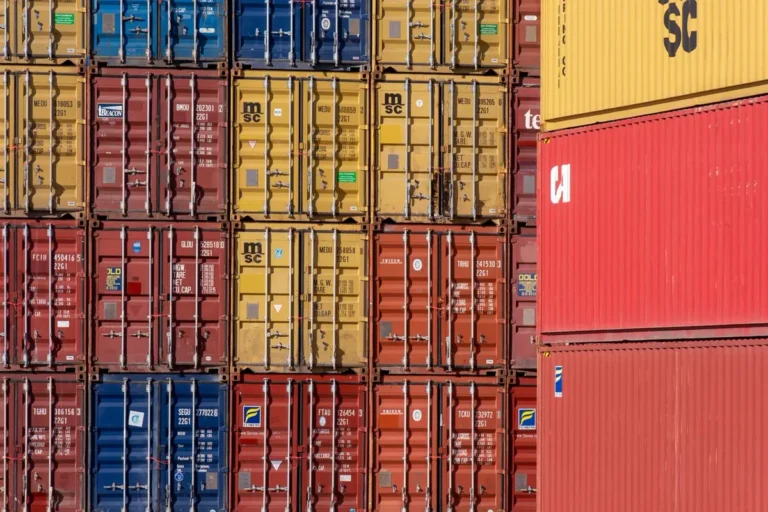
Demurrage and detention are penalty charges shipping lines bill when a container overstays its allowed “free time”: demurrage applies while the full container sits inside the port terminal beyond its free days, and detention applies after the container leaves the port but has not yet been returned empty to the carrier’s depot. A third charge, port storage, is billed separately by the terminal itself for occupying yard space. All three escalate in daily tiers, and on a container stuck for several weeks the combined bill can exceed the ocean freight you paid to ship it. This is the kind of scope a sourcing partner such as FBM Sourcing takes on.
For overseas project buyers importing container loads of FF&E and building materials from China, these charges are one of the most common — and most avoidable — sources of budget leakage. A hotel or apartment project moving 10–20 containers has 10–20 separate free-time clocks running at destination, and a construction site that cannot receive cargo on arrival day is exactly the scenario these fees were designed to monetise. This guide explains what each charge is, who bills it, and the practical steps that keep your containers moving.
Demurrage vs Detention vs Port Storage: What Is the Difference?
The three charges are invoiced separately, often by different parties, which is why importers frequently discover them one at a time. The distinction comes down to where the container is and whose asset is being tied up:
- Demurrage — the loaded container is still inside the terminal after its container free days expire; billed by the shipping line.
- Detention — the container has been picked up and is outside the port (at your site or warehouse) but the empty box has not been returned to the carrier’s depot; billed by the shipping line.
- Port storage — the terminal’s own charge for the container occupying yard space, running on its own free-time clock that is usually shorter than the carrier’s; billed by the terminal or via your forwarder.
- Chassis and per-diem fees — in markets like the US, trucking chassis rent by the day as well, adding a fourth clock on long-held boxes.
| Charge | Where the container is | Who bills it | Typical free time |
|---|---|---|---|
| Demurrage | Inside the port terminal, still loaded | Shipping line | Set by the carrier, counted from discharge |
| Detention | Out of the port, empty not yet returned | Shipping line | Set by the carrier, counted from gate-out |
| Port storage | In the terminal yard | Terminal / port authority | Set by the terminal; often shorter than carrier free time |
Free time is negotiated per booking and varies by carrier, port and contract, so confirm it on each booking. The critical point: demurrage and detention are consecutive risks on the same container. A box can clear its demurrage window cleanly, then rack up detention because the site took two weeks to unload and return it.
How Much Free Time Do You Get, and How Fast Do Charges Escalate?
Carriers grant free days of demurrage counted from the day the container is discharged from the vessel, and free days of detention counted from the day the container gates out of the terminal; the number of days is set per carrier, port and booking. Weekends and holidays usually count as free-time days, which matters when a vessel discharges on a Thursday before a long weekend.
Charges are tiered: the daily rate for days 1–4 past free time is typically the lowest band, days 5–9 jump to a higher band, and beyond that the rate roughly doubles again. Because the meter runs on every container independently, a 15-container FF&E shipment where clearance stalls for ten days does not generate one penalty — it generates fifteen, each in an escalating tier. On a box that stays stuck, the accumulated demurrage, detention and storage can end up exceeding the original ocean freight for that container.
This is also why demurrage exposure should be considered part of your landed cost planning, not an unforeseeable accident. Our guide to calculating the landed cost of a China project order covers where these destination charges sit in the total cost stack.
Why Project Cargo Gets Stuck: Five Common Causes
Container-scale project imports fail free-time windows for predictable reasons. In rough order of frequency:
1. Documents not ready when the vessel arrives. If the original bill of lading has not been surrendered — or a telex release has not been issued because the final payment to the factory settled late — the consignee cannot take delivery, and the clock runs while paperwork catches up. An original B/L couriered internationally adds courier time by itself; a telex release or seaway bill removes that physical document entirely.
2. Customs queries and examinations. A vague commercial invoice (“furniture, 1 lot”), mismatched HS codes, or missing certificates for regulated goods (timber products, electricals) invite a query or a physical exam. A full customs examination can hold a container for extra days, almost always burning through free time. Knowing who is responsible for clearing customs on a project import — and confirming they have every document before arrival — is half the battle.
3. Late security and entry filings. US-bound cargo requires an Importer Security Filing (ISF “10+2”) lodged at least 24 hours before the cargo is loaded in China (19 CFR 149.2); late or missing ISF filings carry penalties and flag the shipment for holds. The formal requirements are set out by US Customs and Border Protection. Similar pre-arrival regimes exist elsewhere — the entry should be prepared while the vessel is still at sea, not after it docks.
4. The receiving site cannot take delivery. This is the project-specific killer. Construction programmes slip, and a site with no crane time, no clear laydown area, or no finished floors to install into cannot unload 20 containers the week they land. Ordering to the original programme and receiving to the slipped one is how detention bills are born.
5. Trucking and chassis shortages. At congested ports, drayage booked after arrival can mean waiting days for a truck and chassis appointment while demurrage accrues inside the terminal. Chassis pools in the US and driver availability in Australia and the UK are recurring bottlenecks, especially in peak season.
Sourcing this for a commercial project?
FBM Sourcing works with project owners, developers, main contractors and FF&E contractors on hotel, apartment, school, office and other commercial building projects. Send us your BOQ, drawings or product list — our team will review it and get back to you.
How Do You Avoid Demurrage and Detention Charges?
Avoidance is a scheduling and documentation discipline, and almost all of it happens before the vessel arrives. On the sailing from South China to the US East Coast, the UK or the Middle East, you have the whole transit time in which to get every destination step pre-arranged — the charges only bite when that window is wasted.
Complete the document pack before departure, not before arrival. Commercial invoice, packing list with per-container detail, bill of lading, certificates of origin, and any product certificates should be finalised and shared with your customs broker within days of the vessel sailing. Where payment terms allow, use telex release or seaway bill instead of couriered original B/Ls.
Pre-clear customs while the cargo is on the water. Most major markets allow entries to be lodged before vessel arrival — in the US, entry documentation may be submitted before the merchandise arrives (19 CFR 142.2(b)). Pre-cleared containers can gate out on day one of free time instead of day four.
Book drayage against the ETA, not the arrival notice. Lock in your trucker and chassis well before ETA, with terminal appointments requested as soon as the carrier opens them. At congested ports this single step routinely saves demurrage days on every container.
Match the delivery schedule to the construction programme. If the programme has slipped, tell your forwarder before arrival and stagger the pickups — pulling four containers a week that the site can actually unload beats pulling twenty at once into detention. On the origin side, factories can also hold finished stock and ship in staggered batches so containers land when the site is ready for them, not when production happens to finish.
Use a bonded or 3PL warehouse as a buffer. When the site genuinely cannot receive, transloading into a local warehouse and returning the empties immediately stops both detention and chassis per-diem. Warehouse handling and short-term storage on a 40HC is almost always cheaper than letting that same box sit on tiered detention for two or three weeks.
What Should You Do When a Container Is Already Stuck?
Once a box is over free time, every day is a decision. First, identify which clock is running — demurrage (still in port), detention (out but not returned), or storage — because the fix differs: a customs hold needs your broker pushing the query response same-day, while a site-access problem needs a warehouse booked this week. Second, ask your forwarder to request extended free time or a one-off waiver from the carrier; lines grant these more often than importers assume, particularly where the delay was a port or carrier problem such as a missed appointment window or yard congestion.
Third, get the empty back fast. Detention often outlasts demurrage on project cargo because unloading at a construction site is slow — a live unload of a floor-loaded 40ft container of flatpack casegoods can take a crew hours, and sites rarely have crews standing by for multiple boxes. Booking a drop-and-pick arrangement, or transloading at a 3PL, gets the carrier’s asset back inside the detention window even when your cargo is not yet at the site. Destinations with long feeder legs, such as Caribbean project deliveries, deserve extra caution: smaller ports often have shorter free time and fewer trucking options, so the recovery plan needs to exist before arrival.
How the Origin Side Prevents Destination Charges
Most demurrage stories are told as destination failures, but many start in China. A shipment that leaves with a clean, complete document pack, correct HS codes, consistent cartons-per-container packing lists, and a loading schedule agreed against the project programme rarely gets stuck. One that leaves with a one-line invoice and an unsurrendered B/L usually does.
This is where a china sourcing agent handling the full procurement package earns its keep on the logistics side. FBM Sourcing manages the entire China procurement package for overseas construction projects. In practice that means consolidating multiple factories’ cargo into efficiently packed containers, preparing the export document set while goods are still in production, coordinating telex release with payment milestones, and sequencing container loading and sailings so arrivals match the site’s installation schedule rather than the factories’ convenience. Before anything ships, our own team carries out a full pre-shipment inspection on the factory floor, with photo and video records delivered before shipment — so a quality dispute never becomes the reason a container sits in a port while parties argue.
Free time at destination is set by the carrier and the terminal; the origin-side work that protects it happens across the production and loading period before the vessel ever sails. That asymmetry is the whole argument for planning demurrage avoidance at booking stage, not at arrival.
Get a China Procurement Quote for Your Project
If you are planning a container-scale FF&E or building-materials order from China for a hotel, apartment building, school, office or other commercial project, send us your drawings, BOQ or product list along with quantities, destination port and project timeline. We will structure the sourcing, consolidation, documentation and shipping schedule around your site programme — so free time works for you instead of against you.
Use the quote button above or message us on WhatsApp with your destination port and target on-site dates, and our team will review your project and come back with a procurement plan.