A hotel property improvement plan (PIP) puts three clocks on the same casegoods order: the brand’s completion date, the lender’s reserve and disbursement conditions, and the factory’s own sequence of drawings, samples, bulk production and sea freight. China-made casegoods fit a PIP when the order is sequenced backward from the brand date, with the funding release and the sample approval fixed before production is booked. They collide with a PIP when any one of the three clocks is assumed instead of confirmed in writing.
This article is written for US franchised-hotel ownership companies, asset managers and the FF&E contractors and procurement teams who work for them. It deals with the guestroom casegoods package: headboards, nightstands, desks, wardrobes, luggage benches, minibar and media units.
What a PIP Is, in the Words of the Brands and the Owners Themselves
Brand standards manuals and individual PIP documents are not public, so this article does not describe any brand’s specific PIP terms. What is public is how franchisors and listed hotel owners describe PIPs in annual reports filed with the US Securities and Exchange Commission (SEC).
- A PIP is a condition of staying in the system. Hilton Worldwide Holdings, in its Form 10-K for fiscal 2025 (filed February 2026), states that for existing franchised hotels it provides franchisees with property improvement plans “that must be satisfied to keep the hotels in compliance with our brand standards, so that they can remain in our hotel system.”
- PIPs arrive at contractual windows, not only at a sale. Choice Hotels International, in its Form 10-K for fiscal 2025 (filed February 2026), says it may require hotels already in its franchise system “to execute property improvement plans at specified contractual windows”, and requires PIPs, when necessary, for hotels entering the system.
- An acquisition usually triggers one. RLJ Lodging Trust and Xenia Hotels & Resorts both state in their fiscal 2025 Form 10-K filings (February 2026) that upon acquiring a hotel they are often required to complete a property improvement plan to bring it up to the franchisor’s or brand’s standards.
- The cycle can be short, and failure has a defined consequence. Xenia’s fiscal 2025 Form 10-K says that under certain franchise agreements renovation expenditures “are mandated at set periods, with at least some level of expenditure required every five to six years”, and lists “the failure to maintain brand standards” among the events that allow a franchisor to terminate.
The same filings show where the money is expected to come from. Xenia reports that many of its franchise agreements require FF&E reserves of 4% of hotel revenues. RLJ Lodging Trust describes an FF&E reserve of up to 5% of gross revenue, established when required by a management agreement, a franchise agreement or “the requirements of any lender”, and states that renovation funding comes first from those reserves where the management agreement permits. An individual hotel’s franchise agreement and loan documents set its own numbers.
Why Does the Lender’s Clock Often Run Ahead of the Brand’s?
The brand sets the date by which the rooms must be finished; the lender often decides when the money to order them can move. In a January 2026 finance column in LODGING Magazine, Ryan Bosch, principal at the real estate investment company Arriba Capital, described how lenders treat PIPs by timing. His points, as published:
- Lenders see PIPs as “scheduled, non-optional capital obligations”, and the column states that brand cycles “are compressing”.
- For a PIP falling inside 24 months, owners should expect “day-one reserves escrowed for the full renovation budget, with disbursement tied to construction milestones or brand sign-offs”.
- For a PIP at 24–36 months, the column describes “elevated FF&E reserve requirements (often 5–6 percent vs. the standard 4 percent)”, and says lenders may require a funded reserve account or a letter of credit.
That is one practitioner’s published view, not a rule, and each loan is documented differently. A factory in China books board, veneer, hardware and a production slot only after it receives a deposit. If the deposit has to come out of an escrowed reserve released against a brand sign-off or a lender’s draw procedure, the factory clock starts on the day the draw is funded, not the day the PIP was issued or the quotation accepted.
The Factory Clock: What It Contains and Who Confirms It
A guestroom casegoods order made in China runs through a fixed sequence.
- Quotation against the FF&E schedule and brand specification. The factory needs the item list, dimensions, substrate, face material, hardware and any brand drawing package.
- Shop drawings. The factory redraws each item for production, for review by the owner’s design lead and, on a PIP, often by the brand.
- Finish samples and a sample piece or mock-up room. Brand, owner and factory must all agree here. Our article on working with franchise FF&E specifications covers how a brand package becomes factory production.
- Deposit and material booking.
- Bulk production.
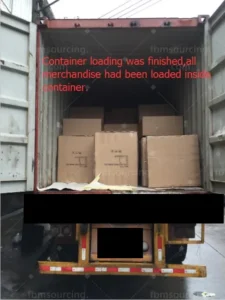
- Inspection before shipment, packing and container loading.
- Sea freight, US customs entry, and delivery to the hotel or a receiving warehouse.
- Installation, room by room, and brand inspection of the finished rooms.
We do not publish week counts for production or ocean transit. Production time depends on the factory’s order book, the finish and the quantity; sailing time depends on the port pair and the carrier’s schedule at booking. Both are confirmed per order by the factory and the freight forwarder, in writing, and those figures are what belongs in a PIP schedule. For a category-by-category view, see FF&E lead times and order sequencing for hotel projects.
One calendar fact is fixed: Chinese factories close for the Chinese New Year holiday each winter. An order whose bulk production would straddle that holiday needs the factory’s written restart and completion dates before the deposit is paid.
Where the Three Timelines Collide
| Collision point | What happens | What prevents it |
|---|---|---|
| Funding release vs factory deposit | The quotation is accepted but the deposit waits on a lender draw or a reserve release; the production slot is not held. | Ask the lender early which document releases the FF&E draw, and have it ready when the quotation is final. |
| Brand approval vs sample approval | The factory’s finish sample is approved by the owner, then revised after the brand reviews it; the sample round repeats. | Include the brand’s reviewer from the first sample round, and approve against a physical control sample. |
| Scope negotiation vs drawings | The PIP scope is still being negotiated while shop drawings are under way; items change after drawing. | Freeze the item list by room type before shop drawings begin; keep unresolved items in a separate, later order. |
| Rooms out of service vs container arrival | Rooms are stripped before the goods are on site, or goods arrive before rooms are released and sit in paid storage. | Tie the room-block closure dates to confirmed arrival dates, not planned ones. |
The fourth row is the one tied to revenue. Chatham Lodging Trust’s fiscal 2025 Form 10-K lists among the risks of capital improvements the “possibility that revenues will be reduced temporarily while rooms or restaurants offered are out of service”, together with construction delays “including those caused by supply chain disruptions and tariffs”.
Have a PIP casegoods schedule to price against a brand date?
Send us the FF&E schedule and brand specification for your guestroom casegoods package. We quote it item by item for your ownership company or FF&E contracting team.
How Should the Casegoods Order Be Sequenced Backward from the PIP Date?
The method is the same backward scheduling used for a new-build opening, described in our guide to building a procurement schedule around hotel construction milestones. A PIP adds two things: the hotel is trading while the work happens, and brand and lender each hold a gate inside the sequence. Work backward in this order.
- Start from the brand’s completion date and subtract the brand’s own inspection step. That date is when rooms must be finished and accepted, not when furniture must arrive.
- Subtract installation, by room block. The installer’s daily output and the number of rooms the hotel can take out of service at once set this duration.
- Subtract delivery, customs entry and sea freight. Use the forwarder’s confirmed figures for the actual port pair and season, plus a margin the owner’s team decides.
- Subtract inspection, packing and loading, then bulk production. Use the factory’s written figure for this order, counted from the later of deposit receipt and sample approval.
- Subtract the sample and drawing rounds, allowing for a revision.
- Subtract the funding step. The result is the latest date by which the lender’s draw conditions must be met.
If the date produced by the last step is already in the past, the schedule does not work as a single order. The options then sit with the owner: ask the brand for a phased completion, or limit the first phase to fully approved room types.
Phased Room Blocks: Keeping the Finish Consistent Across Shipments
A trading hotel rarely closes all its rooms at once, so PIP casegoods are commonly installed by floor or by wing. One bulk run, packed and labelled by room block and shipped in the order the blocks will close, gives the best colour and sheen consistency, because laminate batches, veneer and lacquer mixes are shared across every room. Separate runs introduce batch variation between floors.
Where separate runs are unavoidable, the factory must hold the approved control samples, the laminate or veneer reference and the finish recipe from the first run. Our article on matching existing finishes on a phase 2 FF&E order explains what the factory needs from the client to do that.
Factories that work mainly on hotel projects are used to room-type labelling, carton marks by floor and repeat runs against a retained sample. Our overview of hospitality casegoods manufacturing hubs in China describes where those factories are concentrated.
Compliance Items That Belong on the Schedule, Not in the Appendix
Three items take time to resolve, so each belongs on the schedule from the first day.
- Composite wood formaldehyde rules. The US Environmental Protection Agency states that regulated composite wood products, and finished goods containing them, manufactured in or imported into the United States after 22 March 2019 must be certified and labelled as TSCA Title VI compliant (40 CFR Part 770). Certified board and the finished-goods label have to be arranged with the factory before production starts.
- Tariffs. RLJ Lodging Trust’s fiscal 2025 Form 10-K states that proposed or enacted tariffs on imported goods, “including construction materials, furniture, and equipment”, may increase the cost or delay the timing of planned capital projects. The duty position on a specific item is a question for a licensed customs broker before the order is placed; our overview of the US import duty structure for furniture and building materials from China explains the layers involved.
- Whether the owner is free to choose the supplier. Some franchise systems run purchasing programmes with selected vendors; Choice Hotels’ fiscal 2025 Form 10-K, for example, describes relationships with qualified vendors intended to streamline purchasing and “maintain brand standards” and consistency. The Asian American Hotel Owners Association (AAHOA) includes vendor exclusivity among the topics of its 12 Points of Fair Franchising. Whether a particular PIP allows casegoods from a supplier of the owner’s choice is answered only by that hotel’s franchise agreement and PIP document, and should be asked of the brand in writing before any factory is briefed.
Containers, Room Blocks and Loading Order
Casegoods are bulky, so container planning is part of the schedule. Sometimes, on a large project, the casegoods alone fill full containers; sometimes the casegoods share containers with the other product categories of the same project; and sometimes, in one batch, we combine a dozen or more product categories from several projects of the same client into a few containers — always full containers, and for us this is routine, well-practised work.
For a PIP, the loading plan mirrors the installation plan: cartons marked by room type and room block, and the block closing first delivered first.
What FBM Sourcing Does on a PIP-Driven Casegoods Package
FBM Sourcing acts as the client’s sourcing partner in China, based in Guangzhou, one hour from Foshan. On a PIP-driven casegoods package our work follows our standard process:
- We quote against the FF&E schedule and the brand specification the client provides, with the factory’s written production time for that order.
- We manage shop drawings, finish samples and, where the client wants one, a sample piece or mock-up room for the client and the brand to approve. Bulk production starts after that approval.
- After bulk production is finished, our own team carries out one inspection at the factory before shipment, with photo and video records, and an inspection report goes to the client before the balance is paid.
- We ship in full containers, loaded in the order the client’s room blocks require. Sea freight is quoted to you before shipment.
The brand’s approval, the lender’s draw, US customs entry and installation on site remain with the owner and its US team.
Have a PIP casegoods schedule to price against a brand date?
Send us the FF&E schedule and brand specification for your guestroom casegoods package. We quote it item by item for your ownership company or FF&E contracting team.
Frequently Asked Questions
What is a hotel PIP, and who issues it?
A property improvement plan is a scope of upgrades a franchisor requires a hotel to complete to meet current brand standards. Hilton’s fiscal 2025 Form 10-K describes PIPs as plans that “must be satisfied” for hotels to remain in its system, and Choice Hotels’ fiscal 2025 Form 10-K says it may require them at specified contractual windows.
Can casegoods for a PIP be made in China and still be accepted by the brand?
The brand approves the product against its specification, usually through drawings, finish samples and a mock-up room. Whether the owner may choose its own supplier at all is set by the hotel’s franchise agreement and PIP document, and that question should be put to the brand in writing before a factory is briefed.
How long do China-made hotel casegoods take to produce and ship?
There is no single figure that is safe to plan on. Production time depends on the factory’s order book, the finish and the quantity, and sailing time on the port pair and the carrier’s schedule. Both are confirmed per order by the factory and the freight forwarder, and those written figures go into the PIP schedule.
Why does the lender affect the factory schedule?
A factory books materials and a production slot only when the deposit arrives. A January 2026 LODGING Magazine finance column by Ryan Bosch of Arriba Capital describes lenders escrowing reserves for a near-term PIP, with disbursement tied to construction milestones or brand sign-offs. If the deposit must come from such a reserve, the factory clock starts when the draw is funded.
Should a phased PIP be ordered as one production run or several?
One run, packed by room block and shipped in the order the blocks will close, gives the most consistent colour and sheen because the laminate, veneer and lacquer batches are shared across all rooms. Several runs introduce batch variation, so the factory must retain the approved control samples and finish references from the first run.
About FBM Sourcing
FBM Sourcing manages the entire China procurement package for overseas construction projects. Since 2014 we have worked with developers, general contractors, builders, commercial project owners, interior design and construction companies and FF&E solution providers across more than 20 countries and over 1,000 containers, as their sourcing partner in China — from the schedule or BOQ through factory selection, sampling, inspection by our own team before shipment, consolidation and shipping. All quotations, invoices and shipping documents are issued by FBM Sourcing, and sea freight is quoted to you before shipment. If you have a hotel casegoods package to price, start at China building materials and FF&E procurement.