
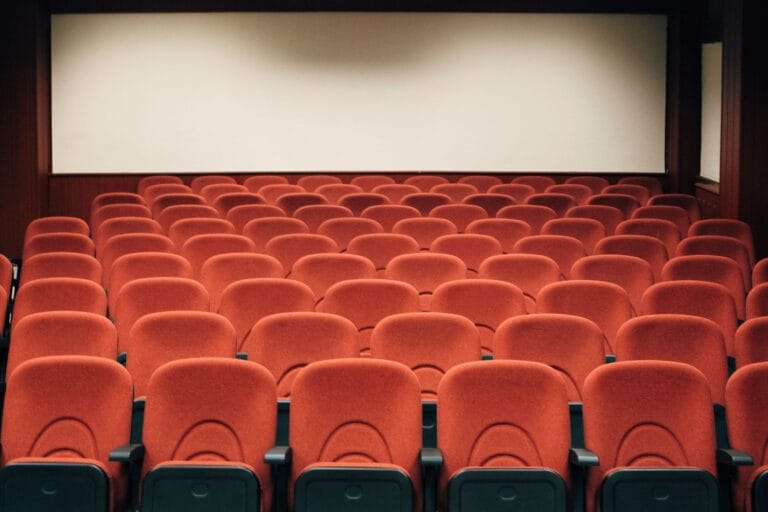
Cinemas, bowling centres, family entertainment centres, escape-room venues and live music clubs are not hotels with different seats. The procurement package has an unusual shape: a very small number of item types repeated in very large quantities, a handful of genuinely specialist products with long lead times, a fit-out programme driven by an opening date that has already been advertised, and acoustic and fire requirements that are stricter than almost any other commercial interior.
This guide sets out how an entertainment venue package is actually structured, which items belong in a China procurement scope and which do not, and where the programme risk sits. It is written for operators, developers, main contractors and FF&E contractors buying for a new venue or a chain rollout.
What Is Actually in a Cinema or Entertainment Venue Package?
Split it into four groups before pricing anything, because they behave differently:
- Auditorium seating — the defining line item. Recliners, rocker seats, love seats and accessible positions, on a stepped or raked floor with fixed pitch and row spacing. Priced per seat, but the price is set by the mechanism, the fabric grade and the floor condition, not by the seat count alone.
- Front-of-house furniture and fittings — lobby seating, concession counters, bar fronts, queue management, back bar joinery and merchandising. This is ordinary commercial FF&E, and it is where the visual brand lives.
- Interior building materials — acoustic wall treatment, ceilings, carpet, wall protection, doors and washroom fit-out. Bulk items, priced by area, and the largest share of shipping volume.
- Specialist equipment — projection, screen, sound systems, bowling machinery, ride and attraction equipment. Usually bought direct from the brand or its regional distributor for warranty and service reasons, and usually outside a China procurement scope. Assume it is excluded unless it has been explicitly agreed in.
Auditorium Seating: What Sets the Price
Seating is the item most often under-specified and it is where two quotations diverge most.
- Seat type and mechanism: fixed rocker, manual recliner, electric recliner. Electric recliners multiply cost and introduce a motor, a control, a power supply and a warranty obligation into a room that will run thousands of cycles a year. The cycle test class is the specification that matters and it must be asked for.
- Fire performance of the upholstered assembly: the destination standard, tested as an assembly rather than as a fabric. BS 7176 at the appropriate hazard level in the UK, CAL 117 and the applicable state and local codes in the US, AS/NZS 3744 in Australia and New Zealand. A compliant fabric over a non-compliant foam is not a compliant seat.
- Fabric abrasion grade: stated as a Martindale or Wyzenbeek rub count against a contract requirement. See how contract-grade upholstery fabric is specified, and fabric vs vinyl for commercial seating — vinyl and PU are common in venues where food and drink are served at the seat.
- Floor interface: this is the field most often missing from an enquiry. Riser heights, step nosing detail, floor slope, fixing method and whether the seat standards are bolted to concrete or into a stepped timber platform all change the base and the bracket. A seat quoted without a section through the auditorium floor is quoted against an assumption.
- Row layout: row ends, wall-side panels, aisle lighting, cup holders, tablet arms, accessible and companion positions and row and seat numbering are all separate line items and are routinely omitted from a first-round price.
If you are supplying your own fabric to the seat manufacturer, the arrangement and the risk change — see how COM and COL work on China orders.
Fitting out a cinema or entertainment venue?
FBM Sourcing works with project owners, developers, main contractors and FF&E contractors on commercial building projects, including leisure and entertainment venues. Send the seating layout and the finishes schedule and we will price the package against your opening date.
Acoustics Are a Procurement Item, Not Just a Design One
Entertainment venues are the one commercial building type where acoustic separation is a core commercial requirement rather than a comfort issue: sound bleeding between auditoria damages the product being sold. The procurement consequences are that the wall and ceiling treatment carries a performance specification and a fire class simultaneously, that door assemblies have to hold both an acoustic and a fire rating, and that the panel build-up as tested has to match the build-up as supplied.
See acoustic wall panels sourcing from China, PET, fabric-wrapped and wood slat panels compared, and mineral fibre vs gypsum vs metal ceilings. On the fire side, Class A flame spread wall panels and the broader fire rating standards map set out what a certificate actually has to say.
Why the Programme, Not the Price, Is the Real Risk
An entertainment venue has an opening date that has usually been announced before the furniture is ordered. That changes how procurement should be sequenced.
- Seating is a long-lead item and it is installed late. It cannot go in until the stepped floor, the finishes and the carpet are complete, so it is simultaneously the longest lead and the last delivery — the classic squeeze.
- Order sequencing matters more than order date. See building a lead-time buffer into the construction schedule.
- A single sample approval round can cost weeks. Approve a production sample of the actual seat, in the actual fabric, on a mock riser if possible — and build the approval round into the programme rather than treating it as a formality.
- The Chinese New Year shutdown stops production entirely for a period each year and the ramp-up either side is real. See the Chinese New Year shutdown.
- Shipping is volumetric. Recliner seating is bulky and fills containers by volume long before weight becomes relevant. See 40ft container loading, CBM and weight limits.
Chain Rollouts: What Changes
For an operator opening several venues, the procurement question stops being “what does this venue cost” and becomes “what is the repeatable kit”. The things worth fixing once are a standard seat specification with a documented build, a fabric and finish schedule archived by code and batch, an agreed spare parts holding, and a production and shipping cadence matched to the opening programme rather than negotiated venue by venue. See how chain rollouts are procured and repeat and reorder purchases on project furniture.
Order spares with the first venue rather than after the first failure: motors and controls for electric recliners, cup holders, arm caps, fabric for repairs, and touch-up finish. Individually sourcing a recliner motor two years later costs many times what it costs in the original consignment.
What Belongs in a China Scope and What Does Not
- Normally in scope: auditorium seating, lobby and lounge furniture, concession and bar joinery, acoustic wall and ceiling treatment, carpet and soft flooring, doors and door hardware, washroom fit-out, signage and wayfinding, and wall protection.
- Normally out of scope: projection and screen, sound and AV systems, bowling and ride machinery, POS and ticketing systems, commercial kitchen equipment where a local service contract is required, and anything whose warranty depends on an authorised local installer.
- Always out of a China quotation: destination customs clearance, delivery into the building, installation, local permits and inspections. Comparing a China package price against a local turnkey figure without adding this scope back is the standard false saving. See FOB, CIF and DDP compared.
What to Have Ready Before You Ask for a Price
- Seating layout drawings with row spacing, seat counts per auditorium and accessible positions marked.
- A section through the auditorium floor showing riser heights and the fixing substrate.
- Seat type, mechanism and fabric grade, plus the destination fire standard stated as a standard.
- A front-of-house furniture schedule with quantities and dimensions.
- Acoustic performance requirements for wall and ceiling treatment, and door ratings.
- The opening date and the site access sequence, so the shipment can be planned backwards from it.
If you have drawings but no schedule, that is a takeoff exercise rather than a blocker — see turning drawings into an order sheet.
Related reading: how procurement works for airport lounge and transport hub fit-outs.
Worship buildings raise many of the same seating, acoustic and lighting questions as entertainment venues, with their own code review and a much longer service life; see this guide to church furniture sourcing from China for worship centre projects.
About FBM Sourcing
FBM Sourcing manages the entire China procurement package for commercial building projects — furniture, FF&E and building materials — for project owners, developers, main contractors and FF&E contractors, including entertainment and leisure venues. We work from your drawings and layouts, hold the specification across a rollout, and plan shipments against an opening date. To price a venue package, go to https://fbmsourcing.com/china-building-materials-ffe-procurement/.





