The Chinese New Year factory shutdown schedule runs longer than the official public holiday set each year by the State Council (8 days in 2025, 9 days in 2026): in practice, furniture and building material factories in China stop production for longer than that, with capacity booked out before the break and output recovering gradually as workers return in stages. The next Chinese New Year falls on 6 February 2027, so custom orders that must ship before the holiday need their deposit paid around four months before the planned pre-holiday sailing — the allowance from deposit to shipment on custom orders. Project buyers who miss that window face compressed production slots, tight vessel space and elevated quality risk in the pre-holiday rush. This kind of coordination is what a sourcing partner like FBM Sourcing is for.
Here is the shutdown cycle, before we walk through each phase:
- Official holiday: set by the State Council each year (8 days in 2025, 9 days in 2026) — but real factory downtime runs longer.
- Pre-holiday crunch: production slots are effectively booked out in the final weeks before closure.
- Post-holiday ramp-up: workers return in batches, and full output returns gradually.
- Order deadline: pay the deposit on custom orders around four months before the planned pre-holiday sailing.
- Freight: vessel space tightens in the weeks before the holiday and rates typically rise noticeably.
Why Does a Short Holiday Stop Production for Much Longer?
On paper, Chinese New Year is a short break. The public holiday arrangement set by the State Council ran 8 days in 2025 and 9 days in 2026, yet across furniture and building material manufacturing the real production stoppage runs longer. The gap comes from how China’s manufacturing workforce actually lives and moves.
Most production workers are migrants from other provinces, and Chinese New Year is the one time of year they travel home — it is the largest annual human migration in the world. Workers begin leaving before the official holiday to secure transport, and many return after it ends. Factories respond by winding lines down early and restarting them late. A portion of the workforce also changes jobs over the holiday, so the first weeks after reopening are spent rehiring and retraining before lines run at normal speed.
The shutdown also cascades through the supply chain. Upstream factories making hardware, foam, glass, fabric, coatings and packaging close on the same calendar, so even a workshop that reopens promptly may sit idle waiting for inputs. For project buyers, the practical planning assumption is simple: treat the holiday as a hole in the production calendar that is longer than the official public holiday.
The Chinese New Year Factory Shutdown Schedule, Phase by Phase
The weeks before the holiday: the last safe production window
This is when every buyer with a pre-holiday deadline is competing for the same capacity. Factories triage their order books, and new orders arriving in this window are frequently quoted post-holiday delivery even if the theoretical lead time fits. In the last weeks before closure, production slots at most furniture and building material factories are effectively gone. Anything not already on the line is, in reality, a post-holiday order.
The final weeks: shutdown begins
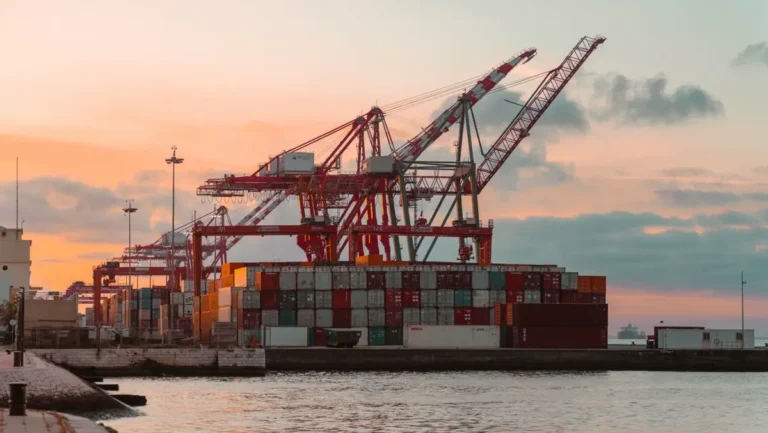
Lines wind down section by section as workers depart. Finishing, packing and loading are squeezed into fewer working days, and inland trucking capacity shrinks at the same time because drivers also go home for the holiday. Ports see a surge of cargo racing to leave China, which is exactly why vessel space tightens in the last weeks before the break. Factories that promised “before CNY” shipment are now making trade-offs about which orders make it — and how fast they are finished.
Reopening: a gradual return to full output
Factories formally reopen after the official holiday, but they do not reopen at full strength. Workers return in batches, new hires need onboarding, and upstream material deliveries restart gradually. First-week output is well below normal, and the first post-holiday production batches deserve extra quality attention because lines are re-finding their rhythm. Any order caught by the holiday should carry extra time in the plan for shutdown, ramp-up and freight backlogs combined, and the factory confirms its closure and restart dates in writing.
How Far in Advance Should You Order Before Chinese New Year 2027?
Chinese New Year 2027 begins on 6 February 2027 (in 2026 it fell on 17 February, which is why the safe windows shift every year — always re-anchor your plan to the actual date). Working backwards from 6 February 2027, custom furniture and building material orders that must ship before the holiday need their deposit paid around four months before the planned pre-holiday sailing — around two months for drawings and around two months for production.
That window assumes samples and finishes are already approved. Custom joinery, doors, windows, stone and FF&E packages have production lead times that the factory confirms in writing, before booking, trucking and export clearance — see the full China sourcing and shipping timeline by project type for normal-season baselines. Items with the longest lead times are the ones most likely to miss the boat: identify those and lock them first.
CNY production planning for China orders therefore runs on three dates: sample sign-off before the order window opens (late September 2026 is the practical deadline, because the October Golden Week eats the first week of October), purchase orders and deposits placed by early November 2026, and cargo on the water by mid-to-late January 2027 — ahead of the final freight crunch.
What if you have already missed the window?
If your order cannot realistically start production by mid-November 2026, plan it as a post-holiday order rather than gambling on a last-minute slot. A realistic post-CNY calendar looks like this: factories reopen in mid-February 2027, reach full output by late February, and fresh production runs through March — which puts new custom orders on the water from late March onwards. That is often the better commercial decision: a planned March shipment beats a rushed January one that arrives with defects, and it lets you negotiate production slots while most buyers are still distracted by the pre-holiday race. The key is to make that call deliberately in October, not by default in January.
Sourcing this for a commercial project?
FBM Sourcing works with project owners, developers, main contractors and FF&E contractors on hotel, apartment, school, office and other commercial building projects. Send us your BOQ, drawings or product list — our team will review it and get back to you.
What Happens to Ocean Freight Before and After the Holiday?
The freight market feels Chinese New Year on both sides of the date. In the final weeks before the holiday, exporters across every industry are pushing cargo out at once: vessel space out of Chinese ports tightens sharply and rates typically rise noticeably during the crunch. Bookings that would normally be routine can be rolled to later sailings, which is fatal for cargo that must leave before the shutdown.
After the holiday the problem reverses. With factories at partial output, carriers cancel scheduled sailings — so-called blank sailings — for several weeks to match reduced volume, which thins the schedule exactly when delayed cargo is trying to catch up. The planning rules that follow: book vessel space earlier than usual for any January 2027 departure, avoid treating the last pre-holiday sailings as a safety net, and if your site schedule allows it, either ship well before the last pre-holiday sailings or accept a post-holiday slot with the ramp-up built into the plan.
The holiday also ripples through to the destination side. Cargo that raced out of China before the holiday arrives in a bunch, weeks later depending on the route, which can overload receiving warehouses and site storage at once. If several containers are converging on one project, stagger the pre-holiday departures across two or three sailings rather than pushing everything onto the last available vessel — it costs nothing in transit time and removes the single-sailing failure point from the plan.
Why the Pre-Holiday Rush Is a Quality Risk Window
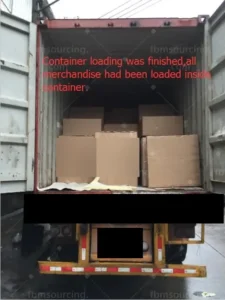
The last production slots before shutdown are the riskiest of the year. Orders finished in the last weeks before closure are produced under maximum time pressure: finishing and curing times get compressed, temporary labour fills gaps left by early departures, and packing is rushed to hit the last trucks. None of this shows up in a photo of a loaded container — it shows up on your job site months later.
This is where an on-the-ground china sourcing agent earns its fee. FBM Sourcing schedules client orders away from the final rush wherever possible, monitors production against the pre-holiday calendar, and verifies goods before they leave: one inspection is carried out by FBM Sourcing’s own team at the factory once bulk production is finished, before shipment, with photo and video records delivered to the client. If an order cannot avoid the rush window, the pre-shipment inspection becomes the single most important checkpoint in the whole timeline. For the wider playbook on protecting both schedule and budget, see how to source building materials from China on time and on budget.
Does Golden Week in October Affect Orders Too?
Yes, on a smaller scale. National Day Golden Week starts on 1 October; the State Council arrangement for 2026 is a 7-day break from 1 to 7 October (in 2025 it merged with Mid-Autumn into 8 days), and many factories close for the full break, some for longer once travel is factored in. The disruption is measured in days rather than weeks — workers largely return on time and upstream supply restarts quickly — but it lands in an awkward spot: right inside the order window for pre-CNY shipment.
Practically, that means October loses working days. Sample approvals, deposits and drawing confirmations planned for early October 2026 should be pulled forward into September, and any order placed in late September should assume production starts after the holiday rather than immediately.
Golden Week is also a useful dress rehearsal. If a factory struggled to restart cleanly after the October break — late deliveries, quality dips on the first batches back — that is a strong signal to keep its Chinese New Year orders well clear of the final rush window and to weight the pre-shipment inspection accordingly.
A Chinese New Year Planning Checklist for Project Buyers
For commercial projects — hotels, apartment buildings, schools, offices, restaurants — the safest approach is to run the holiday backwards from your site dates. The CNY-specific overlay looks like this:
- Lock-order window: for CNY on 6 February 2027, pay the deposit around four months before the planned pre-holiday sailing.
- Sample sign-off deadline: approve samples, finishes and shop drawings before Golden Week, which starts on 1 October.
- Shipping cutoff: book the pre-holiday sailing early, ahead of the vessel-space crunch in the final weeks before the holiday; the carrier confirms the last sailings at booking.
- Backup plan: split critical items into an early shipment, hold buffer quantities of install-critical materials, and pre-agree post-holiday production slots for anything that can wait until March.
Buyers who follow this calendar treat Chinese New Year as a known constraint rather than an annual surprise — and their February and March install schedules survive intact.
Get a China Procurement Quote for Your Project
If your project has deliveries landing anywhere near the first quarter of the year, the time to map your order calendar is now — before the pre-holiday capacity race starts. FBM Sourcing is a China building materials and FF&E procurement agent working with project owners, developers, main contractors and FF&E contractors on commercial building projects, on a 5% commission for suppliers you nominate (products we source for you are quoted at a direct price).
Send us your drawings or BOQ, item quantities, destination port and target timeline, and our team will review how Chinese New Year 2027 intersects with your schedule and build a procurement plan around it. We focus on commercial projects — hotels, apartment buildings, schools, hospitals, offices, government buildings, chain restaurants and similar — rather than single-item retail purchases.