Wall panels and interior finishes made in China can meet US flame-spread requirements, but only when the specific product — the exact core, thickness, facing and adhesive — has been tested to ASTM E84 (UL 723) and achieves the class the International Building Code demands for that room, or has passed the NFPA 286 room-corner test where the code requires it. “Class A” means a flame spread index of 0–25 and a smoke-developed index of 0–450 in the Steiner tunnel; it is a property of a tested assembly, not of a material family, so a factory’s claim that “our WPC panels are Class A” is worth nothing until the report behind it matches what you are ordering. This guide explains which class each part of a US commercial building needs, when NFPA 286 replaces ASTM E84, how Chinese wall panels, acoustic panels, laminates and wallcoverings typically perform, and what a building material sourcing agent and sourcing partner checks before the order is placed.
What Does “Class A Flame Spread” Actually Mean?
The US system for interior wall and ceiling finishes comes from IBC Chapter 8 (Section 803) and NFPA 101 Chapter 10, and both use the same three classes derived from ASTM E84, the Steiner tunnel test. A 24-foot (7.3 m) specimen is mounted on the ceiling of the tunnel, exposed to a gas flame at one end, and the spread of flame and the density of smoke are measured against red oak (index 100) and inorganic cement board (index 0).
- Class A: flame spread index (FSI) 0–25, smoke-developed index (SDI) 0–450.
- Class B: FSI 26–75, SDI 0–450.
- Class C: FSI 76–200, SDI 0–450.
- Anything with FSI above 200 or SDI above 450 is unclassified and cannot be used as an interior finish under the IBC.
- NFPA 101 uses the same indices (Class A/B/C) in its occupancy chapters, which is why hospitals under CMS rules and hotels under the IBC end up with near-identical requirements for exit enclosures.
The smoke-developed cap of 450 applies to every class — a panel with FSI 15 and SDI 600 is not Class A, it is unclassified. That detail catches decorative PVC and some foam-backed products that spread flame slowly but smoke heavily.
Which Class Does Each Area of a US Building Require?
IBC Table 803.13 (Table 803.11 in older editions) sets the minimum class by occupancy group and by three locations: interior exit stairways, ramps and exit passageways; corridors and exit access stairway enclosures; and rooms and enclosed spaces. A fully sprinklered building is allowed one class lower than a non-sprinklered one in most cells. Representative rows for commercial project types — always confirm against the edition and amendments your jurisdiction has adopted:
- Hotels (R-1), offices (B), schools (E), retail (M): sprinklered — Class B in exit enclosures, Class C in corridors and rooms; non-sprinklered — Class A in exits, B in corridors, C in rooms.
- Apartments (R-2): sprinklered — Class C throughout; non-sprinklered — Class B in exits and corridors, C in rooms.
- Hospitals and nursing homes (I-2): sprinklered — Class B in all three locations; non-sprinklered — Class A in exits and corridors, B in rooms.
- Restaurants, bars and assembly spaces (A-2), theatres (A-1): sprinklered — Class B in exits and corridors, C in rooms; non-sprinklered — Class A in exits and corridors, B in rooms.
- Detention (I-3): Class A in exits and corridors even when sprinklered.
Two consequences for a project BOQ. First, a single hotel package typically needs two grades of the same wall panel: a Class A or B product for stair enclosures and corridors, and a Class C product is acceptable inside guest rooms — unless the owner’s brand standard or the AHJ asks for Class A throughout, which is common on healthcare and education work. Second, finishes less than 0.036 inch (0.9 mm) thick applied directly to a non-combustible substrate (paint, thin vinyl wallcovering on gypsum board) are exempt from the classification under IBC 803.2, but a 9 mm WPC slat panel on battens is not.
When Is NFPA 286 Required Instead of ASTM E84?
ASTM E84 was designed for flat, stable materials. For products that melt, drip, delaminate or are installed as a system, the IBC either requires or permits NFPA 286, a full-scale room-corner test in an 8 ft × 12 ft × 8 ft (2.4 × 3.7 × 2.4 m) room where the finish is mounted on the walls and ceiling and exposed to a gas burner at 40 kW for 5 minutes and then 160 kW for 10 minutes. To pass, the product must not let flame spread to the ceiling during the 40 kW exposure, must not reach flashover, must not spread flame to the outer extremity of the sample on any wall or ceiling, must keep peak heat release below 800 kW and total smoke released below 1,000 m². A product that passes NFPA 286 is accepted in place of a Class A rating.
- Required (not optional) for: textile wall and ceiling coverings (IBC 803.5 — NFPA 265 or 286), expanded vinyl wall coverings (803.6), high-density polyethylene and polypropylene panels (803.8), site-fabricated stretch systems (803.9), and foam plastic interior finishes (Chapter 26, Section 2603.9 / 2604), which must also carry a label.
- Permitted as an alternative to E84: any wall or ceiling finish (803.1.2), which is why some manufacturers of fluted MDF and fabric-wrapped acoustic panels test to NFPA 286 to avoid the thickness and mounting disputes that come with E84 on a composite product.
- Laminated products factory-produced with a wood substrate (HPL on MDF, veneer on plywood) may be tested to E84 with the laminate adhered to the substrate it will be sold on (803.11) — the report must name that substrate.
How Do Chinese Wall Panels and Finishes Typically Perform?
Chinese factories supply most of the decorative panel categories used on US hotel, apartment and office interiors. Performance is material-driven and varies inside each category; the figures below are what we see in test reports, not guarantees for any particular factory.
- WPC / PVC fluted wall panels: standard formulations land in Class B or C; flame-retardant grades with higher mineral filler and FR additives reach Class A, usually with SDI in the 200–400 range, so the smoke figure must be read, not just the flame figure. Ask for the report on the same profile and thickness (commonly 9–12 mm).
- PET felt acoustic panels: 9 mm and 12 mm polyester felt (2,000–2,500 g/m²) is routinely tested Class A when an FR grade is specified; non-FR felt can drop to Class B. Our acoustic wall panel sourcing page covers the density and NRC side.
- Wood-slat acoustic panels (veneered MDF slats on PET backing): the weak link is the MDF slat; with standard MDF the assembly is typically Class C, with fire-retardant MDF and an FR lacquer it can reach Class A or B. The report must be on the slat-plus-felt assembly, not on the felt alone.
- High-pressure laminate (HPL) panels: standard HPL on MDF is usually Class B or C; FR-grade HPL (EN 438 “F” grade) on FR-MDF is commonly Class A. See HPL laminate vs wood veneer for hotel casegoods for how the two finishes compare.
- Commercial vinyl wallcovering (Type II, ASTM F793): a mature export product; Class A reports are the norm, but expanded (foamed) vinyl must go to NFPA 286 under 803.6.
- Aluminium composite panel (ACP) and aluminium honeycomb panels: FR-core ACP (mineral-filled core) is Class A; PE-core ACP is not and should never be used as an interior finish in a US commercial building.
- Magnesium oxide (MgO) board and fibre cement decorative boards: non-combustible under ASTM E136 and effectively FSI 0 / SDI 0 — the easy route for Class A backing behind thin decorative layers.
Fire performance is one of several specification checks; the same factories also need to satisfy the broader map of fire rating standards for building materials and finishes when the project spans US and non-US markets.
Sourcing this for a commercial project?
FBM Sourcing works with project owners, developers, main contractors and FF&E contractors on hotel, apartment, school, office and other commercial building projects. Send us your BOQ, drawings or product list — our team will review it and get back to you.
How Do You Verify a Chinese Factory’s E84 or NFPA 286 Report?
A US building official or the project’s fire consultant will accept a report when four things line up: the laboratory, the test method, the specimen, and the date. This is where most “Class A” claims from overseas fall apart.
- Laboratory accreditation: the report should come from a laboratory accredited to ISO/IEC 17025 for ASTM E84 by a recognised accreditation body — in the US typically IAS, A2LA or NVLAP. Some Chinese laboratories hold CNAS accreditation with ASTM E84 in scope; many AHJs accept those reports, some do not, and for a product going into a hospital or school we recommend testing at a US-accredited laboratory unless the AHJ confirms in writing that the Chinese report is acceptable. Factory test reports vs accredited lab testing explains the difference in weight between the two.
- The specimen must be your product: the report identifies the product name, thickness, density, facing, colour/finish system, substrate and adhesive, and the mounting practice used (ASTM E2404 for wallcoverings, E2579 for wood products, E2231 for plastics, E2573 for stretch systems). A report on a 12 mm panel does not cover the 9 mm version; a report on bare MDF does not cover the veneered, lacquered panel you are buying.
- Date and edition: reports older than about five years, or to a superseded edition of E84, tend to be challenged. Ask when the product formulation last changed.
- Listing or labelling where required: foam plastics must carry an approved agency label; textile and expanded vinyl wallcoverings need the NFPA 265/286 evidence attached to the submittal; fire-retardant-treated wood must be labelled per IBC 2303.2. For everything else, the test report in the submittal package is usually sufficient.
- Testing from scratch: if no valid report exists, the factory ships a sample (E84 requires a specimen about 20 in × 24 ft, roughly 0.5 × 7.3 m, in multiple pieces) to the laboratory; allow several weeks for shipping, scheduling and the test before the submittal can be closed — build this into the procurement programme rather than discovering it at shop-drawing stage.
What Should the RFQ and Purchase Order Say?
Write the requirement as a performance line, not a brand name, so that every factory quotes on the same basis: “Interior wall panel, [material], [thickness], Class A per ASTM E84 (FSI ≤ 25, SDI ≤ 450) tested as the supplied assembly, report from an ISO 17025-accredited laboratory dated within 5 years, or passing NFPA 286; submittal to include test report, product data sheet and SDS.” Add the location split from Table 803.13 so the factory can quote the FR grade only where it is needed, and the installation method (battens, direct adhesion, clip system) because the mounting changes the test result. A wall panel sourcing brief that carries these lines gets comparable quotations; one that says “Class A fire rated” in a single cell does not.
How FBM Sourcing Handles Flame-Spread Compliance on a US Package
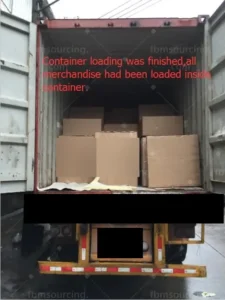
FBM Sourcing manages the entire China procurement package for overseas construction projects. On a US hotel, apartment, school or healthcare package we start from the code table, not the catalogue: the interior finish schedule is sorted into Class A / B / C locations and into products that fall under NFPA 286, so each line carries the grade it actually needs. Factories are shortlisted on whether they hold a current accredited report for the exact product, and the report is checked against the specification before the order is confirmed. Where a report is missing, we arrange sample testing early so the submittal is not what delays production. Before shipment our own team inspects the goods at the factory — product identification, thickness, labels and packaging — with photo and video records before shipment, and the compliance documents are compiled with the shipping set. All quotations, invoices and shipping documents are issued by FBM Sourcing — you deal with us, and we carry the responsibility. For suppliers you nominate, we charge a 5% commission; for products we source for you, we quote a direct price. We ship by full container: on a large project the wall panels alone can fill several containers, and on a smaller one they are consolidated with other categories from the same project.
Where the wall finish is a covering rather than a rigid panel, see wallcovering and commercial wallpaper manufacturers in China — the supplier types, the durability classes and the certificates that have to match the product actually being quoted.
Get a China Procurement Quote for Your Project
If you are specifying wall panels, acoustic panels, laminates or wallcoverings for a US hotel, apartment, office, school or healthcare project and want the flame-spread documentation managed as part of the full package, send us the finish schedule with locations, quantities, the destination port and the required-on-site dates. Our team will review the package line by line and set out a quotation.
Use the quote button above or WhatsApp +86 135 6007 5057 to start the conversation.