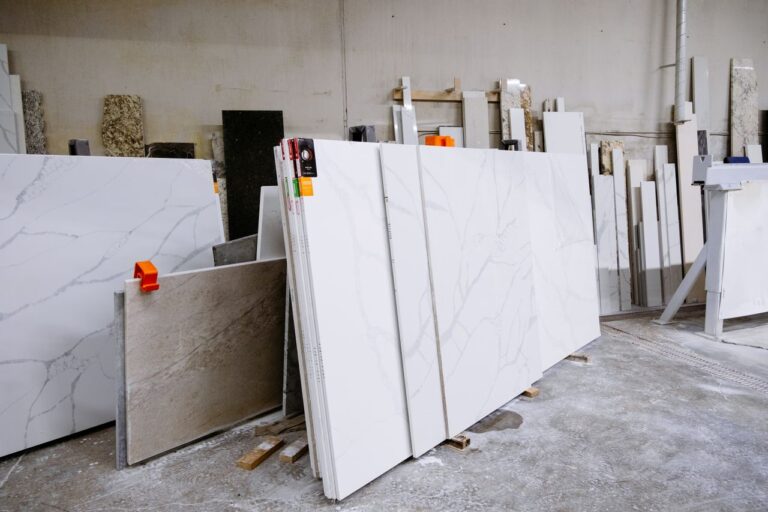
The Foshan building material market is where a large share of the world’s commercial construction materials are specified, priced and bought — the densest concentration of Foshan building materials showrooms, factories and export services anywhere in China. If you are a developer, main contractor or FF&E contractor planning a hotel, apartment building, school or office project, there is a good chance the tiles, doors, windows, cabinets and sanitary ware in your BOQ are already being produced in and around Foshan. This guide explains how the market districts are organised, how showroom pricing really works, and how project buyers turn a market visit into signed supply contracts and loaded containers. On projects like this, FBM Sourcing works as your dedicated sourcing partner.
Foshan is not one market. It is a cluster of specialised trading districts spread across a manufacturing city of nine million people in Guangdong province, next to Guangzhou. Each district concentrates one product family, backed by hundreds of factories in the surrounding towns. For a project buyer, that concentration is the whole point: you can compare many tile factories’ commercial ranges in one district, something that would otherwise take a long series of factory visits.
Buying materials from Foshan for a project?
Send your BOQ or product list with quantities and the destination, and our team will review it and get back to you.
What the Foshan Building Materials Districts Actually Cover
Understanding the geography saves time on the ground. The Foshan building materials trade is organised by product family, and the districts sit far enough apart that a badly planned itinerary wastes much of every day in traffic. Here is how commercial project buyers should map the city.
Ceramics: Tiles, Slabs and Wall Coverings
Foshan produces a significant share of China’s ceramic tile output, and the trading side of the industry is anchored by large ceramics trading complexes such as China Ceramics City and the Huaxia ceramics trading area. These are not retail malls. Most showrooms here are trading companies that sell a package, and some belong to factories; the ranges on display include 600×600 and 800×800 porcelain for apartment flooring, large-format sintered slabs for hotel lobbies and reception counters, outdoor 20mm pavers, and wall tile programmes for bathrooms and commercial kitchens. Ask each showroom for project-specific documentation — slip ratings, water absorption, breaking strength — which matters when your specification references ISO 10545 or ANSI standards. For a deeper look at how factory selection works in this category, see our guide to sourcing from china tile manufacturers for building projects.
Doors, Windows and Aluminium Systems
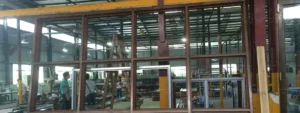
The Dali area of Foshan’s Nanhai district is an aluminium profile production base. Around it sits a trade ecosystem for aluminium windows, doors, curtain wall components, balustrades and shopfront systems. Project buyers come here for thermally broken window systems for European and Australian projects, fire-rated door sets for hotels and student accommodation, and custom aluminium fabrication for facades. Timber and composite door factories are also found in the surrounding towns; ask each one which parts of a hotel door package it supplies — hardware, seals and fire certification — and who holds the certificates.
Sanitary Ware, Kitchen Cabinets and Interior Finishes
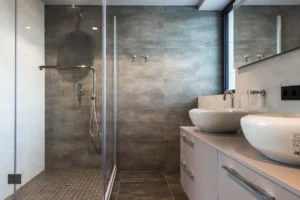
Foshan and neighbouring Chaozhou dominate Chinese sanitary ware production. In the Foshan showrooms you will find complete bathroom packages — wall-hung toilets, shower enclosures, freestanding tubs, vanity programmes — aimed at hotel and multi-unit residential projects. Kitchen and wardrobe cabinet factories concentrate in Foshan’s Shunde district, where whole-project cabinetry is quoted directly from your architectural drawings. Flooring, wall panels, stainless steel fabrication and lighting round out the districts, meaning a mixed BOQ for an entire building can genuinely be covered inside one city. Our guide to sanitary ware from China covers the certification questions for that category in detail.
Lighting, Stainless Steel, Stone and the Rest of the BOQ
Beyond the headline categories, the wider Foshan trade area also covers several of the remaining lines on a commercial BOQ. Stainless steel fabrication — balustrades, kitchen benching, decorative screens, lift cladding — is found in the Lanshi area; ask each factory to work from your shop drawings. Decorative and architectural lighting showrooms serve hotel and office projects locally, drawing on the giant lighting manufacturing base at Guzhen in neighbouring Zhongshan. Stone and marble processing is split between Foshan yards and the larger stone trading centres around Guangzhou, and engineered timber flooring, WPC decking and wall panel suppliers trade alongside the ceramics districts. The practical consequence: a hotel or apartment project can place several lines of its material scope within this one region, and consolidating those lines into shared containers is one reason buyers look at Foshan; whether it suits your BOQ depends on the product mix.
How Project Buyers Should Plan a Foshan Market Trip
Before You Fly: BOQ First, Shortlist Second
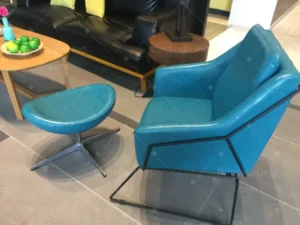
The buyers who get the most out of the Foshan building material market arrive with a quantified BOQ, drawings and a target specification for each category — not a general intention to “look at materials.” Send square-metre quantities, door schedules and delivery timelines so that each showroom can quote against them. Before travelling, decide which categories justify face-to-face selection (tiles, stone and cabinets, where surface finish matters) and which can be handled by sample shipments (hardware, accessories). For a mixed-material project, plan the itinerary by district; the trip can be combined with the furniture districts covered in our Foshan furniture market guide.
On the Ground: Showrooms Are the Front Door, Not the Factory
Most showrooms in the Foshan building material and furniture markets are trading companies that sell a package, with the products made by several different factories. Some showrooms do belong to factories, but a factory showroom shows the line it makes itself alongside other lines it trades from other makers. The showroom is where you compare ranges and negotiate; it does not show who actually makes each item, and the factory behind each item is where your order is made. If you cannot verify the factory yourself, that verification step is exactly what a Foshan sourcing agent performs on your behalf.
Timing: Trade Seasons, Chinese New Year and Your Site Programme
Two calendar facts shape every Foshan procurement plan. The first is Chinese New Year, falling in January or February, when factories close for the holiday, with closure dates confirmed by each factory, and the weeks either side are consumed by pre-holiday production rushes and post-holiday workforce ramp-up. Orders that must ship in the first quarter need deposits placed well before the holiday. The second is production lead time itself: for custom building material packages — windows made to your openings, doors to your schedule, cabinets to your drawings — the lead time from confirmed specification to ex-factory is confirmed by the factory in writing for each order, before ocean freight. Working backwards from your site installation dates, the market visit therefore belongs months before materials are needed on site, not weeks: please plan for about four months between deposit and shipment, plus ocean freight. Arriving with that runway leaves room to plan the order and ship by sea; arriving late can mean expediting and air-freighting small items that should have travelled by sea.
Sourcing this for a commercial project?
FBM Sourcing works with developers, main contractors and FF&E contractors buying from Foshan for hotel, apartment, school and office projects. Send us your BOQ or product list for the Foshan categories you are buying, and our team will review it. See how we work as a Foshan sourcing agent on multi-category packages.
How a Building Material Sourcing Agent Turns Market Visits into Delivered Containers
Selecting products in Foshan showrooms is the enjoyable part of procurement. The commercial risk sits in everything that happens after you fly home: contract terms, technical confirmation, production monitoring, inspection and consolidation. This is where a building material sourcing agent earns its fee on a commercial project.
First, specification locking. A showroom quotation may not be a complete technical document. Before any deposit is paid, each item needs a signed specification sheet — dimensions, material grades, finishes, hardware brands, certification requirements and packing method — because “same as the showroom sample” is not an enforceable standard once production is under way. A sourcing agent can convert your selections into a specification pack for each factory, and the approved sample becomes the reference for bulk production and for the inspection.
Second, factory verification and payment protection. Your agent confirms that the company on the contract is the actual manufacturer, checks its export licence and production capacity, and structures payment terms so that money is never released ahead of verified progress.
Third, pre-shipment inspection. Building material orders fail in predictable ways: tile batches with shade variation between production runs, window frames with incorrect thermal breaks, cabinet carcasses in a lower-grade board than quoted. A formal pre-shipment inspection against the sealed samples catches these while they can still be reworked.
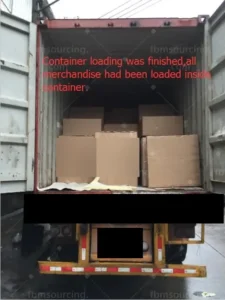
Fourth, consolidation. A mixed project order from eight Foshan factories has eight different production finish dates. A sourcing agent books consolidated warehousing, schedules trucking as each factory completes, plans the container loading sequence around the site installation programme, and manages export documentation as one shipment. For a typical mid-size hotel or villa project, that consolidation alone is the difference between four clean containers and a logistics headache spread across several sailings.
How Do You Get a Foshan Building Materials Price List?
Project buyers raise this request, and the honest answer is that a single “Foshan price list” is not a quotation for your project. What exists is a showroom number, and a showroom number is not a quotation. Understanding the difference saves an entire round of wasted enquiry.
A showroom figure is quoted for an unspecified quantity, an unspecified specification, an unspecified packing standard and an unspecified delivery term. Change any one of those and the figure changes. It is a starting point for a conversation, not a basis for a budget.
A price list that a project buyer can actually build a budget on has to state, for every line:
- The exact specification — material, thickness or gauge, finish, and the standard it is tested against where one applies.
- The quantity the price is based on — unit pricing moves with volume, and a figure without a quantity behind it means nothing.
- The delivery term — whether the figure is ex-works, FOB or delivered changes what is included by a wide margin.
- What packing is included — export packing is not the default in a domestic showroom quote, and it is not free.
- How long the figure holds — raw material movement makes an undated price list unusable within a season.
The practical route to a usable list is the reverse of asking for a catalogue of prices. Rather than asking for a catalogue of prices and then trying to match items to your project, send the schedule or BOQ first and have the list built against it. That produces comparable numbers for the items you are actually buying, on one set of terms, in one currency, valid for a stated period.
If you have a schedule or BOQ ready, send it through our project procurement enquiry page and we will come back to you with a list built against your actual scope.
Showroom Prices, MOQs and Common Mistakes at the Foshan Building Material Market
Three commercial points are worth settling before your first visit. First, a showroom list price is a starting position, not a quotation for your project; ask for a quotation against your quantities, specifications and timeline. Second, ask each showroom or factory for its minimum order quantity and how it quotes for your category — per square metre, per door schedule or per container — and whether it will bundle several categories; custom items may carry minimums of their own. Third, ask for batch consistency in writing for ceramics and finishes: tiles for one project should come from a single production run, and cabinet finishes should be sprayed from one paint batch, because matching a shade on a later reorder can be difficult. Finally, the costliest mistakes are not price mistakes. They are unverified factories, unsigned specifications and skipped inspections — problems that surface after the goods land on your site, when rework means another round trip by sea.
It is also worth deciding early whether Foshan is the right base for your whole BOQ or only part of it. Foshan can be a base for ceramics, doors, windows, cabinets, sanitary ware and furniture; for some specialist categories another region may suit better. Our comparison of Foshan vs Guangzhou vs Yiwu breaks down which sourcing base fits which product mix.
What Project Buyers Should Plan Differently in 2026
Four things change how a Foshan building material market trip is planned in 2026, and none of them are visible from the showroom floor:
- Destination conformity now sits at the front of the process. Saudi and Gulf projects need SASO/SABER or UAE conformity documents arranged before shipment (see SASO/SABER for building materials and ESMA and UAE conformity requirements); US projects need CARB/TSCA on composite wood and current anti-dumping scope checks on cabinets, quartz and flooring (US anti-dumping duties explained). Ask about the paperwork before you ask about the price.
- Test reports are read, not collected. A showroom certificate is a starting point; the sample description on the report must match the item you are buying, and project-specific tests may need a fresh accredited-lab report (factory test reports vs accredited lab testing).
- The programme buffer is a schedule item. Between approved samples and goods on site, allow the six-stage buffer described in what lead-time buffer a construction schedule should allow, and treat the Chinese New Year shutdown as a hard exclusion, with closure dates confirmed by each factory (Chinese New Year and production schedules).
- Packing is specified, not assumed. Tiles, glass and doors leave Foshan on ISPM 15 crates and pallets with a written packing spec in the RFQ (export packing standards for project orders); the market price of a tile is not the landed price of a tile.
FBM Sourcing manages the entire China procurement package for overseas construction projects; a market trip is one input to that package, not the package itself.
Get a China Procurement Quote for Your Project
FBM Sourcing is a sourcing agent for commercial construction projects, based in Guangzhou, one hour from Foshan. We walk the Foshan building material market with project buyers, verify the factories behind the showrooms, lock specifications, run pre-shipment QC with our own team, and consolidate mixed orders into clean container shipments for hotels, apartment buildings, schools, offices and other commercial developments in the USA, Australia, Europe and the Caribbean.
If you have an active project, send us your drawings, BOQ or product list together with your destination port and target timeline, and our team will review it and get back to you — including whether a market visit is worth your time or whether we can run the whole selection remotely with samples and video walkthroughs. Start on our China building materials and FF&E procurement page.
Before comparing a China quotation against a local supplier, see is it cheaper to buy building materials from China? Cost structure and landed cost explained for what actually sits inside the factory price versus what gets added on top.
Most of the showrooms in these districts sell a package rather than manufacture one — see Foshan one-stop suppliers: trading package or factory-direct for what Foshan actually makes, the five business types a project buyer meets there, and how the two kinds of quotation differ on paper.
Related reading
Related reading: Top paint & coating manufacturers in China