When a Chinese factory misses its production deadline on a project order, what happens next is decided by three things that were settled — or not — before the order was placed: whether the contract defines the delivery date, the remedy and the cap; whether anyone was measuring progress against milestones early enough to see the slip coming; and whether the buyer has kept enough commercial leverage — the inspection gate before loading, the documents, the next order — to make the remedy real. In practice a delay is rarely a single event on the due date; it is a series of smaller slips — a late material delivery, a subcontracted component behind schedule, a sample approval that took longer than planned — that surface as a missed ex-factory date only when nobody was watching the intermediate steps. The recovery options are re-sequencing production so the site-critical lines ship first, shipping the completed portion in a full container with the balance to follow, rebooking the vessel, and in the extreme case moving critical items by air at the party’s cost who caused the delay; the remedy for the cost of all that is whatever the contract says, which is why the contract is where this article starts. That is the role FBM Sourcing plays as a sourcing agent and sourcing partner on projects like this.
Why Do Chinese Factories Miss Project Deadlines?
Understanding the cause matters, because the recovery and the liability differ. On project orders sourced from China, the causes fall into a short list:
- Late inputs from the buyer’s side: drawings approved late, finish samples signed off late, a design change after production started, or an order confirmed after the quoted production slot has been given to someone else. Under most contracts these move the delivery date and are the buyer’s delay, not the factory’s.
- Raw material and component lead times: a specific fabric, a low-E glass, an imported hinge, a stone block — ordered by the factory after order confirmation, and arriving later than the factory assumed. The factory owns this, but the buyer feels it.
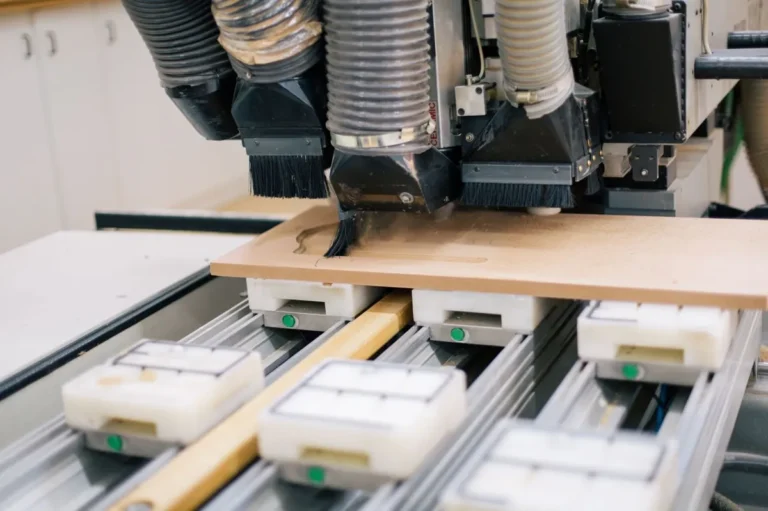
- Subcontracted operations: upholstery, powder coating, glass tempering, stone cutting and CNC work are often subcontracted; the factory’s own schedule may be on time while the subcontractor’s is not.
- Capacity overbooking: a factory that quoted a lead time in a quiet month accepts more orders and now needs longer. Common in the run-up to Chinese New Year and in the September–November peak.
- Calendar events: Chinese New Year (factory closure, worker return and restart, with dates confirmed by each factory), the National Day holiday in early October, and regional power-rationing episodes. Our guide to how Chinese New Year affects factory production and shipping covers the calendar in detail.
- Quality failure at inspection: a pre-shipment inspection finds defects and the rework pushes the loading date; the container misses its vessel. This is a factory delay, and it is far better than the alternative of shipping the defects.
The first category is the one that causes the most disputes, because the factory will say — often correctly — that the clock only started when the last approval was received. A project team that wants to hold a factory to a date has to hold itself to the approval dates first.
What Should the Contract Say About Delivery and Delay?
A purchase order that states only a number of days for delivery leaves every important question open. A contract that will actually work when a delay happens defines:
- The clock: the event that starts the lead time (order confirmation, approved shop drawings and signed finish samples, all three), and the event that ends it (goods complete, inspected and packed, ready for container loading at the factory — not “shipped”, which depends on vessel space the factory does not control).
- Buyer-side dependencies: a schedule of what the buyer must approve and by when, with the rule that a late approval moves the ex-factory date day for day.
- Grace and notice: a short grace period agreed in writing, and an obligation on the factory to notify in writing as soon as it knows a date is at risk, with the new date and the cause.
- The remedy: liquidated damages at a fixed percentage of the value of the late portion per week, subject to a cap. The rate per week of delay and the cap are negotiated contract by contract; set them at a level the factory will actually sign and that can be deducted in practice. Beyond the cap the buyer’s remedy is termination of the undelivered portion.
- Partial delivery: whether the buyer may require the completed portion to ship in a full container ahead of the balance, and who pays the second container’s freight when the split was caused by the factory.
- Force majeure: a defined list, a notice obligation, and — importantly — a statement that ordinary holidays, ordinary material lead times and the factory’s own capacity are not force majeure.
The mechanics of getting these clauses accepted are in contract terms that protect project buyers on China orders. The single most effective term is not the penalty percentage; it is an inspection gate before loading — nothing is released to the container until our own team has passed it — because that is the point at which the factory has every reason to finish and none to argue.
How Do You See a Delay Coming Before the Due Date?
A missed deadline discovered on the deadline is a failure of monitoring as much as of production. Project orders are long enough — production takes about two months on most custom orders — that a slip is visible well ahead if someone is looking at the right things:
- Material-in date: the day the critical raw materials and bought-in components arrive at the factory. If an order’s fabric, glass or hardware has not arrived at the factory early in the production window, the date is already at risk.
- Percentage complete by line, not by order: a factory that reports “80% complete” may have finished the easy lines and not started the difficult one the site needs first.
- Packing start: if packing for a full-container order has not started in good time before the loading date, loading will move.
- Vessel booking and cut-off: the container yard cut-off is set by the carrier on the booking; missing it means waiting for the next sailing.
Written weekly progress reports with dated photographs against those milestones — not a phone call that says “no problem” — are how a project team keeps the option to act. What a good report contains, and how to read one, is set out in production progress reports from Chinese factories.
Sourcing this for a commercial project?
FBM Sourcing works with project owners, developers, main contractors and FF&E contractors on hotel, apartment, school, office and other commercial building projects. Send us your BOQ, drawings or product list — our team will review it and get back to you.
What Are the Recovery Options Once a Date Has Slipped?
When the slip is confirmed, the objective changes from “hold the date” to “protect the site programme at the lowest total cost”. The options, roughly in the order they should be considered:
1. Re-sequence production to the site’s critical path
Not every line on a project order is needed on the same day. If the site can install guest-room casegoods before restaurant seating, or fix windows before doors, the factory can be directed to complete and pack the critical lines first. This costs nothing if it is done early and is the most common real-world fix.
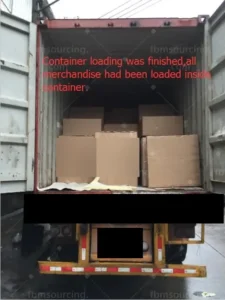
2. Ship the completed portion in a full container; balance follows
Where the completed lines fill a container, they ship on the original booking and the balance follows on the next available sailing. FBM Sourcing always ships by full container; on a delayed order that means grouping the finished lines — and, where useful, other categories from the same project that are ready — into one full box rather than sending part of an order as loose freight. The freight for the second container is a cost the contract should have assigned. Where the finished portion is short of a container, the alternative is to hold it at the factory and ship everything together on the recovered date; see holding stock at the factory for staggered delivery.
3. Rebook the vessel and manage the port side
A recovered ex-factory date needs a new booking, and on busy lanes the next available sailing may not be soon. The container should not be pulled from the depot until the cargo is genuinely ready, because a box sitting loaded at the factory or the terminal accrues demurrage and detention quickly — typically 3–7 free days at origin before charges start. Our note on demurrage and detention charges and how to avoid them covers the free-time mechanics.
4. Air freight the truly critical items
For a small, high-value, site-critical subset — hardware, a lobby feature, the sample rooms’ worth of casegoods for a hotel opening — air freight can save a programme. It is expensive per kilogram and impractical for bulky furniture, and it should be charged to whichever party caused the delay under the contract. It is a last resort, not a plan.
5. Substitute or re-source a line
If one line is the problem and its factory cannot recover, the same specification can sometimes be placed with a second factory in the same cluster. This works for standard items (chairs, tiles, sanitary ware) and rarely for custom joinery or made-to-measure windows, where the tooling and drawings would have to be redone. The decision turns on lead time, not price.
Who Pays for a Delay, and What Can Actually Be Recovered?
A project team should be realistic about recovery. Liquidated damages at a weekly rate up to a cap are a real remedy on a large order when they are agreed in writing and applied at the point the order is closed out; they are not a mechanism for recovering the site’s own delay costs, which will usually exceed the cap. Enforcement against a Chinese factory after the goods have shipped and the order is closed is slow and expensive; a remedy applied while the order is still open is immediate. That is the practical reason for settling the delay terms before the order is placed rather than at the destination. Where the buyer caused the delay through late approvals or a design change, the factory will not accept damages and should not be expected to; the recovery options in the previous section still apply, but their cost sits with the buyer. On what a mid-production change does to the date, see design changes after production has started.
How Much Buffer Should a Project Programme Carry on a China Order?
The single most effective protection against a factory delay is a programme that does not need the container to sail on the exact day the factory promised. Working figures FBM Sourcing uses when planning project orders:
- Between the factory’s stated ex-factory date and the vessel cut-off: a buffer, larger for custom furniture, joinery and windows than for standard products.
- Between the scheduled arrival at the destination port and the date the site needs the goods: a buffer to absorb port congestion, customs examination and inland haulage.
- Around Chinese New Year: place orders so that production is complete and packed before the factory closes, or plan on the goods being made after the restart and ramp-up, with dates confirmed by the factory.
- Ocean transit is a fixed input, not a buffer: transit time is confirmed by the carrier at booking.
Buffer is cheaper than any recovery option on this page. A programme that has it can accept a slip on a secondary line without anyone on site noticing; a programme without it turns the same slip into an air-freight bill.
How FBM Sourcing Handles Production Deadlines on Project Orders
FBM Sourcing manages the entire China procurement package for overseas construction projects, and the production schedule is part of what we manage rather than something we report on after the fact. Before an order is placed, the lead time is checked against the factory’s current loading and the calendar, the buyer’s approval dates are written into the schedule, and the delivery, notice, damages and partial-shipment terms are agreed in the purchase order. During production, our own team follows up material-in dates and percentage complete by line, and reports in writing with dated photographs, so a slip is visible weeks ahead rather than on the due date. Where a slip appears, we re-sequence to the site’s critical path, group finished lines and other ready categories from the same project into full containers, and manage the vessel and depot side so recovery does not create demurrage. Inspection is carried out once by FBM Sourcing’s own team at the factory when production is finished, with photo and video records delivered before shipment.
All quotations, invoices and shipping documents are issued by FBM Sourcing — you deal with us, and we carry the responsibility. For suppliers you nominate, we charge a 5% commission; for products we source for you, we quote a direct price. As a china sourcing agent responsible for the whole package rather than a single factory, we keep the inspection gate before loading — which is the leverage that makes every clause above enforceable in practice.
Get a China Procurement Quote for Your Project
If you are planning a hotel, apartment, school, office or retail project with a fixed opening date and want the China production schedule managed as part of the full procurement package, send us the BOQ or product schedule, the quantities, the destination port and the required-on-site dates. Our team will review the package, set out a realistic production and shipping programme with the buffers above, and provide a quotation.
Use the quote button above or WhatsApp +86 135 6007 5057 to start the conversation.
To reduce the risk of a schedule mismatch like this in the first place, see how to build a delivery schedule around construction milestones instead of a fixed date.