Design changes after production has started are handled through a formal change order: the request goes to the factory in writing, the factory confirms exactly what stage each affected item has reached, re-quotes the cost and lead-time impact, and production resumes only after revised shop drawings are signed again. How much the change costs depends almost entirely on where the order sits against four cut-off points — material release, cutting, finishing, and packing. A revision that is nearly free before cutting can amount to remaking the item once material has been machined. As your China sourcing partner, FBM Sourcing manages this end-to-end.
We manage change orders at China factories on commercial furniture and building material packages every month, usually because a hotel operator revised the room mix, a tenant changed the layout, or site conditions turned out different from the drawings. This is what the process looks like when it is run properly — and what it costs when it is not.
The Four Cut-Off Points That Decide What a Change Costs
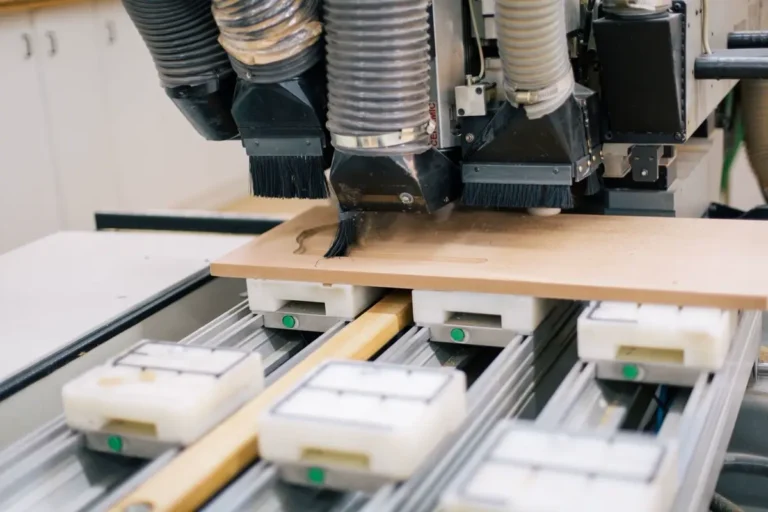
Factories do not price changes by how minor they sound; they price them by how much completed work gets thrown away. On a custom FF&E production cycle, panel cutting and frame machining are usually finished early in the run, which means the cheap window for revising specifications on a China order closes much earlier than most project teams expect.
| Cut-off point | What has already happened | Change feasibility | Cost exposure |
|---|---|---|---|
| 1. Before material release | Materials ordered, nothing cut | Almost any change possible | Low — possible restocking charge on special-order fabric, stone or veneer |
| 2. After cutting / machining | Panels, frames and parts cut to final size | Finish and hardware changes still open; dimension changes mean re-cutting | Medium to high — consumed material is not recoverable |
| 3. After finishing | Spray coats, veneer, plating or upholstery applied | Only strip-and-refinish or remake | High — labour and finishing materials both lost |
| 4. After packing | Cartons sealed, crates built, container booked | Unpack, rework, re-inspect, repack | Highest — rework cost plus real risk of losing the vessel booking |
The first question we put to a factory when a client raises a change is never “can you do it” — a factory will almost always say yes. The question is “which cut-off point has each affected item passed,” verified on the floor, not from the factory’s schedule sheet. Schedule sheets are optimistic; the stack of cut panels next to the CNC machine is not.
Which Design Changes Are Cheap — and Which Ones Mean Remaking the Item?
Some revisions ride through mid-production with barely a ripple. Others quietly turn into a second order for the same item.
Usually cheap if caught before cutting
Fabric or finish colour swaps cost little while the material is still on the roll or in the drum. Changing an upholstery colourway before the fabric is cut is mostly an administrative exercise plus a possible restocking fee; after cutting, that fabric is consumed and the new fabric is bought twice. The same logic covers laminate colours, paint codes and stain tones — but note that a new finish still needs a physical sample signed off, and a finish sample takes the factory time to produce and ship for approval, the same loop described in our note on the sample approval process for China sourcing.
Usually manageable at any stage
Hardware substitutions — hinges, drawer runners, leg glides, control plates — are normally bolt-on items fitted late in assembly, so they survive mid-production changes on custom FF&E better than anything structural. The caveat is drilling patterns: if the new hinge needs a different bore layout on an already-machined door, you are back in remake territory.
Effectively a remake
Dimensional changes after cutting are the classic case. A wardrobe carcass cut at 600 mm deep cannot become 650 mm deep; those panels become offcuts and the affected components are re-cut from fresh board. Changes to anything produced from a die or mould — extruded aluminium profiles, die-cast fittings, moulded shells — are worse still, because a replacement mould or die has to be machined and trialled before the first revised part exists; we cover the mechanics in sample, mold and tooling costs in China sourcing. If a dimension change is driven by site conditions, re-verify the opening before confirming the ECO — the process in our guide to site measurement for custom joinery production exists precisely so a second change order does not follow the first.
What Does a Proper Change Order Process Look Like?
Change orders at a China factory fail in predictable ways: verbal instructions through a salesperson, no re-quote before work resumes, and no revised drawings — so the factory builds a hybrid of old and new specifications. The sequence that prevents this is short:
- Written ECO — one document naming the affected item codes, the exact revision, and the drawing references it supersedes. No WeChat voice notes.
- Same-day stage verification — confirm on the factory floor which cut-off point each affected item has passed, with photos, before anyone prices anything.
- Factory re-quote covering both cost and lead time — a rework price without a revised completion date is half an answer, and the missing half is usually the expensive one.
- Revised shop drawings, re-signed — the change only exists once it is on a signed drawing; ask the factory to confirm in writing when revised drawings will come back; the re-approval loop follows the same rhythm as the original shop drawing approval cycle at China factories.
- Formal re-release — production resumes against the revised drawing set and a written new completion date, and the old drawings are marked void.
The discipline matters most on multi-item packages. If a project revises 12 of 200 line items, the ECO must also state, explicitly, that the other 188 continue unchanged — otherwise cautious factories stop the whole order to wait for clarity, and you have converted a 12-item change into a 200-item delay.
Sourcing this for a commercial project?
FBM Sourcing works with project owners, developers, main contractors and FF&E contractors on hotel, apartment, school, office and other commercial building projects. Send us your BOQ, drawings or product list — our team will review it and get back to you.
How Do Mid-Production Changes Affect Your Delivery Date?
The rework days are only the visible part of the delay. The larger effect is scheduling: a factory running multiple projects fills the slot your order vacated, so reworked items re-enter the queue rather than resuming where they stopped. A change quoted as a few days of rework can surface as a much longer slip on the completion date once re-slotting is counted — which is exactly why the ECO must carry a written revised completion date, not a verbal estimate.
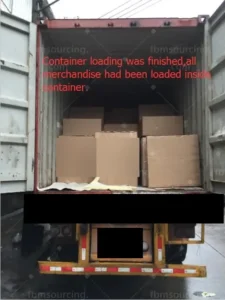
Then the delay compounds at the port. Most China export routes to North America, Europe, the Middle East and Australia run on fixed sailing schedules, so a missed vessel pushes departure back to the next sailing — and container yard cut-offs fall before the vessel departs, on dates the carrier sets at booking, so the goods must be finished, inspected and trucked well before the sailing date itself. A short overrun at the factory can therefore become a much longer slip at destination.
When a change affects only part of a consolidated order, there is a real decision to make. If the changed items are only a fraction of a container, the options are to hold the full container until the rework clears, or ship the unaffected volume on the original booking and consolidate the changed items into a later container. For projects with a fixed fit-out sequence — casegoods needed before soft seating, tiles before joinery — shipping the unaffected items on time is usually the right call, and the split should be decided when the ECO is signed, not at the wharf.
Where a Sourcing Agent Earns Its Fee During a Change
A design change is exactly the moment a remote buyer is weakest: everything now depends on facts inside the workshop that you cannot see. This is the working case for having a china sourcing agent on the ground rather than managing the order by email, and it is what a 5% commission for suppliers you nominate (products we source for you are quoted at a direct price) actually buys during mid-production changes on custom FF&E:
Stage verification on the floor. When the change request lands, someone walks the floor and photographs the actual state of each affected item. Factories quoting rework have an incentive to describe items as further along than they are; dated photos remove the argument.
A continuous evidence file. Because we photograph and film production progressively, there is a dated record of what was built to which drawing revision. When a dispute arises over whether the factory deviated from the signed drawings or the client changed the specification, that file settles it in minutes. The same records anchor the final pre-shipment check — every order is inspected before shipment by our own team, with photo and video records.
Negotiating the cost split. Rework pricing is not a menu; it is a negotiation over consumed material, labour and re-slotting. An agent who places repeat project volume with the factory negotiates that from a very different position than a one-order buyer, and pushes back when a quote silently reprices unaffected items.
Protecting the rest of the order. Someone has to make sure the 188 unchanged line items keep moving, the booking is amended before it lapses, and the revised drawings actually reach the workshop floor — not just the sales office.
How to Prepare Your Contract for Design Changes Before They Happen
The cheapest change order is the one whose rules were agreed before production started. Four provisions do most of the work:
A written-change clause. All changes via written ECO referencing drawing numbers; verbal or chat instructions have no contractual effect. This protects both sides equally.
A cut-off schedule as an annex. Attach the four-stage table above to the order with dates against each stage for each product group, so “too late to change the fabric” is a date on a signed document rather than an argument.
Re-quote-before-resume. The factory may not perform change work until the revised price and completion date are accepted in writing. This clause is what prevents the surprise invoice at balance payment. Under the standard deposit-and-balance structure for custom orders, agreed change costs are settled with the balance — never paid loose in cash against a verbal figure.
An ownership rule for rework costs. Client-origin changes are for the client’s account; factory deviation from signed drawings is for the factory’s account. Written plainly in advance, this single sentence removes most of the heat from mid-production disputes.
Get a China Procurement Quote for Your Project
If your project is heading into production — or a design revision has just landed in the middle of it — we can tell you quickly what is still changeable, what is not, and how to sequence the change without losing your shipping window. FBM Sourcing manages custom furniture and building material orders for hotels, apartment buildings, schools, offices and other commercial developments, from shop drawings through production, pre-shipment inspection and export. Submit your drawings, quantities, destination port and timeline through the quote form or WhatsApp above, and our team will review your package and come back to you with a workable plan.