Six contract areas do the real protective work in china procurement contract terms: a specification freeze tied to approved drawings and control samples, a clearly defined lead-time clock with delay remedies, quality and rework obligations, tooling ownership, raw-material and currency clauses, and a dispute-resolution mechanism you would actually use. Get these six right and most disputes never become disputes — because the contract removes the ambiguity that arguments feed on. Below is the clause-by-clause checklist we apply on commercial building projects, written from the buyer’s side of the table. FBM Sourcing acts as your sourcing partner from specification through to shipment.
1. Specification Freeze: Approved Drawings and Control Samples as Contract Annexes
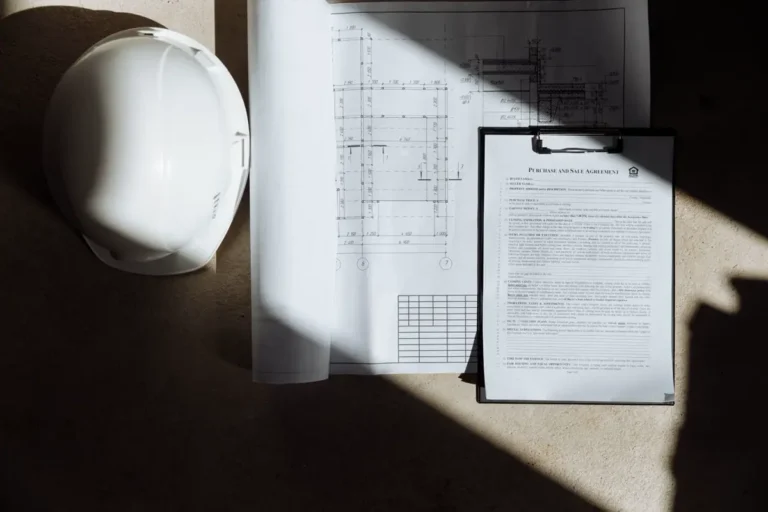
The single most valuable clause in a project purchase contract is the one that defines what “conforming goods” means. The mechanism is a specification freeze: the approved shop drawings and a signed, sealed control sample are listed as contract annexes, and the goods are accepted or rejected against them — not against a catalogue photo or a verbal description.
The freeze only works if the acceptance criteria are measurable. A workable annex for a casegoods or joinery package states numbers a QC checklist can verify:
- Colour and finish: deviation from the control sample within ΔE ≤ 3.0 under a standard light source, verified panel against panel
- Timber and board moisture content: 8–12% at inspection, measured with a calibrated meter
- Hardware durability: drawer runners and hinges specified to a cycle count, commonly 50,000 open-close cycles for drawer slides on contract-grade casegoods
- Dimensional tolerance: typically ±2 mm on cabinet carcasses and worktop lengths
For hospitality and multi-unit residential buildings, the control sample is usually a full mock-up unit or model room signed off before bulk production. Write into the contract that bulk production may not start until the mock-up is approved in writing — otherwise “we already started cutting” becomes the factory’s answer to every change request.
2. Lead Time Clauses: When Does the Clock Actually Start?
Here is the trap that catches more project buyers than any other: the contract states a production lead time in days, and the buyer books installation crews from the signing date. But nearly every Chinese manufacturing contract starts the clock only when two conditions are both met — the full drawing set is approved and the deposit has arrived. If drawing approval takes several rounds, the real timeline is longer than the naive reading by however long those rounds take, and the factory is contractually on time.
Write the clock definition explicitly, then attach a remedy. Liquidated damages (LD) for delay are negotiated contract by contract, as a rate per week of delay with a cap on the total. Two drafting points make LDs actually collectable rather than decorative:
First, define excusable delay narrowly — buyer-caused drawing changes stop the clock, but the factory’s own subcontractor problems do not. Second, allow the LD to be deducted from the balance payment rather than claimed back afterwards. A deduction right is self-executing; a claim against a factory that has already been paid in full is a letter that gets ignored.
Sourcing this for a commercial project?
FBM Sourcing works with project owners, developers, main contractors and FF&E contractors on hotel, apartment, school, office and other commercial building projects. Send us your BOQ, drawings or product list — our team will review it and get back to you.
3. Quality, Rework and Attic Stock Clauses
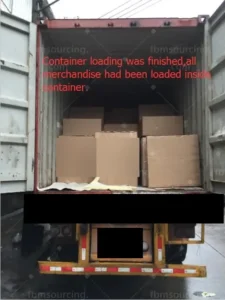
The quality clause connects the specification freeze to a remedy. It should state that goods are inspected before shipment against the contract annexes, with photo and video records forming part of the acceptance file — this is how our own team documents every project order — and that non-conforming items must be reworked or replaced at the factory’s cost before loading. Sampling should reference a recognised standard: AQL 2.5 for major defects and AQL 4.0 for minor defects under ISO 2859-1 is the sampling regime most furniture and joinery contracts adopt.
Two clauses buyers routinely forget:
Attic stock. On multi-unit projects, contract 2–5% overage on breakables and finish-critical items — tiles, glass, fabric-covered pieces, decorative lighting. Ordering the spare quantity in the original production run guarantees batch colour match; a replacement order placed later almost never matches, because a new dye lot or board batch shifts the shade.
Transit damage allocation. Define who bears loss between loading and delivery, and pair the clause with marine cargo insurance naming the buyer as beneficiary. A quality clause that ends at the port gate leaves the highest-risk leg of the journey uncovered.
4. Tooling and Mould Ownership
Custom project work often requires buyer-funded tooling — moulds for die-cast hardware, jigs for curved joinery, extrusion dies for non-standard aluminium profiles. If the contract is silent, the factory holds the physical tooling and can, in principle, run it for anyone. The protective clause states three things: tooling paid for by the buyer is the buyer’s property; the factory holds it as custodian and may not use it for third parties; and the buyer may take possession on request. Since new tooling has to be fabricated before the first production sample even exists, losing access to an existing mould means repeating that entire runway on your next order. Our note on sample and tooling costs covers how these charges are usually structured and when factories waive them against volume.
The same section should cover design IP: drawings, patterns and custom designs supplied by the buyer remain the buyer’s property and may not be reproduced for other customers. Enforcement is imperfect, but a written clause converts a grey area into a clear breach — which matters when the same factory wants your next project.
For a line-by-line view of what the service fee actually pays for, see our breakdown of China sourcing agent fees.
5. Force Majeure, Raw Materials and Currency
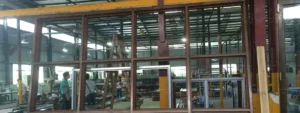
Standard force majeure wording is fine; the clauses that need actual thought are the economic ones. Casegoods, aluminium windows and stone packages carry heavy raw-material exposure, and factories increasingly ask for price-adjustment clauses. The buyer-side compromise is a band: the contract price holds unless the referenced commodity index moves more than an agreed threshold — a ±5% band on the aluminium ingot reference is a common structure on window and curtain-wall packages — with adjustments applying only to the unproduced balance of the order, never retroactively.
Currency works the same way. Contracts are usually priced in USD, and a ±3% exchange-rate band with sharing above the threshold is a fair allocation on orders with long production tails. What you are buying with these clauses is not price certainty — it is the removal of the factory’s incentive to quietly downgrade materials when its margin gets squeezed mid-production.
6. Dispute Resolution: CIETAC, Hong Kong or Singapore — and an Honest Caveat
China is a contracting state to the 1958 New York Convention, which now counts more than 170 member states, so foreign arbitral awards are enforceable in Chinese courts — arbitration clauses are not decorative. The realistic choices: CIETAC (mainland, lowest cost, factories accept it readily), HKIAC (Hong Kong awards enforceable on the mainland under the 1999 Arrangement, better perceived neutrality), and SIAC in Singapore (strong neutrality, highest cost, and some smaller factories will push back on it). For most project buyers, HKIAC is the balanced default; specify the seat, the language and a sole arbitrator for speed.
Now the caveat you rarely read: for disputes worth a few percent of the order value — a short shipment, a batch of doors with finish defects — no tribunal is economic. After years of running project orders, we can say plainly that small disputes are best settled before loading: our own team inspects the goods once bulk production is finished, and anything below standard is reworked, then re-inspected before shipment. Draft the arbitration clause carefully, then run the order so you never need it. And keep logistics liability clean by fixing Incoterms and customs clearance responsibility in the same section, so delivery disputes cannot hide inside quality disputes.
Where a Sourcing Agent Fits Into the Contract
A contract is the last line of defence, not the first. Everything above works better when someone is physically present between signing and shipment: checking that the control sample actually gets sealed, and that the goods are inspected once by our own team after bulk production is finished and before shipment, with photo and video records tied back to the contract annexes. That is the day-to-day role a china sourcing agent plays for project buyers ordering at distance — the contract defines the standard, and the agent’s presence makes deviation visible early enough to fix cheaply. For suppliers you nominate, we charge a 5% commission; for products we source for you, we quote a direct price. Either way it covers that supervision layer across drawing approval, production follow-up, inspection and shipment.
The delivery and delay clauses are the ones that get tested in practice — what happens if a Chinese factory misses its production deadline walks through the remedies and the recovery options in order of cost.
Get a China Procurement Quote for Your Project
If you are a project owner, developer, main contractor or FF&E contractor preparing a purchase from China, we will structure the contract terms around your real risk points — and then run the supervision that makes them stick. Submit your drawings, quantities, destination port and timeline through our building materials and FF&E procurement page, and our team will come back to you with a project-specific proposal.
One structural mismatch deserves its own page: how retention and defects liability periods with China procurement actually work when the factory is paid before shipment.