Yes — Chinese factories can hold finished stock or ship in phases, and for hotels opening floor by floor or apartment projects handing over tower by tower it is a normal arrangement. The condition is that staggered delivery from China factories must be agreed before the deposit is paid: storage charges, release schedule, payment triggers, risk during storage and re-inspection rights all belong in the purchase contract, not in a negotiation after your goods are already sitting in someone’s warehouse. FBM Sourcing acts as your sourcing partner from specification through to shipment.
This guide sets out the three workable models, what each does to cost, freight and risk, and which fits which kind of phased project.
The Three Models for Staggered Delivery from China Factories
Every phased-delivery arrangement in China is a version of one of these three structures:
| Model | How it works | Strengths | Watch-outs |
|---|---|---|---|
| 1. Batch production, batch shipping | Factory produces each phase separately and ships as it finishes | No storage cost; freshest goods; payments spread naturally per batch | Batch-to-batch colour and finish variation; later batches exposed to material price movement; factory may resist small production runs |
| 2. Produce once, factory holds stock | Single production run; factory warehouse releases goods per your schedule | One run means uniform colour and locked pricing; simplest to set up | Storage fees after the free window; goods occupy space the factory wants back; condition degrades on long holds |
| 3. Produce once, third-party or bonded warehouse | Goods move after inspection to an independent warehouse in mainland China or Hong Kong, which releases per call-off | Professional storage conditions; goods out of the factory’s hands once accepted; clean fit for long or uncertain schedules | Extra handling leg and monthly charges; needs a coordinating party on the ground |
The single-production models (2 and 3) exist because splitting production is not free: minimums apply per run, and matching a veneer stain or powder-coat colour across runs made months apart is genuinely hard. Where finish consistency across phases matters — guest room casegoods, facade-visible materials — producing once and staging the release is usually the sounder engineering decision, and the warehouse question becomes the real negotiation.
How Is Storage Charged, and How Long Will a Factory Really Hold Goods?
Warehouse storage in China is conventionally billed by volume over time — a rate per cubic meter per month, sometimes with a handling charge per movement in and out. Any free storage window after production is agreed with the factory before the deposit; beyond it, expect the meter to run, and on long holds expect pressure, because a furniture factory’s warehouse is buffer space for its production line, not a storage business.
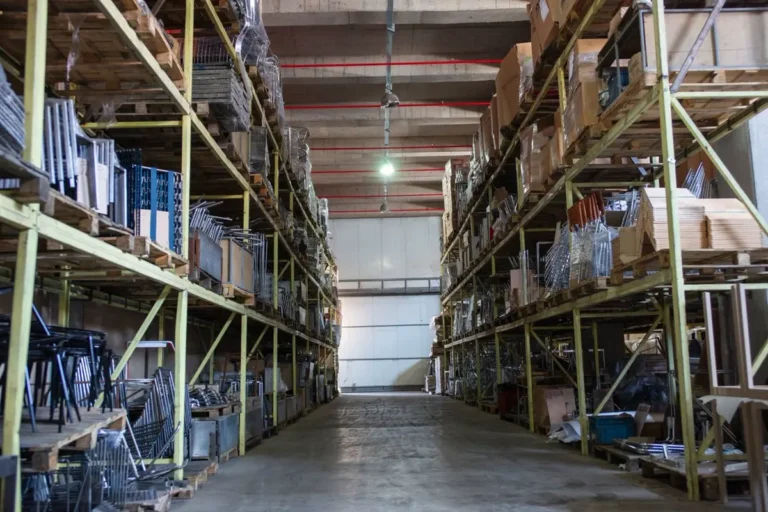
For longer horizons, model 3 is built for the job. Third-party warehouses quote the same per-cubic-meter-per-month structure but with racking, humidity management and proper stock administration. Hong Kong adds a specific advantage: it is a free port that levies no customs duty on general cargo, so goods can sit there and ship onward to the destination without import taxes arising from the staging stop itself.
Stock administration is the part buyers underestimate. A phased release only works if every carton was marked for its phase at the production line — phase code, building or floor, room type, carton count per set — and the packing list is written per phase from day one. A warehouse cannot cleanly pull “Tower B, levels 1-6” out of three hundred identical brown cartons labelled only with a PO number; projects that skip phase-level labelling end up paying for full unpack-and-repack sessions, or worse, discover at destination that phase one arrived with phase three’s wardrobe doors.
Whichever model you use, get the storage clause in writing before the deposit: the rate basis, when the clock starts, who insures the goods while held, and what re-inspection you are entitled to before each release. A building material sourcing agent negotiating this alongside the production terms will land far better conditions than a buyer raising it after the goods are finished, when all the leverage has changed hands.
What Does Splitting Shipments Do to Your Sea Freight?
Each release is a complete, self-contained shipment in the eyes of customs and the carrier. The fixed elements repeat every time:
- An export customs declaration in China for every batch that leaves
- A separate bill of lading, packing list and commercial invoice per release
- A destination customs entry — with its clearance and handling charges — for every arrival
- A booking on that sailing’s schedule, with that month’s freight rate, not the rate you shipped at last quarter
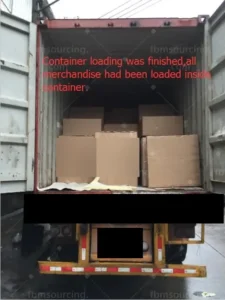
The volume threshold decides the mode per release. As a working rule, each release is sized to fill a container, so a call-off that falls short is grouped with the other categories due in the same window until it reaches that mark. Every shipment leaves as a full container of the client’s own goods, which also avoids the extra warehouse touches that loose cargo picks up at each end. Phased projects should be planned so that each release lands as a sensible container quantity rather than an awkward remnant that cannot fill a box; our container planning guide covers how to size releases from a room or unit count. Who handles the repeated destination-side entries — and what each one involves — is covered in who clears customs on project imports.
Sourcing this for a commercial project?
FBM Sourcing works with project owners, developers, main contractors and FF&E contractors on hotel, apartment, school, office and other commercial building projects. Send us your BOQ, drawings or product list — our team will review it and get back to you.
Payment Terms and Ownership While Goods Sit in a Warehouse
The standard China trade structure — a deposit on order with the balance paid before shipment — was built for produce-and-ship-immediately orders. Held stock breaks its assumptions, so the contract has to answer two questions separately: when is the factory paid, and whose goods are they while stored?
The workable convention is payment against production, not against shipment: the balance falls due when production is complete and the goods have passed inspection, because the factory has by then done everything it was hired to do — the delay is the buyer’s schedule, not the factory’s. From that payment, the goods are contractually the buyer’s property in the factory’s custody. Do not leave the balance unpaid against goods held for months as informal leverage; a factory financing finished stock it cannot invoice will reprioritise, and stored goods with unclear ownership are the ones that get raided for parts when another order runs short.
The deposit structure can also be shaped per model. Under batch production (model 1), the cleaner arrangement is a deposit per production run rather than one deposit on the whole program, so neither side is financing phases that are still a year from starting; under the single-run models, one deposit covers the run. Whatever the split, put the release schedule itself in the contract — a factory holding fully paid goods against a vague “we will call when site is ready” has agreed to nothing enforceable.
Risk is a separate track from ownership. Under FOB terms, transit risk only passes to the buyer once goods are loaded on the vessel — which means warehouse-period risk must be allocated explicitly in the storage clause. Standard marine policies written on Institute Cargo Clauses (A) include warehouse-to-warehouse cover for the ordinary course of transit, but a deliberate multi-month storage stop is not the ordinary course and needs to be declared and covered specifically — the mechanics are in our guide to marine cargo insurance for project shipments.
The Quality Risk Nobody Prices In: Long Storage
Goods that passed inspection in March are not automatically the same goods in October. Southern China’s production belt is subtropical: relative humidity routinely runs high through the summer months, and over a long hold that works on cartons, corrugated board strength, hygroscopic materials like solid wood and veneer, and unprotected hardware, which can show surface oxidation. Export cartons are engineered for a voyage measured in weeks, not for two seasons on a warehouse floor.
The discipline that manages this is straightforward. Goods intended for long holds should be packed for storage from the start — sealed liners, adequate desiccant, pallets off the slab — and every release should be opened, checked and re-photographed before it ships, not trucked to port on the strength of an inspection carried out half a year earlier. Our standing practice applies to each release exactly as to a fresh order: goods are inspected before shipment by our own team, with photo and video records, so what arrives at a phase-two site matches what was approved, or the problem is caught while it can still be fixed in China.
One contractual detail follows directly from long holds: tie the defect liability window to each release date, not to the production date. If the warranty clock starts when the goods come off the line, a phase shipped ten months later arrives with most of its cover already burned before a single guest or tenant has touched it. Factories will accept release-date wording when it is raised at contract stage; it is a much harder conversation once the goods are made.
Which Model Fits Which Phased Project?
Hotels opening in stages
A property opening its first floors while upper floors are fitted out usually wants model 2 or 3: one production run for finish consistency across all keys, released floor by floor over a few months. Short gaps sit comfortably in the factory’s warehouse; anything open-ended belongs with a third party.
Multi-store and chain rollouts
A rollout of near-identical fit-outs over a year or more fits model 3 best: produce the standard kit in economic runs, hold it in a staging warehouse, and call off one store’s worth per opening. Each call-off is small on its own, so the practical move is to group several stores’ kits into one full container rather than shipping each opening separately.
Apartment and mixed-use projects handing over by building
Towers completing six or twelve months apart are usually better served by model 1 — batch production per building — because the volumes per phase are large enough to be economic runs on their own and long storage adds cost without adding consistency benefits at that scale. The procurement structures for these projects are covered in our guides to apartment development procurement and mixed-use development procurement.
Get a China Procurement Quote for Your Project
If your project opens or hands over in phases, the delivery model should be designed together with the order, not bolted on later. Send us your drawings or BOQ, quantities by phase, destination port and the handover timeline, and we will map production runs, storage and release schedule against it — details on our China building materials and FF&E procurement page, or reach the team directly through the buttons above.