US general contractors buy building materials from China in one of three structures: as a direct import under the GC’s own entry, as an owner-supplied package the GC only receives and installs, or through a sourcing agent and sourcing partner that consolidates factories and delivers to the jobsite under one set of documents. Which one you use is decided less by price than by three things — who submits and warrants the materials under the specification, who carries the anti-dumping and tariff exposure, and who absorbs a slip when the sequence on site has already been let. Getting those three assigned before the first purchase order is what separates a China package that works from one that becomes a claim.
Which Materials Do US Contractors Actually Buy Direct From China?
Not everything is worth importing. The categories that consistently justify a direct China package on US commercial work share the same profile: high volume, repeated units, specification-driven rather than code-locked to a domestic listing, and not on the critical path in week one of the build.
- Cabinetry and casework for multifamily, student housing and hospitality — high repetition, high freight efficiency, but the category with the heaviest AD/CVD exposure.
- Doors and frames, hardware sets where the fire rating can be evidenced by an accepted listing.
- Tile, stone and engineered flooring — freight-dense, spec-driven, straightforward to sample and approve.
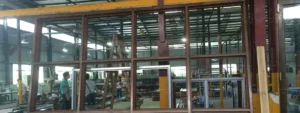
- Aluminium windows, storefront and curtain wall for projects where NFRC ratings and AAMA/NAFS performance can be demonstrated on the actual assembly.
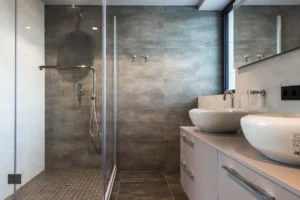
- Bathroom and plumbing fixtures where the item carries UPC/cUPC or NSF listing.
- Light fixtures with UL or ETL listing on the fixture itself, not just on a component.
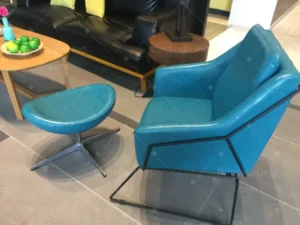
- FF&E and loose furniture on hospitality and multifamily projects, where the scope usually sits with the owner rather than the GC at all.
The categories that most often go wrong are the ones where a US listing, not a test report, is the acceptance criterion — fire-rated assemblies, sprinkler components, structural connectors, electrical distribution equipment. A Chinese factory can hold a valid international certificate and still not have the specific listing your AHJ will accept, and the submittal will be rejected on that basis alone. The distinction between a factory’s own test data and third-party accredited testing is set out in factory test reports versus accredited lab testing.
What Does the Submittal Process Look Like on an Imported Package?
This is the step that decides whether the schedule holds, and it is where most first-time importers under-plan. The submittal has to be complete enough for the architect to approve before production starts, because a rejection after the line has run is not recoverable inside a normal shipping window.
A workable submittal package for an imported material carries the product data sheet with the ASTM or ANSI standards the specification names, the applicable test report or listing, the finish and colour samples in the actual production material, shop drawings coordinated with field dimensions, and where the specification requires it, formaldehyde compliance documentation under EPA TSCA Title VI or CARB Phase 2 for composite wood. Build the approval cycle into the programme as a real duration, not a formality — how it runs with Chinese factories is covered in the shop drawing approval cycle with Chinese factories.
The Duty and Compliance Exposure a GC Has to Price
Duty is not one number and it is not negotiable at the point of entry. Three layers stack on a China-origin material entry into the US.
Ordinary duty by HS classification
Set by what the item is, not by what the invoice calls it. Classification is a technical exercise and it belongs in the pre-order stage, because it also determines whether the next two layers apply.
Anti-dumping and countervailing duty
The layer that ends projects. Wooden cabinets and vanities, quartz surface products and several flooring categories carry AD/CVD orders on China-origin goods, and the rates are assigned by producer — a specific factory’s rate, or the country-wide rate if the producer is not separately listed. Scope rulings and circumvention findings also mean that routing through a third country does not automatically remove the exposure. Because AD/CVD is collected as a cash deposit at entry and finally assessed later at liquidation, the entered figure is not necessarily the final figure. Our breakdown of US anti-dumping duties on cabinets, quartz and flooring covers which categories are affected and what evidence a buyer should hold.
Statutory entry fees and bonds
The merchandise processing fee at 0.3464% of entered value within published minimums and maximums, the harbor maintenance fee at 0.125% on ocean arrivals, a customs bond sized against expected duty, and an ISF filed before the vessel loads at origin. The full list of destination-side charges is in what port and local charges apply beyond ocean freight.
Two further constraints apply on public work. Federally funded projects may carry Buy American or Build America, Buy America requirements that exclude imported iron, steel and manufactured products unless a waiver is in place, and many state and municipal contracts carry their own domestic preference language. Read those clauses before pricing a China package, not after. On private commercial work the constraint is usually contractual instead: an owner’s agreement or a lender’s requirement may specify domestic sourcing for named scopes.
Sourcing this for a commercial project?
FBM Sourcing works with project owners, developers, main contractors and FF&E contractors on hotel, apartment, school, office and other commercial building projects. Send us your BOQ, drawings or product list — our team will review it and get back to you.
Who Should Be the Importer of Record on a Jobsite Delivery?
This decides where the liability sits. If the GC is importer of record, the GC holds the bond, files the entry, warrants classification accuracy and carries the AD/CVD assessment risk through to liquidation — which can land long after the project has closed out. If the owner imports as an owner-supplied package, the GC’s exposure narrows to receiving, storage and installation, but so does its control of the delivery date. If a sourcing agent handles the China side and a US customs broker files under the buyer’s name, the entry work is professionalised without moving the legal responsibility, which is the arrangement most GCs end up with. The trade-offs are set out in who clears customs on a project import.
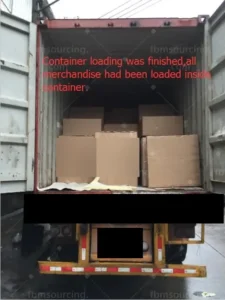
Whatever the structure, put the delivery mechanics in writing before booking: whether the container is delivered to a warehouse or directly to site, who devans, what the free time is on the chassis and the box, and what happens if the site is not ready. Free time at destination is set by the carrier and terminal, and a container waiting for a slab pour is the most expensive storage in the industry.
How Do You Build the Schedule Around a China Package?
The sequence a US contractor should plan is: specification and classification review, factory selection and quotation, sample and submittal approval, production, inspection before shipment, ocean transit, customs entry, and site delivery. Ocean transit time is confirmed by the carrier at booking, and customs release and drayage come on top. Production of cabinetry, doors and furniture starts after approval, and the lead time is confirmed by the factory in writing for each order; aluminium systems and custom stone run longer.
Add buffer deliberately rather than optimistically. A programme that assumes best-case transit, no customs examination and a first-time submittal approval will be late, and the cost of being late lands on the contractor’s schedule rather than the factory’s. The arithmetic for sizing that buffer is in what lead-time buffer a construction schedule should allow, and the wider cost picture is in how to calculate landed cost for a China project order.
What FBM Sourcing Does on a US Contractor’s Package
FBM Sourcing manages the entire China procurement package for overseas construction projects. On a US contractor’s job that means taking the specification and the BOQ, selecting and holding factories against it, running the submittal and sample cycle in a form an architect can approve, scheduling production across the several factories a real package needs, inspecting once at the factory when bulk production is finished, before shipment recorded in photographs and video, consolidating into full containers and issuing one HS-coded document set per container for your broker.
All quotations, invoices and shipping documents are issued by FBM Sourcing — you deal with us, and we carry the responsibility. For suppliers you nominate, we charge a 5% commission; for products we source for you, we quote a direct price. For a contractor pricing a subcontract, that matters: the quotation is a number that can be carried into a bid without a second layer of supplier billing behind it. Duty and AD/CVD exposure is flagged at classification stage, before the order is placed, because that is the only stage at which it can still change the sourcing decision. Related reading for contractors: building material sourcing agent in China: guide for developers and contractors.
Office furniture follows the same route as the rest of the material, but the specification layer is its own: our guide to office furniture manufacturers in China for US corporate projects sets out which listed companies can be checked in public filings and what test evidence each chair, desk and storage model has to carry before it clears submittal.
Get a China Procurement Quote for Your Project
If you are a general contractor pricing or executing a US commercial project with an imported materials scope, send us the specification sections, the BOQ or takeoff, quantities, the destination port or jobsite, and the required-on-site dates. Our team will review the package, flag the categories with duty or listing exposure, and set out how the scope would be produced, inspected, documented and delivered.
Use the quote button above or WhatsApp +86 135 6007 5057 to start the conversation.