Hotel FF&E procurement from China for Saudi and GCC hospitality projects works as a four-phase sequence — specification and sampling, bulk production, inspection and consolidation, and shipping and clearance — that is planned around about four months between deposit and shipment, plus sea freight to Jeddah, Dammam or Jebel Ali, with two fixed obstacles built into it: the Chinese New Year shutdown on the production side and Ramadan and the Eid holidays on the approval and site side. The package is never one factory. Guest-room casegoods, upholstered seating, bedding, banquet furniture, outdoor furniture, lighting and the building-material lines of a serviced-apartment tower come from different specialist plants, and the work of a China sourcing partner is to run them as one programme and ship them as full containers to the right Gulf port with the conformity documents the destination requires.
This guide is for developers, general contractors, commercial project owners, interior design and construction companies and FF&E solution providers delivering hotels, resorts and serviced apartments in Saudi Arabia, the UAE, Qatar, Oman, Bahrain and Kuwait. It sets out the timeline phase by phase, the certification and conformity requirements that differ across the Gulf, the climate and brand-standard points that go into the factory brief, the port and customs decisions, and where FBM Sourcing fits.
What Does the Timeline Look Like Phase by Phase?
| Phase | What happens | Timing | What decides the duration |
|---|---|---|---|
| 1. Specification, factory shortlisting, pricing | Room schedule and BOQ reviewed; each line matched to the factory that runs that production line; quotation issued line by line | Confirmed in writing once the scope is clear | Completeness of the schedule and finish references; whether the operator’s brand standard is available |
| 2. Sampling and approvals | Guest-room prototype and material samples produced, shipped or reviewed at the factory, revised and signed off | Set by revision rounds and approval cycles | Number of revision rounds; designer and operator approval cycles; Ramadan on the approval side |
| 3. Bulk production | Casegoods, seating, bedding, banquet and outdoor lines manufactured in parallel at their factories | About two months; confirmed by each factory in writing | Mix of lines (veneered casegoods and upholstery are the long items); Chinese New Year shutdown |
| 4. Inspection, packing, consolidation | Each factory’s finished goods inspected with photo and video records before packing; container plan across factories | After production is finished at each factory | How many factories and how far apart; packing specification for the Gulf |
| 5. Sea freight and clearance | Full containers from Shenzhen or Nansha to the Gulf; customs and conformity documents lodged | Confirmed by the carrier at booking, plus clearance | Port chosen; routing; document readiness |
These are production and transit realities, not commitments; a project schedule is built from them backwards from the operator’s opening date, with the sample round ideally completed before Chinese New Year and before Ramadan. The way FF&E milestones align with construction milestones is covered in the procurement schedule against hotel construction milestones.
Which Certifications and Conformity Rules Apply Across the Gulf?
The Gulf is six regulatory jurisdictions, and the FF&E package touches several regimes at once. The practical map for a hotel package:
- Saudi Arabia — SASO technical regulations and SABER. Regulated products must have a product certificate of conformity and a shipment certificate issued through the SABER platform before customs release. Furniture as such is largely outside the regulated lists, but the electrical items in a hotel package — lighting, minibars, safes, adjustable-bed mechanisms, hairdryers and other guest-room appliances — and many building-material lines are inside them. The procedure is set out in SASO and SABER certification for building materials from China.
- UAE — ECAS / EQM and Civil Defence. Electrical and some building products fall under the Emirates conformity schemes; hotel interiors are approved by the emirate’s Civil Defence authority under the UAE Fire and Life Safety Code of Practice, which is where upholstered furniture and mattresses are examined. See ESMA and UAE conformity for building materials from China.
- Fire performance of upholstery and bedding. Across the Gulf, hotel consultants normally specify upholstered seating and mattresses to the British ignition standards (BS 5852 including crib 5, BS 7176 medium or high hazard) or to the equivalent US standards, and the evidence is a test report on the exact foam, interliner and fabric build. This is the document most often missing from a Chinese factory’s file and the one most often asked for at civil defence approval.
- Saudi Building Code and Civil Defense. Saudi projects follow the Saudi Building Code for fire safety, and Civil Defense approval covers the interior; specifications in the Kingdom increasingly carry the same fire requirements for furnishings as the UAE.
- Certificates of origin and customs documents. A certificate of origin, commercial invoice and packing list in the required form accompany every shipment; Saudi customs also requires conformity documents to be linked to the shipment in advance. How origin documents affect duty is explained in certificate of origin and import duty for project buyers.
The rule for a sourcing partner is simple: identify which lines of the package are regulated in the destination country before the factory is chosen, because a factory without the certificate for a regulated product is not a cheaper option, it is not an option.
Planning a hotel or serviced-apartment package for the Gulf?
FBM Sourcing works with developers, general contractors, builders, commercial project owners, interior design and construction companies and FF&E solution providers on hotel and serviced-apartment projects in Saudi Arabia and the GCC. Send the room schedule or BOQ and our team will review it and get back to you.
What Goes into the Factory Brief for a Gulf Hotel?
- Brand standard. The operator’s guest-room FF&E standard — casegoods construction, bed base, headboard, minibar and safe integration, lighting levels — must be issued to the factory alongside the designer’s drawings. A factory building to drawings alone will produce a beautiful room that fails the brand inspection.
- Climate specification. Coastal Gulf conditions of 45 °C outside, air-conditioned interiors and high humidity at entrances and terraces call for moisture-resistant substrates, heat-rated adhesives on veneer, controlled moisture content on solid timber, finishes tested for yellowing under strong daylight, and for outdoor lines marine-grade powder coating, solution-dyed fabrics and UV-stabilised resin. The same logic for the building envelope is in aluminium windows and glass specifications for the Gulf climate.
- Fire specification written into the order. The foam, interliner and fabric combination and the standard it is tested to, per item, so that the factory builds to the tested configuration rather than substituting stock foam.
- Prayer, privacy and family-room provisions. Gulf hotel briefs commonly include qibla markers, family-room layouts and privacy screens, and in Saudi Arabia separate facilities in some public areas; these are joinery and loose-furniture items and should be on the schedule from the start.
- Spares and phase-two matching. A percentage of chairs, headboards, casegoods panels and fabric should be ordered with the bulk, and the finish codes, board and fabric references archived, so that a later phase or a replacement order can be matched. Which manufacturer types make each line, and what to ask each, is set out in top hotel furniture manufacturers in China for Middle East and UAE hospitality projects.
Which Port, and How Are the Containers Planned?
For Saudi Arabia the choice is between Jeddah Islamic Port on the Red Sea for projects in Jeddah, Makkah, Madinah and the western giga-projects, King Abdulaziz Port at Dammam for the Eastern Province and Riyadh, and transshipment or road from Jebel Ali for some UAE-linked programmes; sailing time from South China is confirmed by the carrier at booking and depends on port and routing, and the choice is a landed-cost and schedule question rather than a freight-rate one. The port-by-port comparison is in shipping from China to Saudi Arabia via Dammam, Jeddah and Jebel Ali. For the UAE, Jebel Ali serves Dubai and the northern emirates and Khalifa Port serves Abu Dhabi.
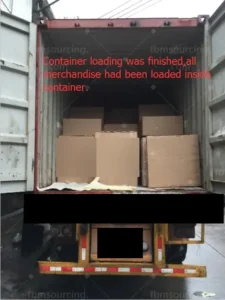
A hotel package is planned as full containers across factories. Sometimes, on a large project, the hotel FF&E alone fill full containers; sometimes the hotel FF&E share containers with the other product categories of the same project; and sometimes, in one batch, we combine a dozen or more product categories from several projects of the same client into a few containers — always full containers, and for us this is routine, well-practised work. On a four-star hotel project we handled elsewhere, the combined building-materials and FF&E package ran to ten 40ft high-cube containers; a Gulf hotel of similar size is in the same range, and the loading order is planned against the installation sequence — guest floors first, public areas last — rather than against factory completion dates.
How Does a Serviced-Apartment Package Differ from a Hotel One?
Serviced apartments and aparthotels in Riyadh, Dubai and Doha add kitchens, wardrobes, doors, tiles, sanitaryware and often windows to the FF&E lines, which means building-material factories join the programme and the conformity map widens to the SABER-regulated building-product lists. The advantage of running both through one China sourcing partner is one programme, one inspection regime and one container plan; the risk of running them separately is two supply chains arriving at a site that can only receive one at a time. The model is described in serviced apartment and aparthotel FF&E procurement, and what a whole-hotel package covers in what a whole-hotel FF&E and building materials package covers.
Where FBM Sourcing Fits
FBM Sourcing is the China sourcing partner for developers, general contractors, builders, commercial project owners, interior design and construction companies and FF&E solution providers; we do not manufacture, do not run a showroom and do not sell to individual homeowners. On a Gulf hotel or serviced-apartment package we match each line to the factory that runs that production line, identify the regulated products and their certification route before factories are shortlisted, write the brand, fire and climate specification into the factory brief, run the sample rounds, inspect each factory’s bulk order with photo and video records before it is packed, and plan the loading into full containers for Jeddah, Dammam, Jebel Ali or Doha with the customs and conformity documents prepared. All quotations, invoices and shipping documents are issued by FBM Sourcing — you deal with us, and we carry the responsibility. For suppliers you nominate, we charge a 5% commission; for products we source for you, we quote a direct price. The Saudi-specific service is described at China sourcing agent for Saudi Arabia, the service for hotel and apartment developments at FF&E procurement China, and how UAE and Middle East contractors buy from China at UAE and Middle East contractors sourcing from China.
Planning a hotel or serviced-apartment package for the Gulf?
FBM Sourcing works with developers, general contractors, builders, commercial project owners, interior design and construction companies and FF&E solution providers on hotel and serviced-apartment projects in Saudi Arabia and the GCC. Send the room schedule or BOQ and our team will review it and get back to you.
FBM Furniture
If your package is mainly hotel guestroom furniture, see hotel guestroom furniture on fbmfurniture.com, the site of FBM Furniture, the furniture sourcing line of FBM Sourcing Limited.
Frequently Asked Questions
How long does hotel FF&E procurement from China take for a Saudi or GCC project?
Please plan for about four months between deposit and shipment: the drawing stage usually takes around two months, because custom items go back and forth until you are happy with them, and production takes about another two months. Factory shortlisting and pricing come first; inspection and consolidation follow once production is finished, then sea freight (confirmed by the carrier at booking) and clearance. The Chinese New Year shutdown and the Ramadan and Eid periods must both be built into the plan.
Does hotel furniture from China need SABER certification for Saudi Arabia?
Furniture as such is largely outside the SASO regulated product lists, but the electrical items in a hotel package — lighting, minibars, safes, appliances — and many building-material lines of a serviced-apartment package are inside them and need product and shipment certificates through SABER before customs release. Upholstered furniture and mattresses are examined separately for fire performance at civil defence approval.
Which fire standards apply to hotel furniture in the GCC?
Consultants across the Gulf normally specify upholstered seating and mattresses to BS 5852 and BS 7176 or the equivalent US standards, and interior projects are approved by the civil defence authority — under the UAE Fire and Life Safety Code of Practice in the UAE and the Saudi Building Code in Saudi Arabia. The factory must supply a test report on the exact foam, interliner and fabric combination in the order.
Which port should a Saudi hotel project ship to from China?
Jeddah for projects in the western region, Dammam for the Eastern Province and Riyadh, with Jebel Ali used for some UAE-linked programmes; sailing time from South China is confirmed by the carrier at booking and depends on port and routing. The choice is made on landed cost and schedule against the installation sequence, and the containers are planned as full loads across the factories in the package.
If your team already runs China procurement for American or Australian projects, what changes when you source a Middle East hotel project from China sets out the differences that actually matter. Where the same product family is specified across several markets, the regimes are compared in window and door export certifications by market.
Conformity outside Saudi Arabia and the UAE follows different national schemes again, and a Saudi certificate does not travel — see conformity rules in Qatar, Kuwait, Oman and Bahrain.
About FBM Sourcing
FBM Sourcing manages the entire China procurement package for overseas construction projects. We work with developers, general contractors, builders, commercial project owners, interior design and construction companies and FF&E solution providers as their sourcing partner in China — from the room schedule or BOQ through factory selection, certification checks, sampling, inspection by our own team, consolidation and shipping, with every quotation and shipping document issued in our own name. If you have a hotel or serviced-apartment package for Saudi Arabia or the GCC to price, start at https://fbmsourcing.com/china-building-materials-ffe-procurement/.