
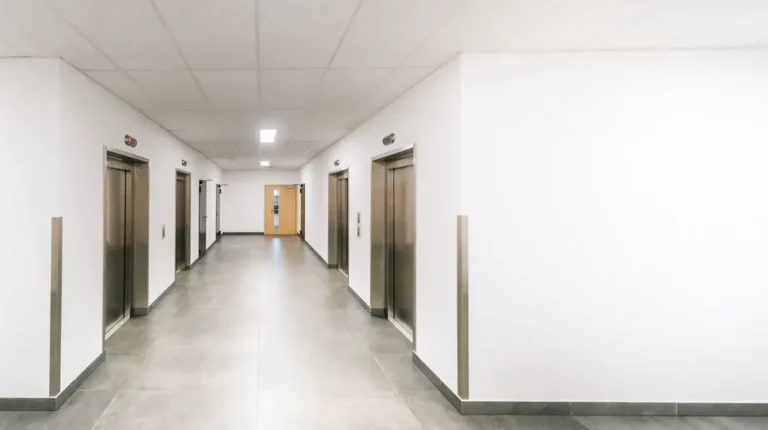
Fire-rated door sets from China can be specified for Australian commercial projects under the NCC, but only as complete tested doorsets — leaf, frame, hardware and seals together — that carry an AS 1530.4 fire test in a configuration covering the size, construction and hardware being supplied, are manufactured and tagged in accordance with AS 1905.1, and come with evidence of suitability the building certifier will accept under NCC Part A5. A Chinese factory’s domestic GB 12955 fire-door certificate does not satisfy any of this, and most factories that quote “fire doors for export” hold only that. The factories that can deliver an Australian project hold AS 1530.4 test reports from a laboratory whose results are accepted in Australia, and they are a small minority, mostly in the steel (hollow metal) door sector.
This guide is for developers, builders, general contractors and interior design and construction companies delivering apartment buildings, hotels, student accommodation and other Class 2, 3, 5, 6 and 9 buildings in Australia, and for the FF&E solution providers buying the door package. It explains what the NCC requires of a fire door, what an AS 1905.1 doorset actually is, the evidence chain from a Chinese factory to a certifier, where imported door sets most often fail, and how FBM Sourcing handles the door line of an Australian package.
What Does the NCC Require of a Fire Door?
- Where fire doors are required: NCC Volume One requires fire-resisting doorsets in openings in fire walls and fire-resisting construction — typically the entry doors to sole-occupancy units in Class 2 and Class 3 buildings (apartments, hotels, student accommodation), doors to fire-isolated stairs and passageways, doors in fire compartment walls, and doors to plant rooms and service risers.
- Fire Resistance Level (FRL): expressed as structural adequacy / integrity / insulation in minutes, for example –/60/30 for a self-closing doorset in a 60-minute wall, or –/120/30 in a 120-minute wall. The dash means structural adequacy is not applicable to a door. The FRL the door needs comes from the wall it sits in and the building’s construction type, not from the door catalogue.
- Self-closing and latching: fire doors must be self-closing and must latch, which means the closer and the latch are part of the fire-rated assembly and must be the ones tested.
- Smoke: where the NCC requires smoke doors or smoke-sealed fire doors, seals tested to AS 1530.7 are added; a fire door is not automatically a smoke door.
- The governing specification: NCC Volume One’s specification for fire doors, smoke doors, fire windows and shutters (Specification C3.4 in NCC 2019, renumbered in NCC 2022) requires fire doorsets to comply with AS 1905.1 and to be tested to AS 1530.4.
The NCC map for the other building-material lines on an Australian project — windows, glazing, flooring, sanitaryware, lighting — is in NCC and BCA compliance for building materials from China.
What Is an AS 1905.1 Doorset, and Why “Door” Is the Wrong Unit?
AS 1905.1, Components for the protection of openings in fire-resistant walls — Fire-resistant doorsets, treats the door as an assembly: the leaf, the frame, the hinges, the closer, the latch or lock, any vision panel and glazing, the seals, and the method of fixing the frame into the wall. The fire test under AS 1530.4 is carried out on that assembly, and the test report describes it precisely — leaf construction and thickness, core material, facing, frame profile and material, hardware makes and models, glazing size and type, and the maximum leaf size tested. A doorset is only “the tested doorset” when what is supplied matches what was tested, within the variations the test report or an assessment allows.
Two consequences follow for a Chinese supplier. First, the factory must be able to supply, or the project must accept, the hardware and seals in the test configuration; substituting a locally preferred closer or lockset without an assessment breaks the evidence. Second, each fire doorset must carry a permanent metal tag under AS 1905.1 giving the manufacturer, the standard, the FRL and the year of manufacture, fixed to the leaf and the frame, and the certifier will look for it. A factory that cannot explain what its tag would say has not manufactured to AS 1905.1 before. The general distinction between fire-rated and non-rated doors is covered in fire-rated vs non-fire-rated doors, and how fire doors are built in how fire-resistant doors are manufactured.
What Evidence Will an Australian Certifier Accept from a Chinese Factory?
NCC Part A5 sets out the evidence of suitability a certifier can rely on. For an imported fire doorset the realistic routes are:
- A test report from an Accredited Testing Laboratory for the AS 1530.4 test on the doorset, plus a regulatory information report or assessment where the supplied door varies from the tested one (a different size, a different closer). Australian certifiers accept reports from NATA-accredited laboratories and, for many, from laboratories accredited under the ILAC mutual recognition arrangement; the acceptance is the certifier’s decision, so it should be asked early.
- A CodeMark Certificate of Conformity covering the doorset, which is the strongest evidence and the rarest for a Chinese manufacturer.
- A certificate from a professional engineer or other appropriately qualified person that the doorset complies, based on the test evidence.
What a certifier will not accept: a Chinese GB 12955 certificate, a UL 10C or NFPA 252 report (the US route), an EN 1634 report on its own, a factory’s internal test, or a report on a different doorset from the same factory. Which markets accept which test routes is compared in window and door export certifications by market, and the difference between a factory’s own report and an accredited one in factory test reports vs accredited laboratory testing.
Sourcing the door package for an Australian project?
FBM Sourcing works with developers, general contractors, builders, commercial project owners, interior design and construction companies and FF&E solution providers on Australian apartment, hotel and student-accommodation projects. Send the door and hardware schedules and our team will review them and get back to you.
Which Chinese Factories Can Actually Supply AS 1905.1 Doorsets?
The Chinese fire-door industry is large and almost entirely built around the domestic GB standard, with steel fire doors dominating. Three groups matter for Australia:
- Steel (hollow metal) fire-door manufacturers with AS 1530.4 reports. A small number of the larger steel-door plants in Guangdong, Zhejiang and Jiangsu have tested doorsets to AS 1530.4 for the Australian market, usually for a specific range of leaf sizes and a defined hardware set. These are the realistic source for fire-isolated stair, plant-room and service-riser doors, and for apartment entry doors where the design accepts a steel leaf.
- Timber fire-door manufacturers. Solid-core timber fire doors are the norm for Australian apartment and hotel entry doors, and the Australian market is served largely by local manufacturers holding their own AS 1905.1 tags. Chinese timber-door plants with Australian test evidence exist but are few; more often the route is a leaf manufactured in China to a core and construction covered by an Australian holder’s evidence, which requires the holder’s agreement and is a commercial arrangement rather than a product purchase. Hotel-door finish options are compared in painted vs veneered vs laminate door finishes for hotel projects.
- Factories with GB certificates only. The majority. Their doors may be well made, but they have no evidence a certifier can use. A project that buys them will end up commissioning its own AS 1530.4 test, which takes months and a full-size furnace slot, or replacing the doors.
The shortlist of Chinese commercial door manufacturers by product type is in top commercial door manufacturers in China; for the Australian door package the first filter is AS 1530.4 evidence, and only then price.
Where Do Imported Fire Doorsets Most Often Fail on Australian Projects?
| Failure | What happened | How it is prevented at order stage |
|---|---|---|
| Wrong evidence | Factory supplied a GB 12955 certificate; certifier rejected it at occupancy | Require the AS 1530.4 report and read it before shortlisting; confirm the certifier accepts the issuing laboratory |
| Outside the tested envelope | Leaves larger than the tested maximum, or double-leaf sets where only single leaves were tested | Check every door on the schedule against the report’s size and configuration limits; obtain an assessment for variations |
| Hardware substitution | Australian-preferred closers and locksets fitted to a doorset tested with different hardware | Fix the hardware set in the specification from the test report, or obtain an assessment for the substitution before ordering; the hardware schedule method is in door hardware schedule before a China quote |
| Missing tags | Doors arrived without AS 1905.1 compliance tags | Tag content and fixing agreed in writing with the factory; tags photographed at inspection before packing |
| Frame not part of the set | Leaves imported, frames bought locally, no evidence for the combination | Order leaf and frame from the same tested doorset, or hold an assessment covering the local frame |
| Accessibility conflict | Closer force set for fire performance exceeds the AS 1428.1 opening-force limit on an accessible path | Specify closers with the required fire performance and adjustable force; check both standards on the same door |
| Handover documents | No test report, tags or maintenance schedule in the O&M manual | Assemble the fire-door evidence pack before shipment; see fire and life-safety documents for project handover |
How Should the Door Line of an Australian Package Be Ordered?
An apartment or hotel door package normally contains three products: fire-rated entry doorsets, non-rated internal doors, and the ironmongery for both. They may come from two or three factories, because a steel fire-door plant does not make veneered internal doors and neither makes locksets. The fire doorsets are ordered as complete tested assemblies with their hardware; the internal doors are ordered against the door schedule with the hardware preparation confirmed; and the hardware is ordered against the hardware schedule from the manufacturers listed in top door and window hardware manufacturers in China. All three are inspected at the factory before packing, with the fire-door tags, the hardware preparation and the leaf sizes checked against the schedule, and the package is shipped as full containers with the frames and leaves packed to protect edges and tags. Sometimes, on a large project, the doors alone fill full containers; sometimes the doors share containers with the other product categories of the same project; and sometimes, in one batch, we combine a dozen or more product categories from several projects of the same client into a few containers — always full containers, and for us this is routine, well-practised work.
Where FBM Sourcing Fits
FBM Sourcing is a China sourcing partner for developers, general contractors, builders, commercial project owners, interior design and construction companies and FF&E solution providers; we do not manufacture and do not sell to individual homeowners. On the door line of an Australian package we ask for the AS 1530.4 evidence before any factory is shortlisted, check each scheduled door against the tested envelope and hardware set, agree the AS 1905.1 tag content in writing, run the sample doorset, inspect the bulk order at the factory with photo and video records before it is packed, and assemble the evidence pack the certifier will need. Doors as a category are described at door sourcing; the Australian procedure generally is in how Australian commercial builders source from China; and the companion shortlist for the window line is top aluminium window and door manufacturers in China for Australian projects.
Sourcing the door package for an Australian project?
FBM Sourcing works with developers, general contractors, builders, commercial project owners, interior design and construction companies and FF&E solution providers on Australian apartment, hotel and student-accommodation projects. Send the door and hardware schedules and our team will review them and get back to you.
Frequently Asked Questions
Can fire doors from China be used on Australian commercial projects?
Yes, if they are complete doorsets tested to AS 1530.4 in a configuration covering the supplied size, construction and hardware, manufactured and tagged to AS 1905.1, and supported by evidence of suitability the certifier accepts under NCC Part A5. A Chinese GB 12955 certificate is not acceptable evidence, and most Chinese fire-door factories hold only that.
What FRL do apartment entry doors need in Australia?
The FRL comes from the wall the door sits in and the building’s construction type under NCC Volume One, not from the door itself; self-closing doorsets of –/60/30 are common for sole-occupancy unit entries in Class 2 and Class 3 buildings, with higher ratings in 120-minute walls. The fire engineer or certifier confirms the required FRL for each opening on the door schedule.
Does the door hardware have to match the fire test?
Yes. Under AS 1905.1 the doorset is the leaf, frame, hinges, closer, latch, seals and glazing together, and the AS 1530.4 test describes the hardware used. Substituting a closer or lockset without an assessment covering the substitution breaks the evidence chain, so the hardware set should be fixed from the test report before the order is placed.
Do imported fire doors need compliance tags?
Yes. AS 1905.1 requires a permanent tag on each fire doorset giving the manufacturer, the standard, the FRL and the year of manufacture, fixed to the leaf and the frame. The tag content should be agreed with the factory in writing and photographed at the pre-shipment inspection.
About FBM Sourcing
FBM Sourcing manages the entire China procurement package for overseas construction projects. We work with developers, general contractors, builders, commercial project owners, interior design and construction companies and FF&E solution providers as their sourcing partner in China — from the door schedule or BOQ through factory selection, evidence checks, sampling, inspection by our own team, consolidation and shipping, with every quotation and shipping document issued in our own name. If you have an Australian door package to price, start at https://fbmsourcing.com/china-building-materials-ffe-procurement/.





