Quick Navigation
Procurement fit
Fire-rated and non-fire-rated doors should not be mixed without checking drawings, code requirements and supplier documentation. Door procurement must follow the project specification and local compliance needs. This is the kind of scope a sourcing partner such as FBM Sourcing takes on.
This guide should be used together with FBM Sourcing’s China building materials and FF&E procurement service, building material sourcing agent China, hotel FF&E procurement from China and China procurement cost planning.
Specification checklist before supplier quotation
| Item to confirm | Why it matters | Buyer action |
|---|---|---|
| Application area | Door rating, location, hardware and documentation needs | Confirm project type, room or area, and installation context |
| Dimensions and quantity | Wrong sizes or quantities create rework and shipment problems | Prepare BOQ, drawings, schedule or room count |
| Material and finish | Supplier prices vary greatly by material grade and finish standard | Provide reference photos, samples, finish board or technical standard |
| Performance requirement | Door performance may be tied to code, safety and inspection requirements. | Confirm code, durability, moisture, fire, load or cleaning requirements |
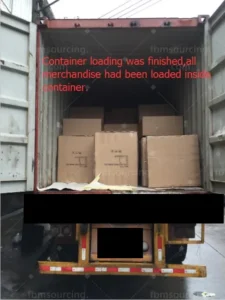
| Packing and shipment | Export damage can erase factory price savings | Confirm packing method, carton marks, pallet or crate needs and loading plan |
QC and delivery checks
- Confirm where fire-rated doors are required by drawings or code.
- Ask for test reports or certificates when needed.
- Check frame, seal, hardware and closer requirements.
- Inspect labels, dimensions, finish and packing before shipment.
Procurement workflow
| Step | Main work | Output |
|---|---|---|
| 1. Scope review | Review drawings, quantities, target budget and destination | Sourcing brief and risk questions |
| 2. Supplier comparison | Compare factory capability, quotation terms and lead time | Shortlist with comparable quotation basis |
| 3. Sample or spec approval | Check finish, dimensions, hardware and material standard | Approved sample record or correction list |
| 4. Production follow-up | Track factory progress and open questions | Production updates and QC window |
| 5. Inspection and loading | Check quality, quantity, packing and shipping readiness | QC comments and loading coordination |
Buyer FAQ
Can non-fire-rated doors be used everywhere?
No. Door rating depends on project code, area use and specification. Buyers should confirm with the project designer or code consultant.
What information should buyers send first?
Send the item list or BOQ, drawings or dimensions, reference photos, quantity, target quality level, destination port, expected delivery date and budget range.
How can FBM Sourcing help?
FBM Sourcing can help compare suitable China suppliers, clarify specifications, coordinate samples, follow production, check quality before shipment and prepare export loading.
Need a project procurement review?
For rated doors, send door schedule and required fire standard. Send your BOQ, drawings, reference photos, quantity, destination port and timeline so FBM Sourcing can review supplier fit, cost risk, QC points and shipment planning.
When specifying doors for a hotel, apartment block, school, or commercial building, one of the most common questions project managers and procurement teams face is: do these doors need to be fire-rated?
The answer depends on where the door is located, what local building codes require, and what level of fire resistance is specified in the project drawings. Getting this wrong is not just a compliance failure — it is a safety risk and a costly replacement job after the fact.
This guide breaks down the key differences between fire-rated and non-fire-rated doors, explains the rating system, and helps you decide what to specify for your next project.
What Is a Fire-Rated Door?
A fire-rated door is a door assembly — including the door leaf, frame, hardware, and seals — that has been tested and certified to resist the passage of fire and smoke for a specific period of time. The certification comes from third-party testing laboratories and must meet recognized standards such as BS 476 (UK), EN 1634 (Europe), NFPA 80 (USA), or AS 1905 (Australia).
Fire-rated doors are designed to compartmentalize a building during a fire — slowing the spread of flames and smoke long enough for occupants to evacuate and for firefighters to respond. They are a passive fire protection measure and form a critical part of any building’s fire safety strategy.
Sourcing this for a commercial project?
FBM Sourcing works with project owners, developers, main contractors and FF&E contractors on hotel, apartment, school, office and other commercial building projects. Send us your BOQ, drawings or product list — our team will review it and get back to you.
What Is a Non-Fire Rated Door?
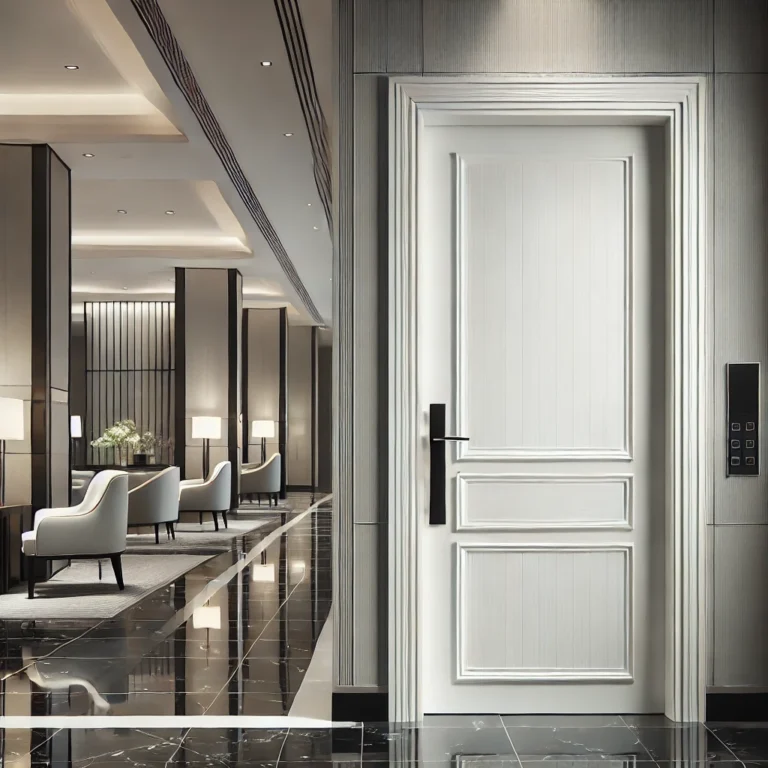
A non-fire-rated door is a standard door with no tested fire resistance. It provides security, privacy, acoustic separation, and thermal insulation, but will not hold back fire or smoke under fire conditions.
Non-fire-rated doors are perfectly appropriate for most interior door applications in a hotel room, office partition, apartment unit entrance, or retail fit-out where building codes do not require fire resistance.
When Do Building Codes Require Fire-Rated Doors?
The requirement for fire-rated doors is determined by the building’s use classification, the area where the door is installed, and the applicable local building code. Generally, fire-rated doors are required in the following locations:
- Stairwells and fire escape corridors — to protect means of egress
- Plant rooms and electrical switch rooms — higher fire risk areas
- Hotel bedroom doors to corridors — required in most jurisdictions for hotels above a certain size
- Kitchen-to-dining area doors — commercial kitchens are fire risk zones
- Lift lobby doors — to prevent fire spreading through vertical shafts
- Basement car park entrances — high fire load environment
- Cross-corridor doors — used to subdivide long corridors in large buildings
Your project’s fire strategy report, prepared by a qualified fire engineer, will specify exactly which door openings require fire resistance and what rating is required. Always confirm this with the architect of record before specifying or ordering doors.
Fire Door Ratings Explained: FD30, FD60, FD90, FD120
In most European and international standards, fire-rated doors are designated by their fire resistance duration in minutes:
- FD30 (E30) — 30 minutes fire resistance. The minimum requirement in most residential and light commercial applications. Commonly used for apartment entrance doors and hotel corridor doors.
- FD60 (E60) — 60 minutes fire resistance. Used in higher-risk locations such as stairwells in medium-rise buildings and plant rooms.
- FD90 (E90) — 90 minutes resistance. Required in some high-rise and industrial applications.
- FD120 (E120) — 120 minutes resistance. Used in very high-risk or specialized industrial buildings.
The letter suffix matters: E30 means integrity only (stopping flames) for 30 minutes. EI30 means integrity plus insulation (stopping both flames and heat transfer). Many building codes for hotels require EI-rated doors, not just E-rated.
Key Differences: Fire-Rated vs Standard Doors
Core material: Fire-rated doors use a solid mineral core (vermiculite board, calcium silicate) that resists combustion. Standard doors often use hollow cores or honeycomb fill.
Intumescent seals: Fire-rated doors incorporate intumescent strips around the perimeter that expand when heated, sealing the gap to block smoke and flame. Standard doors have no such seals.
Hardware specification: Fire-rated doors require fire-rated hardware — hinges, locks, closers, and vision panels must all carry the same or higher rating as the door. A self-closing mechanism is mandatory. Standard doors have no such hardware requirements.
Certification paperwork: Each fire-rated door should come with a certificate linking it to the test report, with a certificate number, testing lab name, and applicable standard that is traceable for building inspections.
How to Source Fire-Rated Doors from China
China is a major manufacturer of certified fire-rated doors and exports to projects in Southeast Asia, the Middle East, Africa, and the Caribbean. When sourcing from China, verify the following:
Third-party certification: Confirm the door has been tested by an accredited laboratory and that the certificate is current and valid for the exact configuration you are ordering. A certificate for a solid flush door does not automatically cover the same door with a vision panel.
Scope match: The test certificate covers a specific door size, core configuration, and hardware set. Confirm your project configuration is within the tested scope.
Factory QC inspection: Fire-rated doors require consistent manufacturing quality. Core density, seal installation, and hardware fitment must all be inspected before shipment.
Lead time: Allow 45–60 days from order confirmation for most hotel project quantities.
Questions to Ask Your Supplier Before Ordering
- What testing standard does the certificate conform to?
- Is the rating E (integrity) or EI (integrity + insulation)?
- Is the certificate in scope for the sizes and configurations we need?
- Is smoke sealing included (S classification)?
- What are the approved hardware types under the certification?
- Can you provide the original test report, not just the certificate?
- What QC process does the factory run on its own line?
If a supplier cannot clearly answer these questions, treat it as a red flag. Fire-rated doors are life-safety products and the documentation must be verifiable.
Related reading: roller, sectional and high-speed doors for industrial and gas station projects.
Making the Right Call for Your Project
For most hotel and commercial fit-out projects, a combination of fire-rated and non-fire-rated doors will be required. The fire strategy drawing will indicate which openings require fire resistance. Where fire-rated doors are needed, specify the correct rating, confirm the certification scope, and plan for longer lead times and more rigorous QC.
If your project is in the planning or tender stage and you need guidance on door specifications, quantities, and sourcing doors from China, contact FBM Sourcing with your door schedule or project brief.
Related reading: Learn how a door sourcing agent in China handles the full procurement process, or read our guide on sourcing wooden doors for hotel projects.
Related reading