Building materials imported from China can be used on an Australian commercial project when each product can be shown to satisfy the relevant Performance Requirement of the National Construction Code (NCC, formerly the BCA) — either by meeting a Deemed-to-Satisfy provision that references an Australian Standard, or through a Performance Solution — and when the evidence of suitability is one of the forms the NCC accepts: a CodeMark certificate, a certificate from a JAS-ANZ-accredited body (WaterMark for plumbing), a report from an Accredited Testing Laboratory, a certificate or report from a professional engineer, or other documentary evidence such as a product technical statement. A factory’s claim that a product is “Australian standard” means nothing to a certifier; a NATA-recognised test report to the specific AS/NZS standard, for the specific product, does. This overview walks an NCC Volume One building — hotel, apartment block, office, school, hospital, aged care, shops — category by category, names the standards and evidence a Chinese factory must supply, and shows how a building material sourcing agent and sourcing partner builds the compliance file into the procurement package.
How Is the NCC Structured, and Which Volume Applies to Your Project?
The NCC is published by the Australian Building Codes Board and adopted by each state and territory through its own building legislation, with some local variations. NCC 2022 came into effect on 1 May 2023 (with transition periods for some provisions) and has since been followed by the 2025 edition — confirm with the certifier which edition the building permit is assessed against, because referenced-standard editions change with it.
- Volume One — Class 2 to 9 buildings: apartment buildings (Class 2), hotels, motels, hostels and student accommodation (Class 3), offices (Class 5), shops, restaurants and showrooms (Class 6), car parks and warehouses (Class 7), factories (Class 8), healthcare (9a), schools and assembly buildings (9b), aged care (9c). This is the volume for almost every FBM Sourcing project.
- Volume Two — Class 1 houses and Class 10 sheds and garages.
- Volume Three — the Plumbing Code of Australia (PCA), which carries the WaterMark and WELS requirements for every plumbing product regardless of building class.
- Compliance pathways: every Performance Requirement is met either by following the Deemed-to-Satisfy (DtS) provisions, which reference Australian Standards, or by a Performance Solution designed and documented by a suitably qualified person (a fire engineer, façade engineer, etc.), or a mix of both.
- Evidence of suitability (Part A5): CodeMark Certificate of Conformity; certificate from a JAS-ANZ-accredited certification body; report from an Accredited Testing Laboratory (NATA-accredited, or a laboratory accredited by a body with a mutual recognition arrangement with NATA); certificate or report from a professional engineer; or another form of documentary evidence that adequately demonstrates suitability, such as a product technical statement.
The Accredited Testing Laboratory definition matters for imports: laboratories accredited by bodies in the ILAC mutual recognition arrangement — which includes CNAS in China — can qualify, so a CNAS-accredited Chinese laboratory report to the exact AS/NZS test method, within its accredited scope, can be acceptable evidence. In practice many certifiers still prefer NATA reports, and for fire-critical products we advise testing in Australia or at a laboratory the certifier has already accepted.
Which Standards Apply to Each Category of China-Sourced Material?
The table below is the working map we use to sort a Volume One BOQ. Each line names the NCC area, the referenced standard and the evidence a Chinese factory is expected to supply.
- Windows and glazed doors: AS 2047 (performance: structural, air, water, operating force) with AS 4420 test methods and AS 1288 glass selection; WERS or NatHERS-compatible thermal data (U-value, SHGC) for Section J energy provisions; AS 3959 bushfire attack level where applicable. Evidence: test reports on the exact system and size, glass compliance to AS/NZS 2208. See do windows from China meet AS 2047.
- External walls and cladding: non-combustibility requirements for Type A and B construction (AS 1530.1 non-combustibility test, or materials deemed non-combustible) and the ban on combustible aluminium composite panels with polyethylene cores; AS 5113 façade test for Performance Solutions; AS 4284 for curtain-wall performance. Evidence: AS 1530.1 report, core composition declaration, CodeMark where the system holds one.
- Internal wall and ceiling linings: fire hazard properties under Specification 7 (formerly Spec C1.10): Group Number 1, 2 or 3 from AS 5637.1 (based on the AS ISO 9705 room test or ISO 5660 cone-calorimeter prediction), with Group 1 required in fire-isolated exits and Group 2 or 3 elsewhere depending on building class and sprinklers; smoke growth rate (SMOGRA) limits apply to some locations; Group 4 materials are not permitted. Evidence: AS 5637.1 classification report on the exact panel, thickness and substrate — an ASTM E84 Class A report from a US-oriented factory is not a substitute.
- Floor coverings: critical radiant flux under AS ISO 9239.1 — not less than 2.2 kW/m² in sprinklered buildings and 4.5 kW/m² in some unsprinklered locations — plus slip resistance under AS 4586 (P ratings) and HB 198 for the location (wet areas, ramps, stairs). Evidence: radiant flux and slip reports on the exact product.
- Fire doors and fire-rated assemblies: AS 1905.1 fire doors tested to AS 1530.4 for the required FRL (e.g., -/60/30, -/120/30), with tagging and certification of the doorset including frame, hardware and seals; smoke doors to the relevant specification. Evidence: AS 1530.4 report for the exact leaf, frame and hardware combination, and the Australian tagging/licensing arrangement — Chinese doors tested to BS 476 or EN 1634 do not satisfy the DtS path without a Performance Solution.
- Sanitary ware, tapware, valves and plumbing products: WaterMark certification under the PCA (AS 5200 scheme) by a JAS-ANZ-accredited body, and WELS registration and labels for water-using products; installation to AS/NZS 3500. Evidence: WaterMark licence number and certificate for the exact model; WELS registration. See CUPC, WaterMark, WRAS and CE for sanitary ware.
- Accessibility: Part D4 and F4 via AS 1428.1 for doorways, sanitary facilities, grabrails, basins and hardware, and AS/NZS 1428.4.1 for tactile indicators. Evidence: dimensioned drawings and load evidence, as set out in our guide to AS 1428 accessible fixtures for Australian projects.
- Balustrades, stairs and railings: Part D3 heights (barrier not less than 1 m at landings and balconies, 865 mm along stair flights), AS 1170.1 imposed actions, AS 1288 for glass balustrades (toughened or laminated, with interlinking rail rules). Evidence: engineer’s certification or load test on the exact post-and-infill system plus glass compliance.
- Energy efficiency (Section J): U-values and SHGC of glazing, thermal performance of insulation and roof/wall systems, lighting power density (Part J7) — all fed from product data into the energy assessment; Class 2 sole-occupancy units are assessed under NatHERS with the 7-star minimum introduced in NCC 2022. Evidence: thermal performance data in the format the assessor accepts.
- Lighting and electrical products: outside the NCC proper but mandatory: electrical safety approval and the RCM mark under the Australian EESS/ACMA arrangements, installation to AS/NZS 3000. Evidence: RCM registration and test reports to the AS/NZS 60598 series for luminaires.
- Timber and board products: formaldehyde classes under AS/NZS 1859 and AS/NZS 4266 (E0/E1) are specification items rather than NCC DtS; fire hazard properties still apply where boards are used as linings.
For the document file an importer should hold under Australia’s asbestos import prohibition, see our reading of Australian Customs Notice 2024/32.
Sourcing this for a commercial project?
FBM Sourcing works with project owners, developers, main contractors and FF&E contractors on hotel, apartment, school, office and other commercial building projects. Send us your BOQ, drawings or product list — our team will review it and get back to you.
What Goes Wrong Most Often with China-Sourced Materials on NCC Projects?
- The wrong country’s test. Factories that export mainly to the US or Europe offer ASTM E84, EN 13501-1 or BS 476 reports for linings and doors. None of these is a DtS pathway in Australia; the certifier needs AS 5637.1 / AS ISO 9705 for linings and AS 1530.4 for doors, or a Performance Solution prepared by a fire engineer who is willing to rely on the overseas data — which costs time and is not guaranteed.
- The wrong laboratory status. A report from a non-accredited factory laboratory or a commercial lab without the specific test in its accredited scope is “other documentary evidence” at best; our note on factory test reports vs accredited lab testing explains what a certifier can and cannot accept.
- System-level approvals claimed from component reports. A fire door is approved as a doorset (leaf, frame, hardware, seals); a window is rated as a complete system at a given size; a balustrade is certified as post, fixing and infill together. Reports on the glass alone, or the leaf alone, do not carry the system.
- WaterMark gaps on otherwise good sanitary ware. Chinese factories hold cUPC or CE for the same model and assume it transfers; it does not, and an unlicensed product cannot be installed by a licensed plumber.
- Edition drift. AS 1428.1-2021 replaced 2009, AS 2047 and AS 5113 have been revised, and Specification 7 renumbered the old C1.10 tables; a report to a superseded edition may still be accepted, but the certifier decides, so record the edition on every document.
- Missing Australian labels and markings. WELS labels, RCM marks, fire-door tags and glass stamps to AS/NZS 2208 are physical marks applied before shipment; if the factory has never shipped to Australia the marks are often absent on the first run.
How Should NCC Compliance Be Written into a China Order?
Put the standard, the clause or performance level, and the evidence type on each BOQ line: “Internal wall panel, fire-isolated exit locations: Group 1 to AS 5637.1 (AS ISO 9705) — report from an Accredited Testing Laboratory on the supplied product and substrate”; “Basin mixer: WaterMark certified, WELS 5-star, AS 1428.1 lever handle”; “Window W3: AS 2047 test report for the exact series and size, N3 wind class, U-value ≤ 3.8 W/m²K”; “Fire door D12: -/60/30 FRL to AS 1530.4 as a complete doorset, tagged to AS 1905.1”. Ask each factory to answer line by line with the report or certificate number, or with “requires testing” and a lead time — and move the line if the answer is neither. A single-word “NCC compliant” in the RFQ header is how non-compliant goods reach a container.
How FBM Sourcing Handles NCC Compliance on an Australian Package
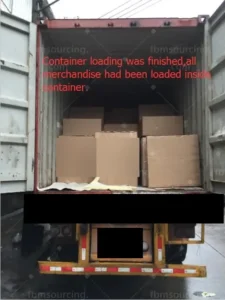
FBM Sourcing manages the entire China procurement package for overseas construction projects. On an Australian hotel, apartment, aged-care, education or office package the BOQ is sorted by NCC area and building class first — fire hazard properties, external wall non-combustibility, fire doors, glazing, plumbing, access, energy — and the evidence each line needs is written against it before factories are approached. Factories are shortlisted on holding the Australian evidence for the exact product (AS 5637.1 group reports, AS 1530.4 doorset reports, AS 2047 system reports, WaterMark licences, RCM registrations), not on US or EU equivalents; missing Australian evidence is either closed by testing early or the line moves to a factory that has it. Before shipment our own team inspects the goods at the factory — product identification, markings and tags, dimensions, packaging — with photo and video records before shipment, and the certificates and reports are compiled into a file ordered by BOQ line for the certifier. All quotations, invoices and shipping documents are issued by FBM Sourcing — you deal with us, and we carry the responsibility. For suppliers you nominate, we charge a 5% commission; for products we source for you, we quote a direct price. We ship by full container; on a large project single categories fill their own containers and on a smaller one the categories from the same project are consolidated.
Related reading: for a fuller look at how Australian commercial builders source FF&E and building materials from China, including AS 1428.1 figures and typical freight timelines, see our sourcing guide for Australian projects.
Fire doors are the line where imported products most often fail the certifier; the AS 1905.1 doorset requirements, the AS 1530.4 evidence chain and the tagging and hardware rules are set out in how to specify fire-rated door sets from China for Australian commercial projects under the NCC.
Which edition a project is assessed against now varies by jurisdiction. Our guide to NCC 2025 adoption dates by state sets out when each state and territory switches over, and what changed for commercial glazing, waterproofing and energy efficiency.
Get a China Procurement Quote for Your Project
If you are sourcing windows, doors, linings, flooring, sanitary ware, lighting or FF&E from China for an Australian Class 2–9 project and want the NCC evidence managed as part of the full package, send us the BOQ or product schedule, the building class and location, quantities, the destination port and the required-on-site dates. Our team will review the package line by line and set out a quotation.
Use the quote button above or WhatsApp +86 135 6007 5057 to start the conversation.