Convenience store and retail chain rollout programmes are procured as a kit, not as a series of individual store fit-outs. One prototype store is designed, specified and built; the approved result is converted into a fixed kit of parts per store format; and the kit is then produced in waves against the opening calendar, with each store’s goods labelled, packed and shipped as its own consignment. The procurement decisions that matter are made once — checkout millwork, shelving and gondola fixtures, flooring, and signage — and then repeated exactly, store after store. This is what a sourcing partner like FBM Sourcing is for.
What Is Actually in a Store Kit?
Most convenience and small-format retail chains resolve into five packages, and splitting them this way matters because each has a different lead time and a different approval route.
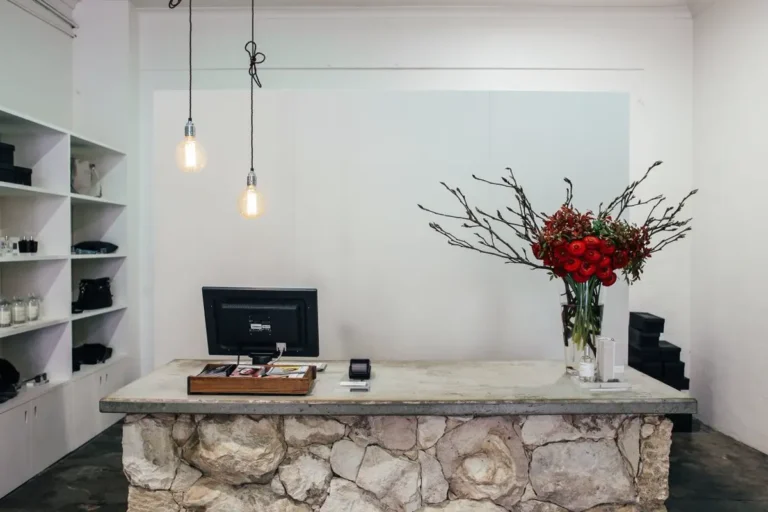
- Checkout and service counter millwork — checkout counters, point-of-sale surrounds, under-counter storage, and any age-restricted product display requiring secure fixtures.
- Shelving and merchandising fixtures — gondola shelving runs, endcaps, wall-mounted shelving systems and refrigerated case surrounds (the refrigeration unit itself is typically supplied by others, but its millwork surround is not).
- Flooring and back-of-house finishes — high-traffic sealed or epoxy flooring for the sales floor, and durable, easy-clean finishes for the stockroom and any food-prep area.
- Signage, branding and lighting — exterior pylon and facade signage, interior wayfinding and category signage, and the LED or fluorescent lighting package the brand’s photometric standard specifies.
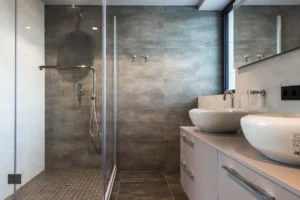
- Restroom and back-of-house fixtures — sanitaryware and hardware for customer and staff restrooms, and any staff break-area furniture.
Shelving and merchandising fixtures are the long pole in most rollouts, because the shelving layout has to be locked to the finalized store format before production, and it is also the scope most frequently revised mid-programme as merchandising strategy evolves — a revision after wave one has already shipped is what causes finish and fixture mismatches between early and late stores.
How Do You Keep Dozens of Stores Looking Like One Brand?
This is the real procurement problem on a rollout, and it is a batch-control problem rather than a design problem. Four controls do most of the work.
- Freeze the specification at the prototype. Named laminate codes, named paint and powder-coat codes, named signage color references and named fixture models. “Or equivalent” is how a rollout drifts.
- Buy finish materials for several waves in one batch. Laminate, powder coat and paint all vary between production batches; buying wave 3’s laminate at the same time as wave 1’s is the only reliable way to get the same finish in store 30 as in store 1.
- Keep a signed control sample. One retained set of approved finish and fixture samples, sealed and dated, against which every subsequent wave is checked before production.
- Order attic stock in the first run. Replacement shelving components, spare signage panels and spare fixture hardware for damage during the programme’s life, produced from the original batch.
The same discipline applies to any phased programme; the mechanics of matching a later order to an earlier one are set out in can you match existing finishes on a phase 2 order, and a closely related rollout structure is covered in our guide to bank branch and financial office rollout procurement.
Sourcing this for a commercial project?
FBM Sourcing works with project owners, developers, main contractors and FF&E contractors on hotel, apartment, school, office and other commercial building projects. Send us your BOQ, drawings or product list — our team will review it and get back to you.
How Should Shipping Be Structured Across a Retail Rollout?
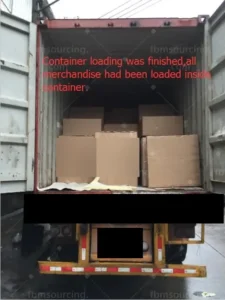
Store fit-outs are small in volume and numerous, which is the opposite of the profile that suits containerised freight one store at a time. The structure that works is consolidation at origin: several factories deliver into one warehouse, goods are sorted and packed by store rather than by supplier, each store’s cartons are labelled with the store code and a zone reference, and containers are loaded so a complete store kit — or several complete kits — arrives together. Production for shelving and millwork starts after drawing approval, and the lead time is confirmed by the factory in writing for each order; ocean transit time is confirmed by the carrier at booking. A store whose landlord handover slips will start accruing demurrage on its container unless the wave can be re-phased — the same buffer logic covered in lead-time buffer for a construction schedule should be built at programme level, not per store.
What Should Be Fixed Before the First Purchase Order?
Five things: the store formats and how many of each (a flagship, a standard and a compact footprint is a common structure for fuel-and-convenience chains); the kit content per format, line by line; the frozen finish and fixture schedule; the wave plan mapped to opening dates with programme-level buffer; and the responsibility split between the sourcing package, the local contractor and the refrigeration/POS technology integrators — particularly who supplies the refrigerated cases, who builds the millwork surround for them, and who is liable if the surround doesn’t fit the equipment.
How FBM Sourcing Runs a Retail Chain Rollout Package
FBM Sourcing manages the entire China procurement package for overseas construction projects. On a store rollout that means taking the approved prototype and turning it into a produceable kit: holding one millwork factory for the checkout and service counters, a shelving and fixture factory, a finishes supplier and a signage maker on a single production calendar, and keeping the standard items identical across every wave.
Inspection is carried out by our own team at the factory, as one inspection once bulk production is finished, before shipment recorded in photographs and video, checked against the retained control sample as well as the drawing — because on a rollout the question is not only whether an item is correct, but whether it is the same as the last one. All quotations, invoices and shipping documents are issued by FBM Sourcing — you deal with us, and we carry the responsibility. For suppliers you nominate, we charge a 5% commission; for products we source for you, we quote a direct price.
Frequently Asked Questions
How does procurement work for a convenience store or retail chain rollout?
As a kit, not as individual fit-outs. One prototype store is designed and approved, converted into a fixed kit of parts per store format, and produced in waves against the opening calendar with each store’s goods labelled, packed and shipped as its own consignment. Most formats resolve into five packages: checkout millwork, shelving and merchandising fixtures, flooring and back-of-house finishes, signage and lighting, and restroom fixtures.
What is the biggest procurement risk on a multi-store rollout?
Finish drift between waves — laminate, powder coat and signage color all vary between production batches, so a store built in wave 5 can visibly differ from wave 1 without batch controls. The fix is freezing the specification at the prototype, buying finish materials for several waves in one batch where possible, keeping a signed control sample, and ordering attic stock in the first production run.
How should containers be organised across a retail chain rollout?
By consolidating at origin and packing by store rather than by supplier: several factories deliver into one warehouse, cartons are labelled with the store code and zone reference, and containers are loaded so a complete store kit arrives together. Production for shelving and millwork starts after drawing approval, with the lead time confirmed by the factory in writing and the transit time by the carrier at booking.
Who supplies the refrigerated cases and who builds their millwork surround?
Refrigerated cases are typically supplied by a specialist equipment vendor, while the millwork surround, counter integration and any custom cladding around the units is a fit-out procurement item. This handoff should be fixed in writing before the first purchase order, since a mismatch between the case’s actual dimensions and the millwork surround’s cut-out is one of the most common rollout disputes.
Do I buy a retail rollout package directly from factories or through a sourcing agent?
A rollout spans millwork, shelving, finishes and signage from several specialist factories, none of which will manage the cross-wave batch control a rollout requires on its own. A china sourcing agent, typically for a 5% commission for suppliers you nominate (products we source for you are quoted at a direct price), holds the factories on one production calendar, verifies each wave against the retained control sample, and consolidates and labels goods store by store.
A rollout package is only as consistent as the factories behind each fixture family. For the metal shelving, joinery, glass, illuminated and refrigerated display makers involved, and the evidence each should supply, see our guide to store fixtures manufacturers in China.
Get a China Procurement Quote for Your Project
If you are running a convenience store or retail chain rollout — new network, refresh programme or format change — send us the prototype drawings or kit schedule per format, the number of stores and the opening calendar, and the destination ports. Our team will review the programme and set out how the kit would be produced, finish-controlled across waves, inspected, consolidated and shipped store by store. Submit your drawings or BOQ, quantities, destination port and timeline via our China building materials and FF&E procurement page, and our team will review your requirements and get back to you.
Related reading: for a grocery-format chain rollout, see how supermarket and grocery store chain procurement from China is structured around refrigeration, shelving and checkout fixtures.