Procurement for supermarket and grocery store chain projects from China works around one defining feature that separates it from a single-location fit-out: a chain rollout needs the same fixture and equipment package built consistently across many stores on a staggered opening schedule, not a one-time order for a single site. A sourcing partner’s job on a grocery chain program is as much about locking a repeatable spec and managing a rolling delivery cadence as it is about the initial factory sourcing.
- Supermarket fit-out splits into four core scopes: refrigeration and cold-chain display cases, shelving and gondola fixtures, checkout and point-of-sale counters, and signage/shopfront elements — each is typically sourced from a different factory specialization.
- Refrigerated display cases are the highest-value, longest-lead-time category, because they combine custom casework with a refrigeration unit that needs to match the store’s electrical and condensate infrastructure before it is built, not after.
- Shelving and gondola runs are ordered by linear meter, not by unit count, and a chain’s fixture spec is usually standardized once and repeated across every new store rather than re-specified per location.
- A staggered store-opening schedule (multiple locations opening weeks or months apart) needs a shipping plan built around a repeat delivery cadence, which is a materially different logistics job from a single large order landing on one date.
How Should a Grocery Chain Standardize Its Fixture Spec Across Stores?
The chains that get the best pricing and the most predictable schedule are the ones that lock a single fixture spec — gondola height and finish, checkout counter design, refrigeration case model — once, verify it thoroughly on the first store’s order, and then repeat that exact spec across every subsequent location rather than allowing store-by-store customization. Re-specifying finishes or dimensions for each new location forces a factory to re-tool or re-quote every time, which erodes the cost and lead-time advantage that repeat production is supposed to deliver. Where individual stores genuinely need to differ (a smaller-format store needs shorter gondola runs, for example), the more efficient approach is to build a small set of standardized modules — two or three approved shelving lengths, not a custom length per store — rather than a fully bespoke spec each time.
What Makes Refrigerated Display Cases the Hardest Category to Coordinate?
Refrigerated and frozen display cases are not a stock catalogue item matched to a store after the fact — the case’s compressor location, condensate drainage and electrical draw need to be checked against the specific store’s mechanical and electrical drawings before the case is built, which is why this category typically has the longest factory lead time in a supermarket package. A chain that finalizes its store MEP drawings late and only then requests refrigeration quotes is the most common cause of delay in a grocery fit-out program — refrigeration sourcing needs to start as soon as a store’s mechanical layout is fixed, in parallel with the shelving and checkout scopes, not after them.
Sourcing this for a commercial project?
FBM Sourcing works with project owners, developers, main contractors and FF&E contractors on hotel, apartment, school, office and other commercial building projects. Send us your BOQ, drawings or product list — our team will review it and get back to you.
How Does a Rolling Store-Opening Schedule Affect Container Planning?
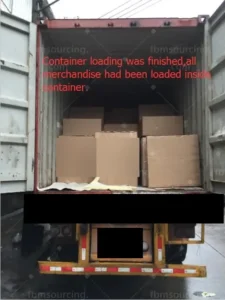
Please plan for about four months between your deposit and shipment on a grocery chain’s first store order — the drawing and spec-approval stage usually takes around two months as the standardized fixture spec is finalized and signed off, and production takes about another two months. Once that first-store spec is locked, repeat orders for subsequent stores can move through production faster because the drawing cycle is already resolved. Sometimes, on a large rollout, one store’s full fixture package fills a container on its own; sometimes several stores opening in the same window share containers, with each store’s fixtures loaded and labeled separately for site-by-site delivery; and sometimes, in one batch, we combine fixtures from several stores of the same client into a few containers timed to the rollout calendar. Always full containers — for FBM Sourcing this is routine, well-practised work.
Frequently Asked Questions
What are the main product categories in a supermarket fit-out sourced from China?
Four core scopes: refrigerated and cold-chain display cases, shelving and gondola fixtures, checkout and point-of-sale counters, and signage or shopfront elements — each usually sourced from a factory that specializes in that category rather than one factory covering all four.
Why do refrigerated display cases take longer to produce than shelving?
Refrigerated cases combine custom casework with a refrigeration unit that has to match the specific store’s electrical draw and condensate drainage, so the case cannot be finalized until the store’s mechanical and electrical drawings are fixed — a coordination step shelving and gondola fixtures do not require.
Should every store in a chain have its own custom fixture spec?
No — locking a single standardized fixture spec once and repeating it across every new store, with at most a small set of pre-approved size variants for different store formats, gets a chain better pricing and a shorter lead time than re-specifying finishes or dimensions for each location.
Can grocery chain fixtures for multiple stores ship in the same containers?
Yes — when several stores are opening in the same window, FBM Sourcing consolidates their fixture packages into shared full containers, with each store’s items loaded and labeled separately so delivery to each site stays organized.
Before a refrigerated case is quoted, its refrigerant, energy registration and electrical safety evidence also have to match the destination market model by model, which is why our guide to cold room manufacturers in China sets out what each type of refrigeration maker should supply.
Related Reading
- How Does Procurement Work for Convenience Store & Retail Chain Rollouts?
- How Does Procurement Work for Bank Branch & Financial Office Rollout Programs?
- How Does Procurement Work for Car Dealership & Showroom Construction Projects?
- China Sourcing Agent for Hotel FF&E Procurement: Who Should You Use?
- How Does FF&E Procurement Work for Food Hall & Food Court Projects?