Yes. Chinese FF&E and joinery factories can match existing finishes on a Phase 2 order, provided the buyer supplies retained physical samples, the original spec sheets and shop drawings, and the batch or colour codes from Phase 1, and a measurable tolerance (typically a Delta E value plus a gloss range) is agreed against a sealed control sample before production starts. Manufactured finishes such as powder-coated aluminium, HPL laminate, melamine, solid surface and porcelain tile from a continuing series match closely; natural veneer, natural stone, dye-lot fabrics and anodised aluminium match only within a visible range. On projects like this, FBM Sourcing works as your dedicated sourcing partner.
General reorder mechanics (pricing, minimums, re-confirming drawings) are covered in our article on repeat and reorder purchases from Chinese factories; this piece is only about making a Phase 2, extension or additional-building order look the same as Phase 1.
What Does the Factory Need From You to Match a Phase 1 Finish?
A colour code alone is not enough. Factories match against physical references, so the quality of a Phase 2 match is decided by what your team kept from Phase 1:
- Retained physical samples from the Phase 1 run: a laminate offcut, a coated extrusion piece, a veneer sample, a fabric cutting, a tile from a delivered carton, ideally at least 300 x 300 mm for flat finishes.
- Original spec sheets and finish schedules: laminate brand and reference, RAL or Pantone code, gloss level, veneer species and cut, stain and lacquer sheen, fabric article and colourway.
- Approved Phase 1 shop drawings with edge details, grain direction and board thicknesses, so dimensions and joints repeat exactly.
- Batch, lot or dye-lot codes from Phase 1 packing lists, tile cartons, laminate sheet labels and fabric roll tags.
- Site photographs of installed items under the actual room lighting.
Some references carry hard numbers that make matching mechanical rather than subjective. HPL sheets are made to standard sizes of 1220 x 2440 mm and 1300 x 2800 mm, and the sheet label carries the design reference and production batch. A powder coat specified as RAL 9010 matt, around 30 gloss units at 60 degrees, can be re-produced by any coating line that carries the RAL master.
How Is Matching Tolerance Agreed?
The most important step is converting “match the existing” into a number and a physical control sample that both sides sign; otherwise the factory ships what looks right on its bench and the site team rejects it under different lighting.
For solid colours (powder coat, plain laminate, lacquer, solid surface) the convention is a colour difference of Delta E (ΔE) at or below 1.0 to 2.0 against the reference under a D65 daylight illuminant. A ΔE of 1.0 is roughly the threshold a trained eye notices side by side; 2.0 is generally accepted where items are not butted together. Coating lines and laminate mills own spectrophotometers, so asking for a ΔE reading is normal. Gloss is measured at 60 degrees and usually held to plus or minus 5 gloss units.
The control sample process runs in three steps. The factory produces a strike-off from the Phase 1 reference; the buyer or their sourcing agent approves it and the piece is split, one half sealed at the factory as the production reference, the other held by the buyer or agent; and the sealed sample with its ΔE, gloss and sheen readings is written into the purchase order as the acceptance standard. Any dispute at pre-shipment inspection is settled against the sealed piece. See our note on the shop drawing approval cycle for how approvals move through Chinese factories.
For veneer, stone and textured fabrics, where a numeric ΔE is meaningless, tolerance is agreed as sealed “light” and “dark” boundary samples, with anything between them accepted.
Which Finish Families Match Easily and Which Do Not?
The table summarises what we see on hotel, apartment and school Phase 2 packages, and what each finish family needs for a Phase 2 match.
| Finish family | Match difficulty | Realistic tolerance | Notes for Phase 2 |
|---|---|---|---|
| Powder-coated aluminium (RAL / Pantone solid) | Easy | ΔE ≤ 1.0, gloss ±5 GU | Any line with the RAL master can repeat it; state gloss and texture. |
| HPL / compact laminate | Easy if reference still in production | ΔE ≤ 1.0 to 1.5 solids; visual range for woodgrains | Buy the full quantity from one batch. |
| Melamine-faced board | Easy to moderate | ΔE ≤ 1.5 solids; visual for prints | Re-match edge banding to the new board batch. |
| Solid surface | Easy for plain colours | ΔE ≤ 1.0 to 2.0 | Particulate patterns vary by batch; avoid butt-jointing phases. |
| Porcelain tile (same series) | Easy to moderate | Shade and calibre codes matched to Phase 1 cartons | Discontinued series: treat as hard. |
| Natural wood veneer | Hard | Light/dark range samples; no meaningful ΔE | Species, cut and stain repeat; the log does not. |
| Natural stone | Hard | Range samples from the same quarry, ideally same block | Approve slab photos before cutting. |
| Upholstery / drapery fabric | Hard (dye-lot dependent) | Visual match to retained cutting; ΔE ≤ 2.0 plains only | Order all Phase 2 plus attic stock from one dye lot. |
| Anodised aluminium | Hard | Visual range; tone varies with alloy batch and bath | Consider anodic-look powder coat where the spec allows. |
Even easy families need the whole Phase 2 quantity from one batch, which is why matching adds time to a normal lead time; the factory confirms the added time in writing. Lacquer and PU-painted MDF sit between the two groups: the colour is codeable, but sheen and film build shift its appearance, so a ΔE of 2.0 with a sealed sample is the practical limit. Our comparison of melamine, PVC and lacquer cabinet finishes explains why a lacquer Phase 1 is harder to repeat than a melamine one.
Sourcing this for a commercial project?
FBM Sourcing works with project owners, developers, main contractors and FF&E contractors on hotel, apartment, school, office and other commercial building projects. Send us your BOQ, drawings or product list — our team will review it and get back to you.
What Happens When the Original Factory Is No Longer Available?
On projects with a two- or three-year gap between phases, it is common for the Phase 1 factory to have closed a line, changed ownership, switched inputs, or lost the file. This does not end the match, but it changes the method: the new factory has only your retained samples and drawings to work from.
For manufactured finishes the transfer is straightforward. A powder coat identified by RAL code, gloss and texture can be re-produced by any competent coating line; the RAL Classic system holds over 200 defined shades and the masters are identical everywhere. A laminate identified by mill and design reference can be bought from that mill by any joinery factory, so the match is really a purchasing task followed by a strike-off on the new press to confirm edge banding, glue line and machining. In our experience the new-factory route on laminate or powder-coated items adds sampling time compared with a same-factory repeat.
For natural finishes it is a genuine re-selection: veneer re-sourced by species, cut and stain formula and approved against range samples; stone re-selected from the same quarry with slab photographs approved before cutting. Where a tile or laminate series has been discontinued, the options are a designer-approved nearest match under a signed range sample, or a deliberate contrast so Phase 2 rooms read as an intentional variant. Both are legitimate; hoping the difference will not be noticed is not.
Attic Stock vs Fresh Production: How Sequencing Affects Consistency
Attic stock is the overage of finished goods held after Phase 1 for replacements. Hotel and apartment projects commonly hold a small allowance of tiles, laminate panels, loose furniture components and upholstery fabric from the original batch, agreed at order stage. That stock matches Phase 1 by definition, and it plays two roles in a Phase 2 order.
First, it is your best physical reference: an attic-stock panel is a better matching sample than a site-worn one because it has not faded or scuffed. Second, it lets you decide where the seam between phases falls. A sensible sequence uses attic stock to complete any Phase 1 areas that need infill or connection (a corridor, a lobby extension, a shared restaurant) and runs all wholly new rooms in fresh Phase 2 production. Rooms are then internally consistent even if the batches differ by a barely visible ΔE of 1.0 to 1.5, because nobody sees a Phase 1 panel next to a Phase 2 panel. On a 120-key hotel adding a 60-key wing, for example, the Phase 1 attic stock of headboard laminate and corridor tile goes into the link corridor and the extended lobby, while all 60 new rooms are cut from a single fresh laminate batch and a single kiln run. How much attic stock to hold is covered in our article on attic stock for hotel FF&E.
Where a Phase 2 is already foreseen at Phase 1 tender, the cleaner solution is to buy colour-critical inputs for both phases at once and have the factory hold them: fabric from one dye lot, tile from one kiln run, laminate from one batch, released against a staggered production and shipping schedule. That carries storage and cash-flow implications, discussed in our note on factory hold stock and staggered delivery, but it removes the matching risk on the hard half of the table above.
How Does a Sourcing Agent Run a Phase 2 Finish Match?
FBM Sourcing manages the entire China procurement package for overseas construction projects. On a Phase 2 order the agent’s job is mainly to control the references and approvals so the factory is never guessing. In practice that means five things.
- Assemble the reference package. Retained samples, spec sheets, Phase 1 shop drawings, batch codes and site photos go into one register before any factory is contacted; where Phase 1 was placed through us, these are already on file.
- Confirm the factory and inputs. We check whether the Phase 1 factory and its board, coating and fabric inputs are still available, and where not, transfer the reference package to a factory in the same cluster using the same finish system.
- Agree the tolerance in writing. ΔE and gloss limits for solid finishes, sealed light/dark range samples for natural ones, written into the purchase order alongside the drawings.
- Approve strike-offs and freeze the control sample. Our own team reviews strike-offs against the retained Phase 1 sample under daylight-standard lighting, then seals the split control sample at the factory.
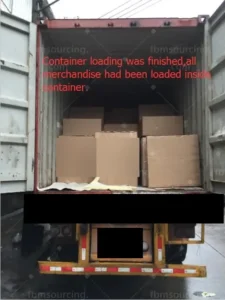
- Inspect against the sealed sample before shipping. Our team carries out a full pre-shipment inspection on the factory floor, comparing production with the sealed control sample and approved drawings, and delivers photo and video records to the buyer before the container is released.
The commercial side is simple: for suppliers you nominate, we charge a 5% commission; for products we source for you, we quote a direct price, and the reference control, factory coordination and pre-shipment inspection above sit inside it. Phase 2 orders are often smaller than Phase 1, sometimes a single 40ft container for one wing, so the matching work is proportionally the largest part of the job. If you want a China building material and furniture sourcing agent to take over the Phase 2 match from your existing samples, that is the starting point.
FBM Furniture
If you are an FF&E contractor, see furniture sourcing in China for FF&E contractors on fbmfurniture.com, the site of FBM Furniture, the furniture sourcing line of FBM Sourcing Limited.
Get a China Procurement Quote for Your Project
To review a Phase 2, extension or additional-building FF&E order, send us the Phase 1 finish schedule and shop drawings, photographs of the retained samples, any batch or dye-lot codes, the Phase 2 quantities and room list, your destination port and the target site date. If Phase 1 attic stock exists, tell us the quantity so we can plan where the two batches meet; a typical small holding covers connection areas and leaves fresh production for wholly new rooms.
Our team will assess which finishes can be matched within a ΔE tolerance, which need range samples, and whether the original factory or a replacement in the same cluster is the right route, and come back with a proposed matching plan and quotation for the full package.