
A buyer who already runs China procurement for American or Australian hotel projects will find that most of the work transfers to a Gulf project unchanged — and that a small number of things change so completely that treating them as a variation on the familiar process is the usual reason a Middle East package runs late. The factories are the same factories. The container is the same container. What moves is where in the programme a compliance problem shows up, and by the time it shows up in the Gulf, the goods are already at a port.
The one structural difference: where a compliance failure surfaces
In the United States, product compliance is enforced at the building. There is no national product approval; the authority having jurisdiction inspects the work, and the evidence a project needs is the listing or approval the code calls for — a UL 10C listing for a fire door assembly, an NFRC label on a window, a Florida product approval for an impact window. Customs does not ask for any of it. A non-compliant product can be manufactured, shipped, cleared, delivered and installed, and the problem appears at inspection.
Australia works on the same principle with different documents. The National Construction Code sets the performance requirements, evidence of suitability comes through the relevant Australian Standard — AS 2047 for windows, AS 1905.1 for fire doorsets, SAA approval for electrical items — and the certifier reviews it on the way to occupancy. Australian customs cares about biosecurity, not conformity: timber packaging has to meet ISPM 15 and a consignment can be held for inspection, but nobody at the border asks whether a door meets AS 1905.1.
The Gulf reverses this. Saudi Arabia and the UAE run pre-shipment conformity as a condition of import. A Saudi consignment needs its certificates registered before it arrives, through the routes described in SASO and SABER certification; the UAE runs its own conformity scheme, set out in ESMA and UAE conformity requirements. The practical consequence is not that the rules are stricter — in several respects they are less demanding than a Californian or Queensland specification. It is that the failure mode moves from month eighteen of the programme to the week the container sails, and a container that cannot be cleared is a container sitting on demurrage in a port where you have no leverage over anything.
For a buyer, that single change carries almost all the consequences that follow.
Certification stops being paperwork and becomes a critical-path item
On a US or Australian job, certification evidence is usually assembled in parallel with production. The factory is already cutting steel while somebody chases the test report. That habit does not survive contact with a Gulf project, because the certificate has to exist, and be registered against the specific consignment, before the goods can enter.
Three things follow that are worth building into the programme rather than discovering:
- Product-level and shipment-level certificates are different objects. One attaches to the product and can be reused; the other attaches to this consignment and cannot. A buyer who has budgeted time for the first and not the second finds the second sitting between a finished order and a vessel.
- The certificate is issued against a declared product identity. A late substitution — a different glass makeup, a different lock, a change of factory for one line item — can invalidate work already done. Substitutions that are routine on a US job because the AHJ will not see them until installation are not routine here.
- The importer of record, not the Chinese factory, is usually the party the scheme recognises. This determines who has to hold an account, who submits, and who is stuck if the local entity has not been set up. It is a question to settle at contract stage, not at shipment.
Where a project spans several Gulf states, the certificates generally do not travel with the goods. The comparison in window and door export certifications by market sets out how the regimes differ product by product.
Pricing a Gulf hotel package from China?
FBM Sourcing works with project owners, developers, main contractors and FF&E contractors on hotel, apartment, school, office and other commercial building projects. Send us your BOQ, drawings or product list — our team will review it and get back to you.
The submittal chain inserts a step before the factory starts
Gulf construction contracts are overwhelmingly written on FIDIC-derived forms with a consultant or engineer sitting between the contractor and the employer, and material submittals go to that consultant for approval before procurement is authorised. Physical samples, technical data and test evidence are reviewed, commented and resubmitted, and none of it is unusual — but the cycle is real, it is measured in weeks, and it happens before the factory can be released.
US and Australian projects have submittals too. The difference is weight and sequence. On a great many American interior packages the contractor procures on its own judgement and submits in parallel; on a Gulf project the consultant approval is a gate. A buyer who plans a Gulf order on a US timeline typically loses those weeks twice — once to the submittal cycle and once to the certification that cannot start until the product identity is fixed by that approval.
The practical response is to front-load the sample round: get physical samples of the controlling items in front of the consultant early, and treat the approved sample as the frozen specification that certification and production both run from. The way a package is assembled for that kind of review is covered in how hotel FF&E procurement from China works for Saudi and GCC projects.
Specification: the Gulf inverts what the climate is asking for
Most of a hotel specification is climate-neutral. Casegoods, loose furniture, sanitaryware and lighting change very little between Dallas, Brisbane and Riyadh. The envelope and the wet areas do.
The clearest inversion is glazing. A large part of American window specification is driven by heat loss — U-factor, NFRC labelling, and in California the Title 24 energy rules. Australia balances heating and cooling by climate zone. A Gulf project is almost entirely a cooling problem, so solar heat gain becomes the governing number, the coating selection changes accordingly, and the thermal break exists to stop condensation and heat transfer inward rather than outward. Add coastal salt exposure and airborne sand and the hardware and finish specification changes too. The detail is in aluminium window and glass specifications for Gulf climate projects.
Two smaller ones catch buyers who transfer a specification wholesale. Electrical items follow a different supply standard from North America, which is worth checking before an FF&E lighting package is repeated from a US property — see voltage and electrical standards. And water fittings do not carry the Australian WaterMark and WELS obligations described in WELS ratings for tapware and toilets, so an Australian tapware schedule contains certification cost that a Gulf project is not asking to pay for.
The calendar: two sets of holidays, and right now they overlap
Every China programme is planned around Chinese New Year and the October national holiday. A Gulf project adds Ramadan, the Eid holidays and the Hajj season at the receiving end, when site working hours are reduced by law, approvals slow and deliveries are harder to book.
The point that is easy to miss: through the second half of this decade these two shutdowns are landing in the same week. Ramadan moves roughly eleven days earlier each Gregorian year, and Chinese New Year oscillates between late January and late February, so the two have converged — Chinese New Year 2027 falls in the first week of February and Ramadan 2027 is expected to begin within about a day of it; in 2028 both fall in the last week of January. Exact Ramadan dates are confirmed by moon sighting and are announced only shortly beforehand, so they should be treated as a window rather than a date.
For a buyer this removes a mitigation that normally exists. On a US or Australian project, a Chinese New Year shutdown can be absorbed because the receiving end keeps working through February; the container arrives into a site that can install it. A Gulf project in these years can lose the factory and the site in the same fortnight. Anything intended to land in the first quarter should be pulled forward, and the buffer logic in lead time buffers in a construction schedule applies with less slack than usual. The broader scheduling picture for Gulf contractors is in how UAE and Middle East contractors source from China.
Freight: shorter, cheaper, and with one extra decision
The Gulf is the easiest of the three destinations to ship to. Transit from South China to Jebel Ali or the Saudi ports is a fraction of a US East Coast or Australian east coast run, and the routing decisions are simpler than a US inland move with its drayage and chassis constraints.
The extra decision is the gateway. A Saudi project can be served directly through the Red Sea or the Gulf coast, or transhipped, and the right answer depends on where the site is rather than on which port quotes best — set out in Dammam vs Jeddah vs Jebel Ali. What does not change from a US or Australian project is the consolidation logic. Sometimes, on a large project, the furniture alone fill full containers; sometimes the furniture share containers with the other product categories of the same project; and sometimes, in one batch, we combine a dozen or more product categories from several projects of the same client into a few containers — always full containers, and for us this is routine, well-practised work.
Duty is the other simplification. A US importer has to reckon with the tariff structure and with anti-dumping and countervailing duties on several categories that can dwarf the ordinary rate. That specific hazard does not exist in the Gulf, which is one of the few places where a US-experienced buyer can plan with fewer unknowns rather than more. Published rates are still not landed cost, so a project-specific landed-cost assessment is worth doing before the budget is fixed.
What does not change at all
It is worth being explicit about this, because the list of differences above can make a Gulf project sound like a different discipline. It is not.
- The factory base is identical. The same manufacturers that supply American and Australian hotel projects supply Gulf ones; nothing about the production is region-specific except the certification and the specification points above.
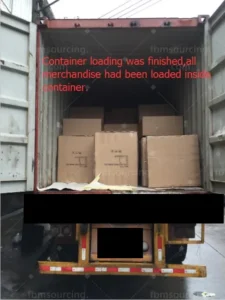
- Quality control is the same work. Inspection on the factory floor with a full inspection before shipment, with photographic and video records, does not change by destination.
- The commercial structure is the same. Full container loads, the same order documentation, the same responsibility sitting with one counterparty.
- The failure modes inside the factory are the same. Late sample approval, an unfrozen specification and a bill of quantities with unresolved items cause the same damage in Riyadh as in Florida — they simply cost more here because the certification behind them cannot start.
Where FBM Sourcing Fits
FBM Sourcing manages the entire China procurement package for overseas construction projects. On a Gulf hotel or serviced-apartment package that means the specification is fixed against the consultant-approved sample before production is released, the conformity route for each product family is settled before the factory is released rather than after, the shipment is planned around both calendars, and the goods are consolidated into full containers for the gateway that suits the site. Our own team inspects on the factory floor and carries out a full inspection before shipment, with photographic and video records.
We work mainly on commercial construction projects, with developers, general contractors, builders, commercial project owners, interior design and construction companies, and FF&E solution providers — we do not sell to individual homeowners.
About FBM Sourcing
Sourcing since 2014, FBM Sourcing has shipped 1,000+ containers of building materials and FF&E to more than 20 countries for hotels, apartment buildings, schools, offices and other commercial buildings. All quotations, invoices and shipping documents are issued by FBM Sourcing — you deal with us, and we carry the responsibility. For suppliers you nominate, we charge a 5% commission; for products we source for you, we quote a direct price.
If you have a Gulf project package to price, send us the specification and drawings and we will tell you which items are realistically buyable from China against the conformity route your market requires at https://fbmsourcing.com/china-building-materials-ffe-procurement/. Our Gulf service page is at China sourcing agent for commercial projects in Saudi Arabia and the GCC.
Where the package includes fire-rated doors, facade cladding or fire-stopping, a further approval layer applies that has no direct equivalent in the US or Australian systems: fire safety approvals for a Gulf project.
Frequently asked questions
Is sourcing from China for a Middle East hotel different from sourcing for a US hotel?
The factories, the production and the quality control are the same. Three things change. Conformity in Saudi Arabia and the UAE is enforced before import rather than at site inspection, so certification becomes a critical-path item instead of parallel paperwork. Gulf contracts run a consultant submittal and approval gate before procurement is released. And the specification shifts from a heating problem to a cooling problem, which changes glazing and coastal exposure requirements.
Why does Gulf certification have to be done before shipment?
Because Saudi Arabia and the UAE operate pre-shipment conformity schemes as a condition of import, rather than leaving product compliance to be checked at the building. In the United States there is no national product approval and customs does not ask for compliance evidence; the authority having jurisdiction checks it at inspection. In the Gulf a consignment without its certificates in order is a customs problem at the port, not a snagging item at handover.
Do Chinese factories that supply American or Australian projects also supply Gulf projects?
Yes. The manufacturer base is the same. What differs is the evidence package each destination requires and the specification points driven by climate. A factory already producing to AS 2047 or to a UL listing is not a different factory for a Gulf order, but the test evidence it holds is not automatically the evidence a Gulf import needs.
How do Ramadan and Chinese New Year affect a Gulf project schedule?
Both shut down part of the chain, and through the second half of this decade they are falling in the same week. Ramadan moves about eleven days earlier each Gregorian year and Chinese New Year oscillates between late January and late February, so Chinese New Year 2027 and the start of Ramadan 2027 are expected within about a day of each other, and in 2028 both fall in the last week of January. That removes the usual mitigation of a Chinese shutdown absorbed by a working site. Ramadan dates are confirmed by moon sighting, so plan a window rather than a date.
Which port should a Saudi project use?
It depends on where the site is rather than on the freight quotation. A Red Sea gateway suits the western region, a Gulf coast gateway suits Riyadh and the east, and transhipment through Jebel Ali makes sense in specific cases. The trade-offs, including free time and seasonal congestion, are set out in our comparison of Dammam, Jeddah and Jebel Ali.
Do anti-dumping duties apply to Gulf imports from China?
The anti-dumping and countervailing duty exposure that affects several categories entering the United States does not apply in the same way to Gulf imports, which makes budgeting more predictable. A published tariff rate is still not the landed cost, so a project-specific landed-cost assessment is worth doing before a budget is fixed.