
Healthcare and aged care furniture for Australian projects is made in China by several separate industries — contract seating factories, casegoods factories, steel casework makers and rehabilitation equipment groups — and only one Chinese listed company can be tied to care furniture through its own annual report: Xiangyu Medical Co., Ltd. (Shanghai Stock Exchange STAR Market: 688626). What decides an Australian aged care or hospital package is therefore not a brand list but two checkable things: which manufacturer type makes each item, and which Australian requirements it has to satisfy.
This round-up is written for developers, general contractors, builders, commercial project owners, interior design and construction companies and FF&E solution providers delivering residential aged care homes, retirement campuses and hospital projects in Australia. It is descriptive, not a ranking, and FBM Sourcing is not affiliated with the company named here.
What Does This List Cover, and What Does It Leave Out?
An Australian schedule splits into groups bought in different ways:
- Beds and powered patient-handling equipment, covered separately in our round-up of hospital bed manufacturers in China, not repeated here.
- Resident room and ward furniture: bedside lockers and chests of drawers, wardrobes, over bed tables, visitor chairs, lockable valuables storage.
- Communal furniture: lounge and dining chairs, dining tables, high-back and assisted-rise armchairs, courtyard furniture.
Our global round-up of healthcare furniture manufacturers in China profiles factories without reference to any one market, and our Middle East hospital variant covers Saudi and UAE conformity routes. This is the Australian view.
At a Glance: Listed Company and Manufacturer Types
| Company or manufacturer type | Role in an Australian aged care package | Evidence to request |
|---|---|---|
| Xiangyu Medical Co., Ltd. (SSE STAR Market: 688626), Anyang, Henan | Rehabilitation equipment group whose product structure includes care and wellness furniture | Which items are made in its own plants, test reports naming each model, Australian regulatory status where an item may be a device |
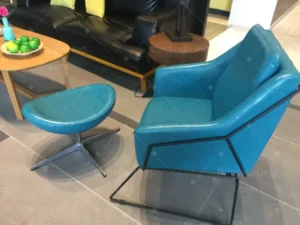
| Contract seating makers | Dining chairs, lounge chairs, high-back and assisted-rise armchairs, visitor chairs | Strength, durability and stability reports for the exact model, including the reclining mechanism fully reclined |
| Resident room casegoods makers | Bedside lockers, chests of drawers, wardrobes, over bed tables, lockable valuables storage | Board and edge specification, formaldehyde emission class, cleaning resistance, castor models |
| Steel and laminate casework makers | Treatment room storage and medication cabinetry that are not devices | Coating and material data, shelf load evidence, disinfection agents the finish tolerates |
| Joinery factories | Nurse stations, reception counters, servery and pantry casework | Shop drawings approved against the interior design, worktop material data, fire performance evidence |
| Outdoor furniture makers | Communal courtyard and terrace furniture | Frame material and coating system, stability at the seat heights specified |
| Rehabilitation aid clusters | Shower chairs, transfer aids and other items on the furniture and device boundary | Statement of intended purpose, labelling and instructions for use, Australian regulatory status |
The Listed Company: Xiangyu Medical Co., Ltd. (688626)
The exchange’s own company list shows Xiangyu Medical as listed on the STAR Market since 31 March 2021, with no delisting date and no special treatment marker on its short name. It is named because its 2025 annual report ties it to care furniture in its own words.
- What the report says: a rehabilitation medical device maker founded in 2002, covering ten product categories, one of which is care and wellness furniture.
- Who it supplies: medical institutions, aged care institutions, welfare homes, education and sports systems, and households.
- Furniture subsidiary: a wholly owned subsidiary in Henan whose name identifies it as a medical and elderly care furniture company.
- What it does not say: revenue by product is reported only in equipment categories, so furniture is not a disclosed revenue line; and the export markets named are Southeast Asia, the Middle East, Central Asia, South America and Africa. Australia is not named as an export market.
Evidence to request: confirmation of which scheduled items are made in its own plants, test reports naming each model, and a written statement of intended purpose for anything that could fall inside the Australian therapeutic goods definition.
Only one company is named because we name a company only when its listing is current and its own annual report ties it to the category. Others we checked report different businesses — smart electric beds, office seating, mattresses or home furniture — so they are not named. Private factories can be excellent suppliers here, judged on their own product documents.
Which Manufacturer Types Supply the Rest of an Australian Schedule?
Most furniture in an Australian residential aged care home comes from private Chinese companies that publish no annual report, so they are described by type above. The factory type decides what test evidence exists and what must be tested for the project. Contract seating makers matter most: in aged care the chair is a clinical interface as much as a furniture item, because seat height, arm height and arm length decide whether a resident can stand unaided, and stability decides what happens when someone pushes down on an arm to rise. Resident room casegoods makers are usually the same factories that make hotel and office casegoods, so the aged care difference is specification, not machinery. Casework, joinery and outdoor furniture factories cover the rest, rarely as the same supplier.
Is Aged Care Furniture a Medical Device in Australia?
Some of it can be, and intended purpose decides, not appearance. Under the Therapeutic Goods Act 1989, a medical device is, among other things, any instrument, apparatus, appliance, material or other article intended, by the person under whose name it is supplied, to be used for human beings for purposes including prevention, monitoring, treatment or alleviation of disease, or treatment, alleviation of or compensation for an injury or disability, and that does not achieve its principal intended action by pharmacological, immunological or metabolic means.
The Act then says where that purpose is read from: the labelling on the equipment, the instructions for using it, advertising material relating to it, and technical documentation describing its mechanism of action. How a factory writes its catalogue, carton labels and manual can therefore move an item into or out of the framework. Where an item sits near the boundary — shower and commode chairs, transfer aids, pressure-relief seating — confirm with the Therapeutic Goods Administration whether it is regulated as a medical device before ordering.
Pricing an aged care or hospital furniture package for an Australian project?
Send us your FF&E schedule or BOQ. We will match each line to the right manufacturer type and request the test reports and timber documents Australia needs.
What Do Australia’s Aged Care Rules Ask of the Furniture?
Australia’s new Aged Care Act started on 1 November 2025, and the Aged Care Rules 2025 sit under it.
The furniture a residential care home has to provide
Under the service type residential everyday living, the Rules describe the furnishings a residential care home provides. Communal furnishings cover fit-for-purpose communal lounge and dining furniture and, where the home has a communal outdoor space, outdoor furniture. Bedroom and bathroom furnishings cover, among other things, a bedside table, locker or chest of drawers, wardrobe space, draw screens for shared rooms, a visitor chair and an over bed table if required; a fixture or item of furniture where the individual can safely lock and store valuables; and a chair, with arms, meeting the individual’s care, safety and comfort needs.
Standard 4 of the Aged Care Quality Standards
Standard 4 of the Quality Standards is titled The environment. Where services are delivered other than in the individual’s home, the provider must ensure that individuals can access funded aged care services in a clean, safe and comfortable environment that optimises their sense of belonging, interaction and function. A separate equipment outcome applies: where the provider uses equipment in delivering services, or provides equipment to individuals, the equipment must be safe and must meet the needs of the individuals. These are outcome statements, not product specifications; the burden sits on the operator to explain why each item is safe and suitable, which is what factory test reports are for.
Restrictive practices and the falls indicator
The Rules define mechanical restraint as the use of a device to prevent, restrict or subdue an individual’s movement for the primary purpose of influencing behaviour, but not the use of a device for therapeutic or non-behavioural purposes. Whether a rail, a lap belt or a deeply reclined chair falls inside that definition depends on how it is used, so the specification should record what each accessory is for, and the operator’s clinical governance team should sign off before restraint-capable accessories are ordered at scale. Providers also report falls and falls resulting in major injury as a quality indicator, which is why operators ask hard questions about seat heights and chair stability.
Which Australian Standards and Building Classes Apply?
The National Construction Code classifies the building, and the class decides which provisions apply. Class 9c is a residential care building; the Code notes that Class 9c buildings may contain residents with various care level needs and that the provisions assume minimal on-duty on-site staff at any time. Class 9a is a health-care building, including one used as a residential care building. Our guide to NCC and BCA compliance for building materials from China covers how provisions flow down to products.
On the furniture standards, with their status as listed by Standards Australia:
- AS/NZS 4688.2:2000, Furniture — Fixed height chairs, Part 2: Determination of strength and durability, current, reproduced from ISO 7173:1989 with variations for Australia and New Zealand.
- AS/NZS 4688.3:2000 and AS/NZS 4688.4:2000, stability of upright chairs and of chairs with tilting or reclining mechanisms when fully reclined, both current. Part 4 is the one that matters for aged care recliners. AS/NZS 4688.1:2000, ergonomic and general requirements, is listed as superseded, so a report against Part 1 alone should be queried.
- AS 1428.1:2021, Design for access and mobility, Part 1, current, governing the accessible built elements the furniture works alongside. See our guide to AS 1428 and accessible fixtures on Australian projects.
One Chinese standard is worth naming in a request for quotation because a Chinese factory already understands it: GB/T 45272-2025, Guidelines for age-adaptive design of household products, issued 28 February 2025, effective 1 September 2025 and current in the Chinese national standards system. It is no substitute for an Australian test report, but asking about it shows whether a factory has an aged care programme.
What Are the Import Conditions for Wooden Aged Care Furniture?
Biosecurity. All imported timber, wooden articles, bamboo and related products must comply with the import conditions stated in the Biosecurity Import Conditions system operated by the Department of Agriculture. Those conditions require the importer to demonstrate that pest risks are mitigated through the manufacturing process or through approved treatments, verified by documentary evidence and inspection on arrival.
Illegal logging due diligence. Australia’s illegal logging laws changed on 3 March 2025, and the Illegal Logging Prohibition Rules 2024 replaced the earlier 2012 regulation and its due diligence requirements. The Rules list regulated timber products by tariff classification, and wooden furniture is squarely inside it: upholstered and other seats with wooden frames, wooden furniture used in offices, kitchens and bedrooms, other wooden furniture, and parts of wood. Recycled material and consignments below a low customs-value threshold are exempt.
Before importing, the importer must obtain as much as is reasonably practicable of a defined information set: the product type and trade name; the common and scientific name of the tree the timber came from; the country and area where it was harvested; the country of manufacture; the supplier’s name, address and trading name; and the sales or delivery document. Overseas suppliers are not directly regulated, but their Australian customers may ask for exactly that, so a species and origin declaration belongs in the request for quotation. See the document trail in our guide to timber legality documents for China-made wood products.
How FBM Sourcing Handles an Australian Aged Care Furniture Package
As a sourcing partner in China, FBM Sourcing starts from the schedule or BOQ and the Australian conditions attached to it, not from a factory list. Each line is matched to the manufacturer type that makes it, and the evidence Australia and the operator need is requested with the quotation.
- Documents: strength and stability reports matched to the exact model, formaldehyde and finish data for casegoods, species and origin information for anything wooden, and a statement of intended purpose near the therapeutic goods boundary.
- Inspection: one inspection by our own team at the factory after bulk production is finished, before shipment, with photo and video records. The inspection report goes to the client before the balance is paid.
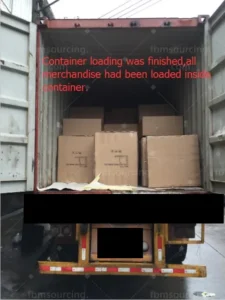
- Containers: Sometimes, on a large project, the aged care furniture items alone fill full containers; sometimes the aged care furniture items share containers with the other product categories of the same project; and sometimes, in one batch, we combine a dozen or more product categories from several projects of the same client into a few containers — always full containers, and for us this is routine, well-practised work.
For the wider category picture, see our China healthcare furniture export note.
Pricing an aged care or hospital furniture package for an Australian project?
Send us your FF&E schedule or BOQ. We will match each line to the right manufacturer type and request the test reports and timber documents Australia needs.
Frequently Asked Questions
Which Chinese listed companies make aged care furniture for Australian projects?
We found one whose own 2025 annual report ties it to care furniture: Xiangyu Medical Co., Ltd. (Shanghai Stock Exchange STAR Market: 688626), a rehabilitation equipment maker listing care and wellness furniture among its ten product categories, although the export markets named in that filing are Southeast Asia, the Middle East, Central Asia, South America and Africa, not Australia.
What furniture must an Australian residential aged care home provide?
The Aged Care Rules 2025 list, under residential everyday living, fit-for-purpose communal lounge and dining furniture, outdoor furniture where there is a communal outdoor space, and bedroom furnishings including a bedside table, locker or chest of drawers, wardrobe space, draw screens in shared rooms, a visitor chair and over bed table if required, lockable valuables storage, and a chair with arms.
Which Australian Standard covers aged care chairs?
The AS/NZS 4688 series on fixed height chairs: Standards Australia lists Part 2 on strength and durability, Part 3 on stability of upright chairs and Part 4 on stability of tilting or reclining chairs as current, while Part 1 is listed as superseded.
Is a shower chair or transfer aid from China a medical device in Australia?
It depends on the intended purpose declared for it: the Therapeutic Goods Act 1989 reads that purpose from the labelling, instructions for use, advertising material and technical documentation supplied under the supplier’s name, so obtain those documents early and confirm with the Therapeutic Goods Administration before ordering.
What timber documents does an Australian importer need for wooden care furniture?
Wooden furniture is a regulated timber product under the Illegal Logging Prohibition Rules 2024, so the importer must obtain, as far as reasonably practicable, the common and scientific names of the tree species, the country and area of harvest, the country of manufacture and the supplier’s details; separately, the goods must meet the biosecurity import conditions.
About FBM Sourcing
FBM Sourcing manages the entire China procurement package for overseas construction projects. Since 2014 we have worked with developers, general contractors, builders, commercial project owners, interior design and construction companies and FF&E solution providers across more than 20 countries and over 1,000 containers, as their sourcing partner in China — from the schedule or BOQ through factory selection, sampling, inspection by our own team before shipment, consolidation and shipping. All quotations, invoices and shipping documents are issued by FBM Sourcing, and sea freight is quoted to you before shipment. If you have an aged care furniture package to price, start at China building materials and FF&E procurement.