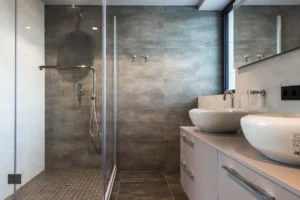
Prefabricated bathroom pods for UK student accommodation and hotel schemes are made in China by four distinct manufacturer types — GRP and SMC moulders, steel-framed pod builders with tiled finishes, concrete pod plants, and panelised or hybrid assemblers — and almost all of them are privately held. The choice between those four is usually made on appearance and price, when it should be made on three things a UK project cannot compromise on: the fire classification of the pod lining, the sound insulation performance of the pod wall and the void behind it under Approved Document E, and whether the fittings inside the pod satisfy the Water Supply (Water Fittings) Regulations. A pod that fails on any of those is not a commercial problem at handover, it is a building control problem.
This guide is written for developers, general contractors, builders, commercial project owners, interior design and construction companies and FF&E solution providers delivering purpose-built student accommodation, co-living, hotels and build-to-rent in the UK. It sets out the manufacturer types, the UK evidence each has to produce, and how a pod programme is sequenced against an academic-year handover that cannot move.
Why This List Names Almost No Companies
The Chinese bathroom pod sector is almost entirely privately held. There are no audited disclosures behind a claim of “20,000 pods delivered”, and no outside party can verify another factory’s project list. The nearest thing to an exception is CIMC (Shenzhen Stock Exchange 000039, also listed in Hong Kong), a listed group with a disclosed modular building business, though its focus is volumetric modular buildings rather than bathroom pods as a standalone product.
So this page describes the manufacturer types, the evidence each should produce for a UK scheme, and the questions that separate a pod plant from a sanitaryware factory that has started assembling pods. A numbered ranking of private pod factories would be an opinion presented as a finding, and a scoring column would invite a buyer to treat a guess as data. The general China-wide view of the category is at top prefab bathroom pod manufacturers in China for hotel and apartment projects, and the prior question of whether to use pods at all is worked through in should you use prefab bathroom pods or site-built bathrooms.
The Four Pod Manufacturer Types
1. GRP and SMC moulded pods
- What they are: pods whose tray, walls and sometimes ceiling are moulded from glass-reinforced plastic or sheet moulding compound, either as a one-piece shell or as a small number of moulded panels bonded together.
- Strength: the best watertightness of the four types, because there are few or no joints in the wet zone, and the lightest, which matters for crane capacity and for floor loading on a tall PBSA block.
- Limitation: the finish is moulded, so it reads as a moulded surface rather than as tiling. Design teams on higher-specification hotels often reject it on appearance; PBSA and co-living clients often prefer it precisely because it is seamless and easy to clean.
- UK evidence to request: reaction-to-fire classification of the moulded material to BS EN 13501-1, watertightness test record for the unit type, and confirmation that the composite meets the fire performance the specification calls up for the room type.
2. Steel-framed pods with tiled finishes
- What they are: a light-gauge steel frame with a tanked tray and board linings, tiled in the factory to the project’s specification.
- Strength: visually identical to a site-built tiled bathroom, so the design team gets the finish it specified while the programme gets factory production.
- Limitation: every tile joint and every board junction is a potential water path, so the tanking system and its inspection record matter far more than in a moulded pod. Weight is higher, which affects lifting and sometimes structural design.
- UK evidence to request: tanking system specification and the manufacturer’s warranty on it, per-unit watertightness test record rather than a type test, tile adhesive and grout specification, board type and its fire classification, and the acoustic build-up of the pod wall.
3. Concrete pods
- What they are: cast concrete units, occasionally with a moulded or tiled interior lining.
- Strength: the best acoustic and fire performance of the four, and highly robust in service, which suits hotels with a long refurbishment cycle.
- Limitation: weight. A concrete pod shipped from China occupies a great deal of payload for the volume, and both crane capacity and the structural frame have to be designed for it from the start rather than accommodated later.
- UK evidence to request: acoustic test data on the actual build-up, lifting points and structural calculations, and a realistic assessment of whether shipping mass from China still makes sense against a European or domestic pod source.
4. Panelised and hybrid pods
- What they are: pods shipped as flat panels and assembled either at a UK facility or on site, or hybrids combining a moulded tray with panel walls.
- Strength: container efficiency. This is the answer to the single biggest weakness of shipping pods from China, which is that a complete pod is mostly air.
- Limitation: the factory quality advantage is partly given back, because the wet-zone joints are now made outside the factory. The watertightness test has to happen after assembly, not before shipping.
- UK evidence to request: who performs and signs off the post-assembly watertightness test, what the assembly rate per day actually is with a trained crew, and where responsibility sits if a pod leaks after assembly by a third party.
Pricing a bathroom pod package for a UK scheme?
FBM Sourcing works with developers, general contractors, builders, commercial project owners, interior design and construction companies and FF&E solution providers on PBSA, co-living, hotel and build-to-rent schemes in the UK. Send the pod schedule, room types and structural openings and we will return it priced by pod type, with the fire, acoustic and water-fittings evidence set out.
What UK Evidence Must Be in Hand Before a Pod Order Is Placed?
- Water fittings compliance. Fittings that carry or receive water from the public supply in the UK fall under the Water Supply (Water Fittings) Regulations, and the practical route to demonstrating compliance is an approval such as WRAS or an equivalent recognised scheme. This is the single most common gap on Chinese-sourced pods, because a tap or a flush valve made for another market will not carry it, and the substitution is usually discovered by a water authority inspector rather than by the buyer.
- Fire classification of linings. Internal linings need a reaction-to-fire classification appropriate to the room and the building, normally expressed to BS EN 13501-1. For pods this covers the moulded shell or the board and its finish, not just the tile.
- Sound insulation. Approved Document E sets sound insulation requirements for rooms for residential purposes, which is what a PBSA study bedroom is. The pod wall build-up and, critically, the void between the pod and the building structure both affect the tested result, and the test happens on site long after the pods are bought. Ask for acoustic test data on the actual build-up, and make sure the void detail is designed rather than left to the installer.
- Accessibility. A proportion of rooms on a UK scheme will be accessible, and accessible pods are a different product with different dimensions, different grab-rail fixings and different door swings. Confirm the accessible pod count and layout at scheme design stage; adding them later means new moulds or new frame jigs and a new lead time.
- Construction products marking. Where a component within the pod is a construction product subject to marking requirements, the UK route and the extent to which CE marking is recognised both need checking for the specific product. See UKCA vs CE marking: which do UK projects need for China-made products and whether a Chinese factory can hold both UKCA and CE.
- Building Safety Act information. On higher-risk buildings the information trail about products and their performance has to be assembled and handed over, not reconstructed at the end. A pod supplier that cannot produce a complete, traceable document set per unit type will create work for the principal contractor later.
How a Pod Programme Is Sequenced Against a September Handover
A PBSA scheme has a handover date that does not move: rooms are let against an academic year, and a block that is not ready loses the whole year, not a month. That makes pod procurement a programme decision before it is a cost decision.
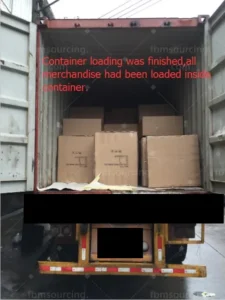
The sequence that holds is: fix room types and accessible-room counts at design stage; approve a full prototype pod, inspected in person or by detailed video and photographic record, before any production begins; release production in batches tied to the floor sequence rather than all at once; and book shipping so that pods land in the order they will be craned in. Sea freight from South China to Felixstowe, Southampton or London Gateway commonly runs around five to six weeks port to port, and the Chinese New Year shutdown stops production for several weeks and slows it either side. Working back from a September handover, the prototype approval needs to be complete well before Chinese New Year, not after it.
The other programme item specific to pods is that a complete pod is mostly air. Shipping volumetric units from China means many more containers per bedroom than a flat-packed fit-out would need, and that cost and that quay-side handling both belong in the comparison against a European pod supplier at the outset. Panelised pods exist precisely to change this arithmetic. The per-bed cost structure that this feeds into is set out in how per-bed FF&E cost structure works in student accommodation.
Comparison: Which Pod Type for Which UK Scheme?
| Pod type | Best for | Watertightness | Weight and shipping | Main UK evidence gap to close |
|---|---|---|---|---|
| GRP / SMC moulded | PBSA, co-living, budget and mid-market hotels | Highest — few or no wet-zone joints | Lightest; still volumetric | Reaction-to-fire classification of the composite |
| Steel frame, tiled | Hotels and BTR where the finish must match site-built | Depends entirely on the tanking system | Medium; volumetric | Per-unit watertightness record and tanking warranty |
| Concrete | Hotels with demanding acoustic or fire requirements | High | Heaviest; often uneconomic to ship from China | Structural and crane design, plus a genuine cost comparison against closer sources |
| Panelised / hybrid | Schemes where container count is the binding constraint | Depends on who assembles and tests | Best container efficiency | Who signs the post-assembly watertightness test and carries the leak risk |
Which Procurement Route Fits Which UK Project?
| Project scenario | Which route fits | Why | What would change the answer |
|---|---|---|---|
| 600-bed PBSA block, repeating en-suite, September handover | GRP or SMC pods from a single plant, batched to the floor sequence, consolidated by a China sourcing partner | Repetition and a fixed handover reward a single mould and a single quality baseline | If container count is the binding cost, a panelised pod changes the arithmetic |
| Hotel where the design team requires a tiled finish | Steel-framed tiled pods, with the tanking system specified by the buyer rather than the factory | Appearance is non-negotiable, so the risk moves to the wet-zone detail and must be controlled explicitly | If the acoustic requirement is severe, concrete or a heavier wall build-up may be forced |
| Co-living scheme with pods, joinery, furniture and lighting in one package | Sourcing partner covering pods and the fit-out lines together | Pods, joinery and FF&E are separate factories; one execution partner avoids three supply chains and three shipping plans | — |
| Small scheme under about 150 beds | Compare a European or UK pod supplier seriously before committing to China | Mould and tooling cost, prototype rounds and container count are all spread over fewer units | If the scheme is one of several in a programme, the tooling spreads across them and China becomes viable again |
Where FBM Sourcing Fits
FBM Sourcing is the China sourcing partner in this picture, not a manufacturer and not a showroom. We work for developers, general contractors, builders, commercial project owners, interior design and construction companies and FF&E solution providers, and we do not sell to individual homeowners. On a UK pod package we shortlist the plants that actually mould or build the units, fix the fire, acoustic, tanking and water-fittings requirements in writing before the prototype, inspect the prototype and then the production batches at the factory with photo and video records before packing, and plan shipping so units land in crane sequence. Where the same scheme also needs study-bedroom furniture, that category is covered in student accommodation furniture manufacturers in China and the process in how furniture procurement works for student accommodation projects.
Pricing a bathroom pod package for a UK scheme?
FBM Sourcing works with developers, general contractors, builders, commercial project owners, interior design and construction companies and FF&E solution providers on PBSA, co-living, hotel and build-to-rent schemes in the UK. Send the pod schedule, room types and structural openings and we will return it priced by pod type, with the fire, acoustic and water-fittings evidence set out.
Frequently Asked Questions
Which type of bathroom pod is best for UK student accommodation?
GRP or SMC moulded pods are the most common choice for PBSA because the wet zone has few or no joints, which is the main source of long-term leaks, and because they are the lightest to lift and to ship. Steel-framed tiled pods are chosen where the design team requires a tiled finish, and concrete pods where acoustic or fire performance is the governing requirement. Panelised pods are chosen where container count rather than product performance is the binding constraint.
Do bathroom pods from China need WRAS approval?
Fittings that carry or receive water from the public supply in the UK fall under the Water Supply (Water Fittings) Regulations, and a WRAS approval or an equivalent recognised approval is the normal way of demonstrating compliance for taps, valves, flushing devices and connections. This is the most common evidence gap on Chinese-sourced pods, because a component made for another market will not carry it. The requirement should be written into the specification before the prototype is built, not checked at handover.
How long does a bathroom pod order from China take?
Prototype design and approval typically takes several weeks and often needs more than one round; production then runs in batches tied to the floor sequence; and sea freight from South China to UK ports is commonly around five to six weeks port to port. Working back from a fixed September handover, prototype approval should be complete before the Chinese New Year shutdown rather than after it, because the shutdown stops production for several weeks and slows it either side.
Are pods from China cheaper than UK or European pods?
The unit price is usually lower and the delivered comparison is much closer, because a complete pod is mostly air and shipping volumetric units means many more containers per bedroom than a flat-packed fit-out. The comparison is most favourable to China on large, highly repetitive schemes, or on a programme of several schemes where tooling and prototype cost spread across them. On a small single scheme, a closer supplier deserves a serious look.
About FBM Sourcing
FBM Sourcing manages the entire China procurement package for overseas construction projects. Sourcing since 2014, we work with developers, general contractors, builders, commercial project owners, interior design and construction companies and FF&E solution providers as their sourcing partner in China — from the pod schedule or BOQ through factory selection, prototyping, inspection by our own team, consolidation and shipping, with every quotation and shipping document issued in our own name. If you have a PBSA, co-living or hotel package for the UK to price, start at https://fbmsourcing.com/china-building-materials-ffe-procurement/.