Furniture procurement for a student accommodation project works as a single packaged scope: the developer or operator appoints one procurement partner to source bed frames, mattresses, study desks, wardrobes, common-room loose furniture and outdoor pieces against a room-type matrix, rather than buying category by category. Because purpose-built student accommodation (PBSA) repeats a small number of room types across hundreds of beds, China is a natural production base — one factory run can cover an entire tower, and a china sourcing agent and sourcing partner manages specification, production, quality inspection and container planning on a 5% commission for suppliers you nominate (products we source for you are quoted at a direct price). We have delivered this model at scale, including an 804-bed student accommodation furniture procurement in Melbourne, so the numbers in this guide come from projects that actually shipped.
For a full breakdown of per-bed FF&E cost structure, see our dedicated guide.
This article explains how student accommodation furniture procurement differs from hotel FF&E, what durability standards to specify, how the container maths works at bed-count scale, and where the schedule risks sit. If your project is a hotel rather than student housing, start with our FF&E package planning guide for hotels and student housing instead.
How Is Student Accommodation Furniture Different from Hotel FF&E?
The procurement mechanics look similar — spec book, samples, production, containers — but the product logic is different in four ways, and each one changes what you should buy.
Repetition is higher. A 200-key hotel may carry 6–10 room types with different casegoods finishes. A PBSA tower with 500–800 beds typically repeats 3–5 studio and cluster-flat layouts, which means longer production runs per SKU, better factory pricing, and far simpler quality control — the inspection team checks one desk design 600 times rather than 20 designs 30 times each.
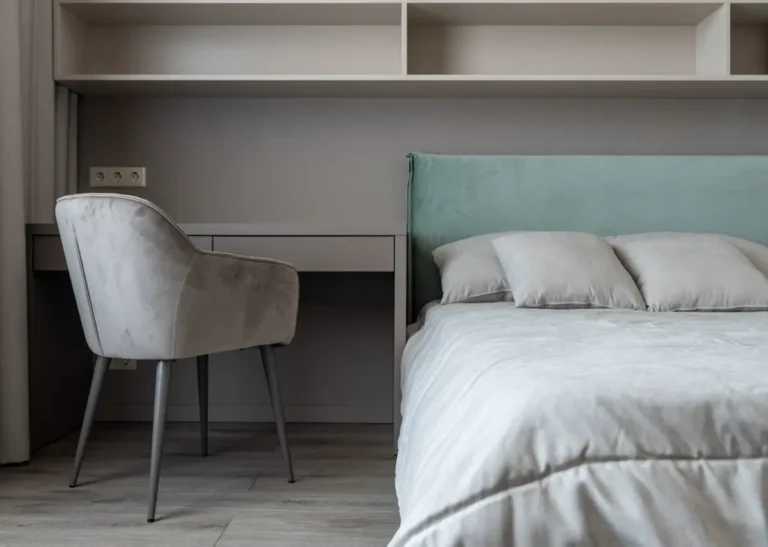
Abuse tolerance replaces luxury finish. Student rooms turn over occupants every academic year. The specification priorities are impact-resistant edges (2mm ABS edge-banding rather than 0.4mm), through-bolted bed frames rather than cam-lock-only assembly, commercial-grade drawer runners rated for 40,000+ cycles, and laminate worktops rather than veneer. A hotel buys for guest impression; a student operator buys for an 8–10 year replacement cycle with minimal maintenance callouts.
Fixed joinery and loose furniture blur together. Most PBSA schemes build the wardrobe and study desk into the room as fixed joinery, which pulls those items forward in the construction programme — they must arrive before practical completion, not after it like hotel loose furniture. This single point catches out more student housing developers than any other: fixed items follow the builder’s programme, loose items follow the operator’s opening date.
The compliance centre of gravity shifts to beds and mattresses. For UK projects specify BS 5852 Crib 5 for upholstered items and BS 7177 medium hazard for mattresses; for Australian projects specify the mattress flammability standard named in the project specification (AS/NZS 4088.1:1996 covers smouldering ignitability of upholstery materials for domestic furniture, not mattresses) and AS/NZS 1170-referenced fixing details for anything wall-mounted; for US student housing CAL 117-2013 covers upholstered seating and TSCA Title VI covers composite wood panels. Factories in China produce to all of these — but only if the certification requirement is written into the purchase order before production starts.
What Should a Student Accommodation Furniture Package Include?
A complete PBSA furniture package is normally structured as a room-type matrix multiplied across the bed count. The core scope:
- Bedroom set per bed: bed frame (often with under-bed storage), contract mattress, study desk, task chair, wardrobe or built-in robe, shelving, mirror, blockout window covering
- Cluster/communal areas: kitchen tables, dining chairs, lounge sofas in contract fabric, coffee tables, TV units
- Amenity spaces: study-room tables and chairs, games-room furniture, reception and lobby seating, outdoor courtyard furniture
- Back-of-house: laundry seating, staff-room furniture, spare stock (typically 2% casegoods, 5% seating and mattresses)
Two packaging decisions drive cost at this scale. First, knock-down versus assembled: KD bed frames and desks cut container count by 30–40% but shift assembly labour to site — viable in Australia and the US where install crews are organised, less attractive where site labour is the bottleneck. Second, mattress compression: roll-packed contract mattresses roughly double the mattresses per container versus flat-packed, and quality contract foam recovers correctly if compression time is kept under the manufacturer’s stated window.
How Many Containers Does a Student Accommodation Project Need?
As a planning rule, one 40ft high-cube container (about 68m³ usable) carries the full bedroom package for roughly 55–75 beds when casegoods ship knock-down and mattresses ship roll-packed. Our Melbourne projects bracket the range: a student accommodation furniture package that shipped in three full containers at the compact end, and the 804-bed Journal Uni Place programme at the multi-container end. Communal and amenity furniture adds 15–25% on top of the bedroom container count, because sofas and lounge pieces cube out far faster than flat-packed casegoods.
Container planning method is the same as for hotels — build a cubic-metre schedule per room type, then add the communal overlay; the full method is in our FF&E container planning guide. The student-specific difference is delivery sequencing: because a PBSA tower hands over floor by floor toward a hard semester-start deadline, containers are usually loaded floor-by-floor rather than SKU-by-SKU, so each container can be unloaded straight into its designated levels without a warehouse sort.
Related reading: Top Student Accommodation (PBSA) Furniture Manufacturers in China
Sourcing this for a commercial project?
FBM Sourcing works with project owners, developers, main contractors and FF&E contractors on hotel, apartment, school, office and other commercial building projects. Send us your BOQ, drawings or product list — our team will review it and get back to you.
What Does the Procurement Timeline Look Like Against an Academic Deadline?
Student accommodation has the least forgiving deadline in commercial furniture procurement: rooms must be ready when the semester starts, and a missed intake is a full year of lost revenue on those beds. Working backwards from a Southern Hemisphere February intake or Northern Hemisphere September intake, a realistic programme is:
- Quotation: issued once a complete room-type spec is in hand; longer if factories must resolve open questions
- Sampling: 2–4 weeks for a full bedroom sample set, reviewed in the factory or shipped to the design team
- Production: 45–60 days for a full PBSA package once samples are signed off
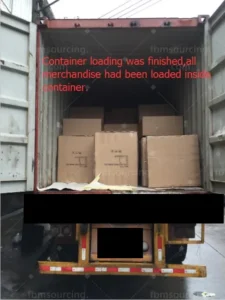
- Quality inspection and loading: a full inspection by our own QC team once production is finished, documented in photos and video before each container closes
- Ocean freight: roughly 2–3 weeks to Australian east-coast ports, 3–5 weeks to the US and Europe, plus customs and delivery to site
That totals roughly 4.5–6 months from signed order to furniture on site. The scheduling trap is upstream: fixed joinery items (built-in robes, desks) need to land 6–8 weeks before loose furniture so the builder can install them before handover. Splitting the package into a “fixed” shipment and a “loose” shipment, rather than one combined delivery, is standard on our student housing projects for exactly this reason.
Who Manages Quality When the Order Is 600 Identical Desks?
Repetition makes student accommodation quality control efficient but unforgiving: a defect in one desk design is a defect multiplied across every bed. Our approach as a building material sourcing agent and furniture sourcing agent is sequenced to catch problems while they are still cheap to fix — sample approval before production, then a full inspection by our own team once production is finished, before loading. All inspections are performed by FBM Sourcing’s own team in the factory and delivered to the client as photo and video records before shipment, so an operator in Melbourne or Manchester can verify the 600th desk matches the first without flying anyone to China. The sample-approval stage carries most of the weight here; our factory QC and inspection guide covers the full sequence.
Get a China Procurement Quote for Your Student Accommodation Project
If you are developing or operating purpose-built student accommodation and want one accountable partner for the furniture package, send us your room-type schedule, drawings or BOQ, destination port and target opening date. As a china sourcing agent for building materials and FF&E, we will come back with a sourcing plan, container estimate and production schedule mapped to your intake deadline — built on the same model as our delivered 804-bed and multi-container Melbourne programmes.