
Per-bed FF&E cost in student accommodation is built from five blocks: the bedroom furniture pack (usually the largest single block), a per-bed share of communal and amenity furniture, soft furnishings and textiles, appliances, and the logistics-and-compliance layer of freight, duty and testing. Purpose-built student accommodation (PBSA) is quoted per bed as standard industry practice, so understanding what sits inside that one number — and what is deliberately left out — is the fastest way to compare offers properly. This article breaks down the structure block by block, the way a China sourcing partner models it when pricing a scheme, without quoting market rates: the structure is stable across projects, the numbers are not.
Why Is Student Accommodation FF&E Priced Per Bed?
PBSA developers, operators, lenders and quantity surveyors all plan in beds: beds define revenue, financing covenants and operational capacity. Quoting FF&E per bed keeps the procurement number in the same unit as everything else in the appraisal, which is why per-bed pricing is the accepted convention across the PBSA industry, from a 150-bed conversion to a 1,500-bed tower.
The convention has a side effect that catches first-time buyers: a per-bed figure is only meaningful together with its inclusion list. One offer may cover bedroom furniture only; another may fold in communal areas, curtains, appliances, freight and compliance testing. Both are legitimate, but they are not comparable until you map each offer onto the same block structure. That mapping is the core skill in student accommodation furniture procurement from China, and it is the framework the rest of this article gives you.
What Goes Into a Per-Bed FF&E Cost? The Building Blocks
Every per-bed number, however it is presented, decomposes into the same blocks:
- Bedroom furniture pack — bed frame, mattress, wardrobe, desk, chair, shelving, mirror; usually the largest single block.
- Communal and amenity furniture — lounges, study rooms, gym, cinema, reception; a shared pool divided across the bed count.
- Soft furnishings and textiles — curtains or blinds, upholstery, headboards, rugs; the block that carries most fire-compliance requirements.
- Appliances — fridges, microwaves, kettles, in-room or in-cluster white goods where the operating model includes them.
- Freight, duty and compliance — sea freight, destination duty, and type-test certificates, allocated back over the beds they serve.
The bedroom pack: the anchor block
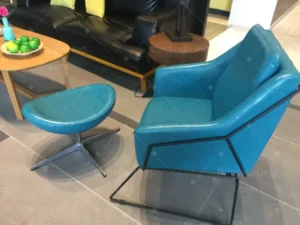
The bedroom pack is priced per room type — cluster en-suite, studio, twin, accessible room — and then weighted by the room mix to give a blended per-bed figure. A studio pack is larger than a cluster pack because it adds kitchenette-adjacent items and often a sofa or lounge chair, so a scheme heavy in studios will carry a higher blended bedroom block than a cluster-led scheme with the identical furniture specification. This is why two schemes with the same headline spec can sit at different per-bed levels without either being mispriced.
Durability standards live in this block. BS EN 1725:2023, the current European standard for bed safety, strength and durability, tests fully assembled beds with loads based on users up to 110 kg — a meaningful benchmark for student use, where furniture takes harder wear than in most residential settings. Specifying test evidence at this level costs little against the block but protects the operator’s replacement cycle for years.
Communal and amenity furniture: the shared pool
Communal FF&E behaves differently from the bedroom pack: it is driven by the amenity brief, not the bed count. A 300-bed and a 600-bed scheme may have similar-sized reception lounges and study lounges, which means the communal pool divides across twice as many beds in the larger scheme. When operators say larger schemes are more efficient per bed, this block is most of what they mean. The same apportionment logic applies in apartment development furniture and building materials procurement, where amenity floors are shared across the unit count.
Soft furnishings: small volume, heavy compliance
Textiles and upholstery are rarely the biggest block by value, but they concentrate the regulatory load. In the UK, contract upholstery for student accommodation is normally required to pass BS 5852 Ignition Source 5 — the “Crib 5” test — and the certificate must cover the actual composite of cover fabric, foam and any barrier layer, not just the fabric roll. US-bound projects typically reference California TB 117-2013, a smoulder-resistance standard for upholstered furniture, while Australian and New Zealand projects commonly cite AS/NZS 4088.1 for burning behaviour of upholstered furniture alongside the AS/NZS 3744 series for ignitability testing. Budget-wise, the lesson is simple: compliant foams and fire-rated fabrics must be specified from day one, because retrofitting compliance after quoting reprices the whole block.
Appliances and white goods
Whether appliances sit inside the per-bed number depends on the operating model: fully catered halls may carry almost none, while studio-led schemes carry a fridge, microwave and sometimes a full kitchenette appliance set per bed. Appliances also carry their own certification regimes (electrical safety marks for the destination market) and their own packing characteristics — dense, heavy, and unforgiving in transit — so they are usually listed as a separate block rather than blended into furniture.
Loose FF&E vs Fixed Joinery: Where the Budget Line Sits
Every PBSA budget has to draw a line between loose FF&E — freestanding items that ship as furniture — and fixed items such as built-in wardrobes, fitted desks and integrated headboard panelling, which are fixed to the building fabric. The distinction matters commercially: fixed joinery is often measured inside the build contract and installed by the main contractor’s trades, while loose FF&E is procured as a separate package and placed after practical completion. A per-bed FF&E figure normally covers the loose package only; if a scheme moves the wardrobe from loose to fitted, the FF&E per-bed number falls while the build contract rises, and nothing has actually become cheaper. Always confirm which side of the line each major item sits on before comparing schemes — it is one of the most common sources of apples-to-oranges comparisons in build-to-rent building materials procurement as well.
Sourcing this for a commercial project?
FBM Sourcing works with project owners, developers, main contractors and FF&E contractors on hotel, apartment, school, office and other commercial building projects. Send us your BOQ, drawings or product list — our team will review it and get back to you.
How Do Freight, Duty and Compliance Testing Fit Into Per-Bed Cost?
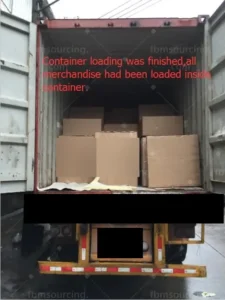
The logistics layer is where per-bed models most often go wrong, because it is volume-driven, not value-driven. How many bed packs fit into a 40HQ or 20GP container depends on how the furniture is engineered for packing. Flat-packed casegoods assembled on site use container space far more efficiently than fully assembled furniture, which is why packing method is a specification decision with direct budget consequences, not an afterthought.
Sea freight time is a planning input rather than a cost block, but it shapes cashflow and programme: the carrier confirms the port-to-port sailing time from China at booking, before inland legs and customs clearance. Duty is set by the destination tariff schedule for each product category and is calculated on the shipment, then allocated back per bed in the model. Compliance testing behaves like a fixed cost: a Crib 5 composite certificate or an EN 1725 test report costs the same whether it covers 200 beds or 2,000, so its per-bed footprint shrinks as schemes grow — a pattern familiar to UK developers sourcing building materials from China across many product categories.
On order size: PBSA orders ship as full containers. Sometimes, on a large project, the student accommodation furniture alone fill full containers; sometimes the student accommodation furniture share containers with the other product categories of the same project; and sometimes, in one batch, we combine a dozen or more product categories from several projects of the same client into a few containers — always full containers, and for us this is routine, well-practised work.
Why Do Larger PBSA Schemes Get Better Per-Bed Economics?
Scale improves per-bed economics through four mechanisms, and only one of them is factory pricing:
- Fixed-block dilution — communal furniture, sampling, tooling and test certificates spread across more beds.
- Container efficiency — larger orders fill containers closer to their volumetric limit, cutting the freight share per bed.
- Production runs — longer runs of identical room packs reduce changeovers and reject rates at the factory.
- Inspection efficiency — one pre-shipment inspection covers more units per visit.
The bedroom pack itself scales almost linearly — a wardrobe for bed 1,000 takes the same material as for bed 100 — so buyers should expect the scale benefit to show up mainly in the shared blocks, not as a dramatic fall in the anchor block. A china sourcing agent modelling your scheme should be able to show you exactly which blocks compress with volume and which do not; if a quotation shows everything falling in lockstep with quantity, the model behind it is probably too crude to trust.
Quality control belongs in this calculation because it protects the largest block. FBM Sourcing manages the entire China procurement package for overseas construction projects. One inspection is carried out by FBM Sourcing’s own team at the factory once bulk production is finished, with a full photo and video record before loading — and on a per-bed basis, that protection also gets cheaper as the scheme gets larger. For a view of which factories are structurally suited to this product category, see our review of student accommodation furniture manufacturers in China.
A Worked Example: Turning the Structure Into a Budget Model
Two methods turn the block structure into a working budget. Both are shown here as method illustrations only — the figures are placeholders to demonstrate the arithmetic, not market benchmarks, and your own quoted numbers must replace them.
Method 1: the block-split model (illustrative)
Build a one-page model with a row per block and the bed count as the denominator. An illustrative layout — a demonstration of the method, not market data — for a studio-led scheme looks like this:
| Block | Relative weight in the per-bed total | Behaviour with scale |
|---|---|---|
| Bedroom furniture pack | Usually the largest single line | Roughly linear |
| Communal & amenity share | A meaningful share | Dilutes as beds increase |
| Soft furnishings & textiles | A smaller share | Roughly linear |
| Appliances | A meaningful share | Roughly linear |
| Freight, duty & compliance | A meaningful share, set by destination and duty | Dilutes with container efficiency |
The value of the model is not the weights — it is that every quotation you receive gets mapped into the same five rows, which instantly exposes what each offer includes, excludes, and assumes.
Method 2: the volume method (worked example)
The volume method estimates the freight block from first principles. Take the packed volume of one studio’s furniture pack from the factory’s packing list and the number of packs per container from the forwarder’s load plan; the scheme’s container count follows. Multiply container count by your quoted freight rate per container, add duty on the goods value, and divide by beds — the freight-and-duty block per bed falls out of the arithmetic. It is quick, honest about its assumptions, and catches quotations whose freight allocation could not physically fit the volume being shipped. A small attrition allowance on high-wear items — extra chairs, extra mattress covers — is common practice in student accommodation orders and should be added to quantities before the container maths, not after.
Frequently Asked Questions
What does per-bed FF&E pricing normally include?
A per-bed FF&E price normally bundles the bedroom furniture pack, a per-bed share of communal and amenity furniture, soft furnishings and appliances where specified, plus an allocation for freight, duty and compliance testing. Always ask for the inclusion list behind the number, because two per-bed figures are only comparable if they cover the same blocks. Fixed joinery is often excluded and carried in the build contract instead.
Why do larger PBSA schemes get better per-bed economics?
Communal furniture, tooling, sampling and compliance test costs are spread across the bed count, so every additional bed dilutes the fixed blocks. Larger orders also fill containers more efficiently and let one factory inspection cover more units. The bedroom pack itself scales almost linearly, which is why the saving shows up mainly in the shared blocks.
Which compliance standards apply to student accommodation furniture from China?
UK projects commonly require BS 5852 Ignition Source 5 (Crib 5) composite certificates for upholstery and BS EN 1725:2023 for bed safety, strength and durability. US projects typically reference California TB 117-2013 for upholstered furniture flammability, while Australian and New Zealand projects commonly cite AS/NZS 4088.1 and the AS/NZS 3744 series. The exact set is defined per project, and test reports should name the actual composite being shipped.
How many bed packs fit in one shipping container?
It depends entirely on your specification and packing method: the number of bed packs per 40HQ or 20GP is set in the load plan from the packed size of each pack, and it should be calculated per project.
Mattresses are one of the few bedroom items where the fire test, the cover and the packing method all change the per-bed figure at once. For the manufacturer types that suit this kind of order and the evidence to ask each one for, see our guide to mattress manufacturers in China for student accommodation.
FBM Furniture
If your package is mainly apartment and student accommodation furniture, see apartment and student accommodation furniture on fbmfurniture.com, the site of FBM Furniture, the furniture sourcing line of FBM Sourcing Limited.
Get a China Procurement Quote for Your Project
If you are budgeting a PBSA or student housing scheme, the fastest way to move from structure to numbers is to price your actual specification. Send FBM Sourcing your drawings, room mix, quantities, destination port and timeline — our team will map your FF&E package into the block structure above and come back with a project-specific quotation built on your real room types, not generic assumptions. Use the project quote form or WhatsApp above to start the conversation.