The top kitchen cabinet manufacturers in China for Australian apartment and build-to-rent projects fall into three tiers: the exchange-listed whole-house cabinetry groups (Oppein, Zbom, Goldenhome, Piano, and on the wardrobe side Sofia and Holike), the large private export plants in Guangdong that manufacture for Australian and North American cabinet brands under OEM contracts, and the mid-sized Foshan and Zhongshan factories that build to a developer’s joinery drawings. For a multi-unit project the choice between them is decided less by brand than by four checks: E0 or E1 board under AS/NZS 1859, high-moisture-resistant particleboard or plywood carcasses, a finish system suited to a rental replacement cycle, and whether the factory ships assembled or flat-packed for the container count you have budgeted.
This guide is written for developers, builders, general contractors and interior design and construction companies delivering apartment buildings, build-to-rent (BTR) developments, student accommodation and serviced apartments in Australia. It covers which manufacturers can be checked from the public record, what the Australian specification will require, the engineered-stone benchtop change that reshaped kitchen packages from July 2024, and how a kitchen package is sampled, inspected and containerised from China.
Which Manufacturers Can Be Verified from the Public Record
China’s cabinetry industry is unusual among building-product sectors in having a group of exchange-listed manufacturers with audited accounts, so a project buyer can check scale and continuity from outside. The main ones are:
- Oppein Home Group (SSE 603833, Guangzhou) — the largest whole-house cabinetry group in China by revenue, with kitchen, wardrobe, bathroom and door lines and a dedicated export and project division.
- Zbom Home Collection (SSE 603801, Hefei) — kitchen and wardrobe manufacturer with a substantial overseas OEM business supplying flat-pack and assembled kitchens to Australian and North American brands.
- Goldenhome Living (SSE 603180, Xiamen) — kitchen cabinet specialist with export plants built around North American and Australian cabinet formats.
- Piano Home (SZSE 002853, Zhongshan) — kitchen cabinetry group with an established developer-project (bulk engineering) business.
- Sofia Home (SZSE 002572, Guangzhou) and Holike Creative Home (SSE 603898, Guangzhou) — wardrobe-led whole-house joinery groups relevant where the package includes bedroom robes and laundry units.
Being listed does not mean a factory will take a 150-unit apartment order directly, or that its export line is set up for Australian carcass heights and appliance cut-outs. It means the counterparty’s scale is on the record. The private tiers below are where most Australian project kitchens are actually manufactured, and they are judged on evidence rather than on a name. Industry structure and the direction the factories are moving is covered in the China kitchen cabinet industry 2026 sourcing guide.
What an Australian Apartment or BTR Kitchen Specification Will Require
- Board emission class. E0 (≤0.5 mg/L) or E1 (≤1.5 mg/L) formaldehyde emission under AS/NZS 1859, tested to the AS/NZS 4266 desiccator method. Ask for the board mill’s certificate for the batch, not a generic factory statement.
- Carcass substrate. Australian practice for kitchens and laundries is high-moisture-resistant (HMR) particleboard, identified by a green core dye, or plywood for sink and appliance units. Standard particleboard carcasses are the most common reason a Chinese sample is rejected by an Australian certifier or joinery consultant.
- Module and height conventions. Australian kitchens are frameless (European) construction on a 600 mm module, with a 720 mm carcass on a 150 mm kicker giving a 900 mm benchtop height, 600 mm appliance spaces and clearances above cooktops set by the appliance standards (a gas cooktop under AS/NZS 5601 needs more clearance than an electric one). A factory that manufactures for the North American framed market will need its drawings converted; see framed vs frameless kitchen cabinets for projects.
- Finish system. Melamine (LPM) and thermolaminated vinyl-wrap doors for standard apartments; two-pack polyurethane or acrylic for premium; HPL for high-wear rental units. Rental replacement cycles favour finishes that can be re-ordered years later in the same colour, which argues for melamine and HPL over custom-tinted two-pack. The finish trade-offs are compared in melamine vs PVC vs lacquer cabinet finishes.
- Hardware. Soft-close hinges and drawer runners from a brand with published cycle-test data (Blum, Hettich, DTC and Higold are the usual candidates in Chinese export kitchens); the specification should name the brand, not just “soft-close”.
- Benchtops. Since 1 July 2024 the manufacture, supply, processing and installation of engineered stone benchtops has been prohibited across Australia. A kitchen package from China now specifies porcelain and sintered slab, natural stone, laminate, solid surface or timber instead, and the cabinet factory needs to know which because it changes the support rails and the cut-out drawings.
- Plumbing products. Sinks, mixers and any tapware supplied with the kitchen must carry WaterMark certification and, for tapware, WELS registration; the cabinet factory is not the right source for these and they are normally bought from the sanitaryware line of the package.
The Three Manufacturer Tiers for Australian Project Kitchens
1. Listed whole-house cabinetry groups
- Location / Established / Classification: Guangzhou, Hefei, Xiamen, Zhongshan · founded in the 1990s and 2000s, listed between 2011 and 2017 · listed manufacturers with own brands and OEM divisions.
- Key products: kitchens, wardrobes, bathroom vanities, interior doors; flat-pack export lines for the Australian and North American markets.
- Verdict: best suited to large developers with a repeat pipeline who want a listed counterparty and can commit to the group’s export formats. Sampling and drawing changes move slowly through a large organisation, which matters on a fast BTR programme.
- Evidence to request: which plant will manufacture the order and whether it is the export plant; the board mill certificate for E0/E1 under AS/NZS 1859; a previous Australian project reference with unit count; the packing specification for flat-pack export.
2. Large private export plants (Guangzhou, Foshan, Zhongshan, Qingyuan)
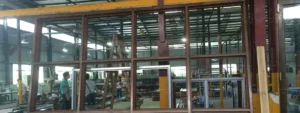
- Who they are: factories of 30,000 to 150,000 m² whose main business is manufacturing kitchens for overseas cabinet brands and joinery companies, including Australian ones, on automated cutting, edging and drilling lines. Some run their own two-pack spray lines and vinyl-wrap presses.
- Key products: flat-pack and assembled kitchens, laundries, vanities and robes to the customer’s drawings and hardware specification.
- Verdict: the tier where most Australian apartment kitchen packages are actually made. They are set up for HMR carcasses, E0 board and Australian appliance spaces because their existing customers demand it, and they price a 100- to 500-unit package as routine.
- Evidence to request: photographs or a visit to the edge-banding and drilling lines (the process that decides whether 300 identical carcasses assemble square on site), the adhesive used on edge-banding, hardware brand invoices, and the spare-parts policy for doors and panels after handover.
Pricing kitchens for an Australian apartment or BTR project?
FBM Sourcing works with developers, general contractors, builders, commercial project owners, interior design and construction companies and FF&E solution providers on apartment, BTR and student-accommodation projects in Australia. Send the joinery drawings and finish schedule and we will return the package priced by factory, with board and hardware evidence and a container plan.
3. Mid-sized project joinery factories (Foshan, Zhongshan, Dongguan)
- Who they are: factories of 5,000 to 30,000 m² that build to a developer’s or contractor’s joinery drawings rather than to a catalogue, often serving Chinese developer projects and a handful of overseas contractors. Machinery is similar to tier 2 at smaller scale; finishing may be outsourced.
- Key products: custom kitchens, laundries, robes, study nooks and reception joinery for apartment and student-accommodation projects.
- Verdict: the right tier for a project with non-standard joinery — corner solutions, integrated study desks, laundry towers — where a catalogue factory would push you back to its modules. Requires closer sampling and inspection because there is no export-brand customer enforcing the standard for you.
- Evidence to request: whether spraying and vinyl wrapping are done in-house or sent out; board and hardware supplier invoices; a full-size sample unit with the specified finish and hardware before bulk production; and the factory’s own QC record on a previous project.
Flat-Pack or Assembled: The Decision That Sets the Container Count
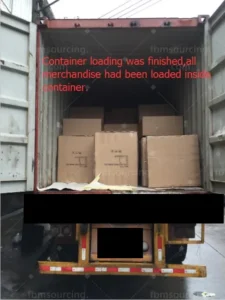
An assembled kitchen carcass ships as air inside a box; a flat-packed one ships as a stack of panels. For the same 150-unit apartment package, assembled cabinets typically need two to three times the container volume of flat-packed ones. The trade-off is on site: flat-pack shifts assembly labour to the Australian installer and demands tighter factory tolerances on drilling and edge-banding so that carcasses go together square. Australian joinery installers are used to both; the choice is normally made on the installation programme and site storage, not on freight alone. Either way the package is shipped by full container. Sometimes, on a large project, the kitchen cabinets alone fill full containers; sometimes the kitchen cabinets share containers with the other product categories of the same project; and sometimes, in one batch, we combine a dozen or more product categories from several projects of the same client into a few containers — always full containers, and for us this is routine, well-practised work. How mixed loads are planned is described in mixed container consolidation for apartment projects.
How a BTR Kitchen Package Differs from a Build-to-Sell One
A build-to-rent operator owns the kitchens for twenty years and replaces doors, panels and hardware many times. Three consequences follow for the factory brief. First, finishes and colours must be re-orderable years later, which favours melamine, HPL and standard vinyl-wrap colours over custom two-pack tints. Second, a spare-parts allowance — typically a small percentage of doors, drawer fronts and end panels, plus hinges and runners — should be ordered with the bulk and stored by the operator. Third, the drawings, board codes, hardware part numbers and finish references should be archived by the sourcing partner so that a phase-two or replacement order can be matched; a trading company that bought the kitchens from an unknown factory cannot do this. The BTR procurement model generally is covered in build-to-rent building materials procurement from China, and the apartment-development package as a whole in apartment development furniture and building materials procurement.
Comparison Table
| Tier | Typical location | Scale | Best fit for Australian projects | Watch-outs | Evidence to request |
|---|---|---|---|---|---|
| Listed whole-house groups | Guangzhou, Hefei, Xiamen, Zhongshan | Multi-plant, audited accounts | Large developers with repeat pipeline, catalogue-format kitchens | Slow drawing changes; export line may not match AU formats | Which plant manufactures; AS/NZS 1859 board certificate; AU project reference |
| Large private export plants | Guangzhou, Foshan, Zhongshan, Qingyuan | 30,000–150,000 m² | 100–500 unit apartment and BTR packages to AU conventions | Must confirm HMR carcass and hardware brand in writing | Line photos or visit; edge-banding adhesive; hardware invoices; spares policy |
| Mid-sized project joinery factories | Foshan, Zhongshan, Dongguan | 5,000–30,000 m² | Non-standard joinery, student accommodation, mixed loose and fixed units | Finishing may be outsourced; needs full-size sample and closer inspection | In-house vs outsourced spraying; supplier invoices; sample unit; QC record |
Which Situation Calls for Which Approach?
| Project scenario | Which tier fits | Why | What would change the answer |
|---|---|---|---|
| 200-unit BTR tower, standard kitchen types, two colour schemes | Large private export plant | Set up for AU conventions and volume; re-orderable finishes | If the operator insists on a listed counterparty, tier 1 with the same evidence checks |
| Student accommodation with integrated study joinery in every room | Mid-sized project joinery factory | Builds to drawings, not modules | If the room count exceeds a few hundred, split standard units to tier 2 and custom pieces to tier 3 |
| Developer with three projects a year, same kitchen family | Listed group or large export plant on a framework | Repeatability and archived drawings matter more than unit price | If each project has a different designer, tier 2 with a sourcing partner holding the archive |
| Kitchens plus doors, tiles, tapware and wardrobes in one package | Any tier for the cabinets, consolidated with other factories by a sourcing partner | No cabinet factory manufactures the other lines; it would resell them | — |
Where FBM Sourcing Fits
Kitchen and wardrobe cabinets are one of the two building-material lines FBM Sourcing has shipped most since 2014, and Australia is one of the two markets we ship to most. We do not manufacture and do not sell to individual homeowners; we work as the China sourcing partner for developers, general contractors, builders, commercial project owners, interior design and construction companies and FF&E solution providers. On a kitchen package we convert the joinery drawings to the factory’s shop drawings, confirm the board, hardware and finish specification in writing, run the full-size sample unit, inspect the bulk order at the factory with photo and video records before it is packed, and plan the container loading alongside the other lines of the project. The category is described at kitchen and wardrobe cabinet sourcing, and the sourcing procedure in kitchen cabinet sourcing from China. The North American counterpart of this shortlist is top kitchen cabinet manufacturers in China for US multifamily projects.
Pricing kitchens for an Australian apartment or BTR project?
FBM Sourcing works with developers, general contractors, builders, commercial project owners, interior design and construction companies and FF&E solution providers on apartment, BTR and student-accommodation projects in Australia. Send the joinery drawings and finish schedule and we will return the package priced by factory, with board and hardware evidence and a container plan.
Frequently Asked Questions
Which Chinese kitchen cabinet manufacturers can Australian developers verify?
The exchange-listed groups — Oppein, Zbom, Goldenhome, Piano, and on the wardrobe side Sofia and Holike — publish audited accounts, so their scale and continuity can be checked. Most Australian project kitchens are nonetheless manufactured by large private export plants in Guangdong that supply Australian cabinet brands under OEM contracts; those are verified through board certificates, hardware invoices, line inspections and project references rather than filings.
What board standard do Australian apartment kitchens require from a Chinese factory?
E0 or E1 formaldehyde emission class under AS/NZS 1859, tested to the AS/NZS 4266 method, with high-moisture-resistant particleboard or plywood carcasses for kitchens and laundries. The evidence is the board mill’s certificate for the batch used, which the factory should supply with the sample.
Can engineered stone benchtops still be supplied with a kitchen package from China?
No. Australia prohibited the manufacture, supply, processing and installation of engineered stone benchtops from 1 July 2024. Project kitchen packages now use porcelain and sintered slabs, natural stone, laminate, solid surface or timber, and the cabinet factory needs the benchtop material confirmed because it changes the carcass support and cut-out drawings.
Should a BTR project order kitchens flat-packed or assembled?
Flat-pack needs roughly a third to a half of the container volume of assembled cabinets and suits projects with installation labour and site storage; assembled suits fast programmes with limited site assembly capacity. Both ship by full container. Whichever is chosen, a BTR operator should order a spare-parts allowance with the bulk and have the drawings and finish codes archived for replacement orders.
For the same category on a UK scheme, where the module, the board grades and the timber due-diligence trail all differ, see our guide to kitchen cabinet manufacturers in China for UK housing and build-to-rent projects.
About FBM Sourcing
FBM Sourcing manages the entire China procurement package for overseas construction projects. We work with developers, general contractors, builders, commercial project owners, interior design and construction companies and FF&E solution providers as their sourcing partner in China — from joinery drawings and BOQ through factory selection, sampling, inspection by our own team, consolidation and shipping, with every quotation and shipping document issued in our own name. If you have an Australian apartment or BTR kitchen package to price, start at https://fbmsourcing.com/china-building-materials-ffe-procurement/.