The kitchen cabinet manufacturers in China best positioned for US multifamily and apartment projects are OPPEIN, Golden Home, ZBOM, Holike, Sogal, Piano, Boloni and Baineng — large factories that can hold one door style and one finish across hundreds of identical units and, critically, document TSCA Title VI formaldehyde compliance on every board that enters the container. For a US multifamily buyer, that compliance paper trail is not optional: composite wood products sold in the United States must meet TSCA Title VI emission limits, and cabinets that arrive without it are a liability, not a bargain — verifying that paper trail is exactly what a good sourcing partner should be doing for you.
This is the US multifamily companion to our global guide to the top kitchen and wardrobe cabinet manufacturers in China for commercial projects. The brands overlap; the buying logic does not. A 179-unit apartment building is a repetition machine — the whole game is standardized SKUs, unit-count economics, attic stock and delivery sequencing, and that is the lens applied to every manufacturer below.
- TSCA Title VI formaldehyde limits: 0.05 ppm for hardwood plywood, 0.09 ppm for particleboard, 0.11 ppm for MDF — demand current CARB/TSCA certificates and lab reports per board type.
- ANSI/KCMA A161.1 is the US benchmark for cabinet construction and finish durability; specify it when your architect’s spec calls for KCMA-grade product.
- A typical one-bedroom apartment kitchen packs flat into roughly 1–1.5 m³, so a 40 ft high-cube (≈68 m³) carries kitchens for roughly 45–65 units.
- Order 2–3% attic stock (extra fronts, panels and hardware) in the same production batch to cover freight damage and punch-list replacements.
- Plan 30–45 days production after shop-drawing approval, plus 14–20 days sea freight to the US West Coast or roughly 30–35 days to East Coast ports.
What Compliance Does a US Multifamily Cabinet Package Need?
Three layers. First, federal law: TSCA Title VI (the successor rule to CARB Phase 2) caps formaldehyde emissions from composite wood at 0.05 ppm for hardwood plywood, 0.09 ppm for particleboard and 0.11 ppm for MDF, and requires labeling and certification by an EPA-recognized third-party certifier. Serious Chinese factories run TSCA-certified board as standard for US orders; the failure mode is a factory quietly substituting cheaper domestic-grade board mid-order, which is why board certificates should be matched to production batches, not just shown at quotation. Our detailed guide to formaldehyde standards for cabinets from China unpacks E1, E0, CARB and TSCA side by side.
Second, specification-level standards: many US architects call up ANSI/KCMA A161.1, which tests structural integrity, drawer cycling, and finish resistance to household chemicals. Third, project-level documentation — sealed shop drawings per unit type, finish samples signed off before production, and a schedule that matches your floor-by-floor install sequence. Get all three layers in writing before you compare a single price.
One material decision sits underneath all of it: carcass construction. Chinese factories quote multifamily work in melamine-faced particleboard as the default, with plywood carcasses as an upgrade line. Particleboard is the US multifamily norm and passes TSCA at 0.09 ppm like any other certified board, but kitchens and bathroom vanities in humid markets — Florida, Texas Gulf Coast, Hawaii — justify the plywood upgrade or moisture-resistant board around sink bases. Decide this at specification stage; it changes both the quote and the container weight, and switching mid-tender resets every price comparison you have collected.
The Shortlist: Manufacturers 1–4
1. OPPEIN (欧派)
Founded in 1994 in Guangzhou and listed in Shanghai (603833), OPPEIN is widely cited as the world’s largest custom cabinetry manufacturer by revenue. For multifamily work its decisive asset is industrialised customisation: automated lines that run project batches of identical kitchens with the dimensional consistency a 200-unit order demands, plus an established international project division that has shipped US-bound work for years.
OPPEIN is rarely the cheapest quote on a value-engineered garden-style project. It wins where the developer wants brand-name product, deep engineering support on unit-type shop drawings, and low execution risk on large counts.
Location: Guangzhou, Guangdong
Established: 1994
Classification: Listed, world-scale custom cabinetry manufacturer (SSE: 603833)
Key products: Kitchen cabinets, wardrobes, bathroom cabinets, wooden doors
Verdict: The low-risk anchor quote for 150+ unit projects where execution certainty outranks the last few percent of cost.
2. Golden Home (金牌厨柜)
Xiamen-based and Shanghai-listed (603180), Golden Home is a kitchen cabinet specialist rather than a whole-home generalist, and that focus shows in kitchen-specific engineering: carcass systems, hardware integration and production planning built entirely around kitchens. It has actively developed overseas project business, and its coastal Xiamen location loads efficiently for US-bound freight.
Location: Xiamen, Fujian
Classification: Listed kitchen cabinet specialist (SSE: 603180)
Key products: Kitchen cabinets, integrated kitchen systems
Verdict: A kitchen-only specialist worth quoting head-to-head with OPPEIN on any pure kitchen package.
3. ZBOM (志邦)
ZBOM, headquartered in Hefei and Shanghai-listed (603801), grew from kitchen cabinets into wardrobes and whole-home lines, and runs modern automated plants with strong cost discipline. On multifamily tenders it frequently lands below the Guangzhou tier-one names while keeping listed-company transparency — a genuinely useful combination for value-engineered projects that still need audit-grade counterparties.
Location: Hefei, Anhui
Classification: Listed kitchen & wardrobe manufacturer (SSE: 603801)
Key products: Kitchen cabinets, wardrobes, whole-home cabinetry
Verdict: The sharpest listed-manufacturer pricing for standardized multifamily SKUs — ideal for workforce and mid-market housing.
4. Holike (好莱客)
Guangzhou-based Holike (Shanghai-listed, 603898) built its name in wardrobes and whole-home customization and has expanded across kitchen cabinetry. For multifamily buyers its wardrobe depth is the differentiator: US apartment projects increasingly buy closets, bathroom vanities and kitchens as one cabinetry package, and Holike covers that combined scope from one production system.
Location: Guangzhou, Guangdong
Classification: Listed whole-home cabinetry manufacturer (SSE: 603898)
Key products: Wardrobes & closets, kitchen cabinets, whole-home systems
Verdict: Shortlist when the package is kitchens plus closets plus vanities — one factory, one finish language.
Sourcing this for a commercial project?
FBM Sourcing works with project owners, developers, main contractors and FF&E contractors on hotel, apartment, school, office and other commercial building projects. Send us your BOQ, drawings or product list — our team will review it and get back to you.
The Shortlist: Manufacturers 5–8
5. Sogal (索菲亚)
Sogal, Guangzhou-based and Shenzhen-listed (002572), is China’s flagship wardrobe and closet manufacturer, with kitchen lines added through its brand family. In a multifamily context it plays the same combined-scope role as Holike, with particular strength in sliding-door wardrobe systems for bedrooms — a high-visibility item in unit walkthroughs and leasing tours.
Sogal’s production system was built around made-to-measure domestic orders, which for project buyers translates into genuine flexibility on non-standard unit types — the corner units and accessible-unit variations that force compromises at more rigid factories.
Location: Guangzhou, Guangdong
Classification: Listed wardrobe & whole-home manufacturer (SZSE: 002572)
Key products: Wardrobes, closet systems, kitchen cabinets
Verdict: Strongest where bedroom storage carries the spec; pair with a kitchen specialist for large kitchen scopes.
6. Piano (百得胜)
Piano is an established Guangdong whole-home customization manufacturer known for pushing low-emission board technology in its product line — a direct advantage when a US spec goes beyond baseline TSCA and asks for ultra-low-emitting materials or green-building credits. Scale is below the listed giants, which usually means more flexibility on mid-sized unit counts.
Location: Guangdong
Classification: Whole-home customization manufacturer
Key products: Wardrobes, kitchen cabinets, low-emission board cabinetry
Verdict: The materials-forward pick when the project chases green-building points or stricter indoor-air targets.
7. Boloni (博洛尼)
Beijing-based Boloni is the design-led name on this list, long positioned at the premium end of Chinese kitchens and whole-home interiors with European-styled ranges. For US work it maps to the top of the multifamily market — luxury rental towers and condominium projects where door design, finish quality and detailing sell units. For the full category page covering carcase construction, hardware and finishes, see cabinets and wardrobes sourcing.
Location: Beijing
Classification: Design-led premium manufacturer
Key products: Premium kitchens, whole-home cabinetry & interiors
Verdict: For condo and luxury-rental specs where the kitchen is a sales feature, not just millwork.
8. Baineng (佰能)
Foshan-based Baineng specialises in stainless-steel cabinetry — carcasses and doors in steel rather than composite wood. In multifamily terms that is a niche with real logic: student housing, co-living and coastal projects value moisture immunity, durability under tenant turnover, and the near-elimination of formaldehyde-emitting board from the kitchen entirely.
Steel carcasses also change the whole-life maths: where wood-based cabinets in high-turnover rental assets are typically refreshed on ownership cycles, stainless carcasses survive tenant after tenant with only door and hardware refreshes, which is why operators of co-living and student portfolios keep returning to the format.
Location: Foshan, Guangdong
Classification: Stainless-steel cabinet specialist
Key products: Stainless-steel kitchen cabinets and carcasses
Verdict: The durability outlier — quote it for student housing, co-living and humid-climate assets.
Comparison Table: All 8 Manufacturers for US Multifamily
| Manufacturer | Base | Listed | Core strength | Multifamily fit |
|---|---|---|---|---|
| OPPEIN | Guangzhou | SSE 603833 | World-scale custom cabinetry | Low-risk anchor for 150+ units |
| Golden Home | Xiamen | SSE 603180 | Kitchen-only specialisation | Pure kitchen packages |
| ZBOM | Hefei | SSE 603801 | Cost-disciplined automation | Value-engineered mid-market |
| Holike | Guangzhou | SSE 603898 | Whole-home scope | Kitchens + closets + vanities |
| Sogal | Guangzhou | SZSE 002572 | Wardrobe systems | Storage-led unit specs |
| Piano | Guangdong | — | Low-emission boards | Green-building targets |
| Boloni | Beijing | — | Design-led premium | Condo / luxury rental |
| Baineng | Foshan | — | Stainless-steel cabinets | Student housing, humid climates |
How Does Multifamily Cabinet Buying Actually Work at Container Scale?
Think in units and containers, not kitchens. A 179-unit apartment project with three unit types needs three engineered kitchen SKUs — not 179 custom kitchens — and every decision flows from that: one door style, one or two finishes, shared hardware, and shop drawings frozen per unit type before production starts. At roughly 1–1.5 m³ per flat-packed kitchen, that project ships in about three to four 40 ft high-cubes, sequenced to arrive as floors become ready rather than all at once. Add 2–3% attic stock from the same batch, because a replacement door pressed six months later will not match the original finish run. If your unit plans are still in CAD, our note on whether a china sourcing agent can read CAD and shop drawings explains how drawings become factory-ready kitchen SKUs.
Who runs that machine matters as much as which factory wins. A china sourcing agent working for the buyer — typically for a 5% commission for suppliers you nominate (products we source for you are quoted at a direct price) — verifies the factory, locks TSCA board certificates to production batches, inspects before loading, and coordinates the container sequence with your GC’s install schedule. The same consolidation logic extends to the rest of the unit interior: many multifamily buyers combine the cabinet package with flooring in the same program — see SPC vs laminate flooring for apartment and hotel projects — to fill containers efficiently and cut per-unit freight.
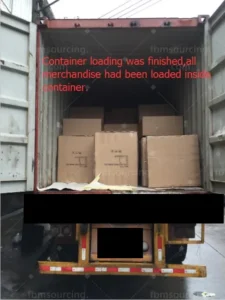
Quality control at this scale is statistical, not anecdotal. A pre-shipment inspection against an agreed sampling plan — AQL 2.5 for major defects is the common baseline — checks dimensions, finish, hardware operation and moisture content across a random sample of packed units, with payment milestones tied to the inspection result rather than the shipping date. Insist on loading supervision too: flat-pack cartons loaded without floor-to-ceiling bracing arrive as the freight-damage line item your attic stock was never sized for.
Which Manufacturer for Which US Multifamily Project?
US multifamily cabinetry has one decision layer above all the others: anti-dumping and countervailing duty on wooden cabinets and vanities from China. Settle classification and rate exposure first, then use the table to shortlist.
| Project scenario | Shortlist from this list | Why it fits | What would change the answer |
|---|---|---|---|
| 150+ unit anchor order needing schedule certainty | OPPEIN | World-scale custom cabinet capacity absorbs a large single programme | A boutique count where a large plant offers no advantage |
| Kitchen-only package with no closet or vanity scope | Golden Home | Kitchen specialisation rather than whole-home breadth | A package where closets and vanities carry real value |
| Value-engineered mid-market rental product | ZBOM | Cost-disciplined automation suited to repeated unit types | A luxury spec where finish range matters more than unit cost |
| Kitchens, closets and vanities under one order | Holike | Whole-home scope removes an interface between three packages | A kitchen-only scope |
| Storage-led unit plans with wardrobe systems | Sogal | Wardrobe systems are the core line, not an add-on | Kitchens dominating the value |
| Green-building or low-emission targets | Piano | Low-emission board is a specified capability, not a claim | A project without an emissions target beyond the statutory minimum |
| Condominium or luxury rental product | Boloni | Design-led premium ranges suited to a higher finish level | Value-engineered rental stock |
| Student housing or humid-climate buildings | Baineng | Stainless-steel carcase construction where moisture is the failure mode | A dry-climate conventional apartment spec |
| Any US-bound cabinet order | Check duty before shortlisting | AD/CVD is producer-specific and collected as a cash deposit at entry, then assessed at liquidation | A producer without a separately assigned rate, which falls to the country-wide rate |
Evidence to Request Before You Shortlist
Catalogues and showrooms all look convincing. What separates a cabinet manufacturer that will perform on a commercial project is the documentation it can produce for your specification — request these items with your RFQ, and treat slow or partial answers as information:
- CARB Phase 2 / TSCA Title VI certificates tied to the actual board batch, not a generic mill letter
- KCMA test documentation where the factory claims it, matched to the construction quoted
- Hardware schedule in writing: hinge and drawer-runner brands with cycle-test confirmation
- Moisture-resistance test data for sink cabinets and wet-area carcasses
- Finish sample doors produced on the production line, in your specified sheen
- Written production slot and lead time for your unit count, including benchtop templating sequence
On FBM-managed packages our own QC team collects and cross-checks every one of these documents against the actual production batch during factory visits and inspection before shipment — so the evidence file your project holds matches the goods in the container, not just the brochure.
Get a China Procurement Quote for Your Project
Specifying kitchens, closets or full unit-interior packages for a US multifamily, apartment or student-housing project? Send us your unit plans or cabinet drawings, unit counts by type, destination port and construction schedule. We will come back with a manufacturer shortlist matched to your spec tier, a per-unit budget estimate, and a container-sequenced delivery plan — built on 30–45 days production plus 14–20 days to the West Coast or 30–35 days to the East Coast. Use the quote button above or WhatsApp us and our team will review your requirements and get back to you.
Related: kitchen cabinet sourcing from China
Frequently Asked Questions
What formaldehyde compliance does a US multifamily cabinet order need?
TSCA Title VI compliance, which caps formaldehyde emissions at 0.05 ppm for hardwood plywood, 0.09 ppm for particleboard and 0.11 ppm for MDF, with labeling and certification by an EPA-recognized third-party certifier.
How should a multifamily project think about kitchen SKUs?
In units and containers, not individual kitchens – a project with three unit types needs three engineered kitchen SKUs, with one door style, shared finishes and hardware, and shop drawings frozen per unit type before production.
What is the biggest compliance risk in a multifamily cabinet order?
A factory quietly substituting cheaper, non-certified board mid-order, which is why board certificates should be tied to the actual batch shipped, not a generic mill letter.