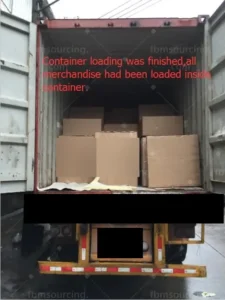
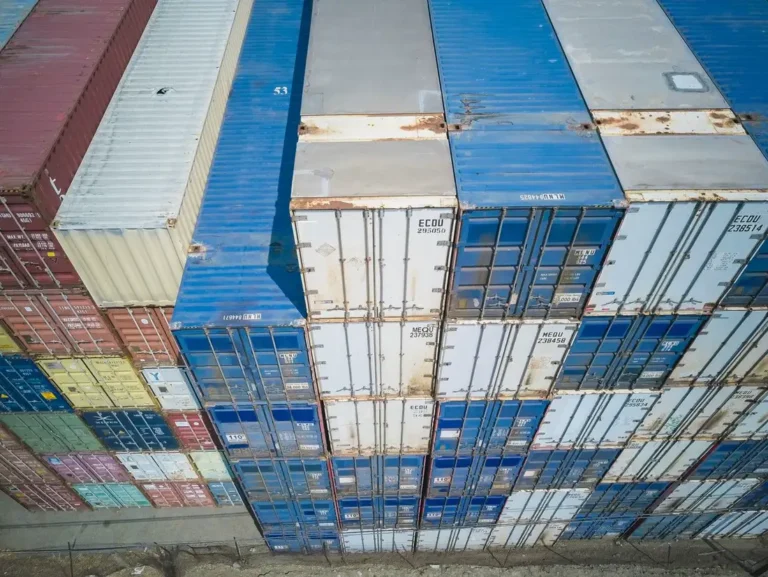
An apartment building’s FF&E and building materials scope rarely arrives as one product category. A single unit type needs kitchen cabinets, doors, windows, sanitaryware, flooring and hardware — typically from five or more different specialized factories — and a developer buying each category in its own dedicated container ends up managing five separate shipping schedules, five customs clearances and five delivery windows for materials that all need to land on site in roughly the same sequence. Mixed-container consolidation solves this by combining multiple product categories from multiple factories into shared containers, organized around the project’s actual unit-type and delivery sequence rather than around which factory happens to finish production first.
Why Apartment Projects Need a Different Consolidation Approach Than a Single-Building Hotel
A hotel project’s FF&E typically ships in a small number of large, coordinated batches tied to a single opening date. An apartment or multifamily project is structurally different: it usually has a small number of distinct unit types repeated many times across multiple floors or buildings, and site handover often proceeds floor-by-floor or building-by-building rather than all at once. This means consolidation planning has to be organized around unit type and handover sequence — enough of each product category to complete a defined block of units, arriving in the order construction actually needs them — rather than around simply filling containers as each factory’s production finishes.
How Unit-Type-Based Consolidation Actually Works
The starting point is the same area and room-type logic used in any FF&E budget: list every unit type (studio, one-bedroom, two-bedroom, penthouse) and the exact bill of materials each one needs. From there, container loads are planned around completing full sets for a defined number of units or a defined floor range, combining categories that are ready around the same production window — kitchen cabinets from one factory, doors and windows from others, sanitaryware and flooring from others still — into shared containers, rather than waiting for every category across the entire building to finish before any container ships. This lets the first floors of a phased handover receive complete, installable sets of materials while later floors’ materials are still in production.
Coordinating Production Timing Across Multiple Factories for One Container
The practical challenge in mixed-container consolidation is timing: five factories producing five different product categories rarely finish at exactly the same moment, and a container waiting on the slowest category sits idle while paying for warehouse storage, or ships incomplete and creates an installation gap on site. Managing this requires tracking each factory’s production schedule against a shared consolidation calendar, building in buffer time for the categories with longer or less predictable lead times (custom millwork and cabinetry typically need more buffer than commodity hardware), and using a consolidation warehouse near the port to stage goods from each factory until a container’s full load is ready to move together.
Coordinating multi-category FF&E for an apartment project?
FBM Sourcing plans container consolidation around your actual unit types and phased handover schedule, combining categories from multiple factories into full containers organized around installation sequence, not production finish date.
Full Containers, Never Part-Loads: How This Fits FBM’s Consolidation Model
Sometimes, on a large project, one product category alone fills full containers; sometimes that category shares containers with the other product categories of the same project; and sometimes, in one batch, a dozen or more product categories from several phases of the same development are combined into a few containers — always full containers, and for us this is routine, well-practised work. Mixed-container consolidation for an apartment project is this same principle applied specifically to the unit-type and floor-by-floor delivery pattern multifamily projects require: every container is filled to capacity, organized by what a specific block of units needs next, never a fractional or shared-with-strangers load.
What a Developer Should Track to Keep Consolidation on Schedule
Three things matter most for keeping mixed-category consolidation aligned with a phased handover: a shared production calendar across every factory involved in a given consolidation batch, updated on a fixed cadence rather than only when a delay is discovered; a consolidation warehouse workflow with clear intake tracking so goods from each factory are accounted for and matched to the right container before it closes; and a defined trigger point (a specific floor range ready for handover, or a fixed calendar milestone) for when a container is loaded and shipped, rather than an open-ended wait for every category to be simultaneously ready.
How FBM Sourcing Manages Mixed-Container Consolidation for Apartment Developers
FBM Sourcing manages the entire China procurement package for overseas construction projects, and for multifamily and apartment developments specifically, that means planning container consolidation around your unit types and phased handover sequence from the start of the project — tracking production timing across every factory in a given batch, staging goods at a consolidation warehouse, and loading full containers organized around what your next block of units actually needs. All quotations, invoices and shipping documents are issued by FBM Sourcing — you deal with us, and we carry the responsibility.
If you are planning a phased apartment or multifamily delivery, share your unit types and handover sequence with us and we will map out a container consolidation plan around it.
Apartment consolidation follows unit-type batching, but a hotel project has a tighter constraint — see synchronized multi-category delivery for hotel projects for why guestroom floor-by-floor installation sequencing changes the consolidation plan.
Consolidation is one step inside a larger sequence. The full route from drawings to container for a multi-unit scheme is set out in apartment project procurement from China.
Related Reading
- China Procurement for Property Developers
- Can you consolidate products from multiple Chinese factories into one container?
- Developer vs. contractor: two procurement paths from China
- Phased delivery aligned to your construction schedule
A related question usually comes up alongside consolidation: how the programme is phased to the construction schedule.