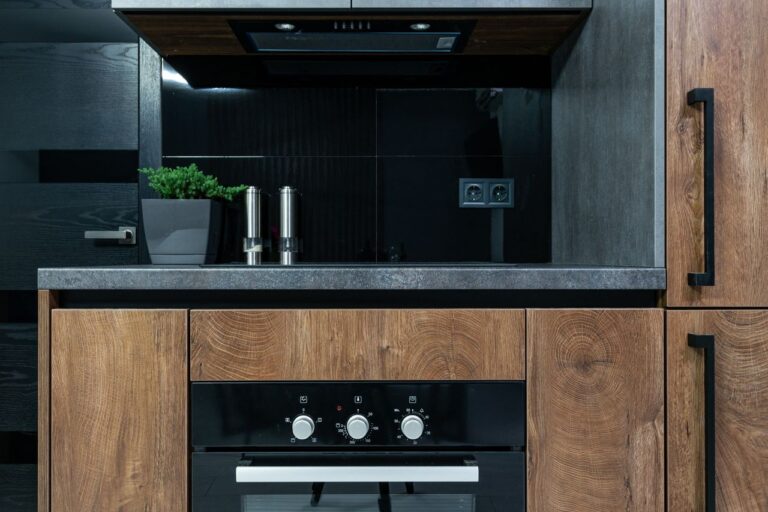
The China kitchen cabinet industry enters 2026 concentrated in two production models a project buyer must tell apart: Guangdong’s custom-export factories around Foshan and Guangzhou, which build made-to-drawing cabinetry for hotels, apartments and villas, and the flat-pack (RTA) clusters serving volume programs with standardised carcasses. Compliance has matured — CARB Phase 2 / TSCA Title VI formaldehyde documentation is now table stakes at export factories — while trade measures in the US market mean the buying decision runs on verified landed cost, not the ex-works price on a quotation. This guide maps the industry as it stands in 2026 and shows how a commercial project should buy into it. This is the kind of scope a sourcing partner such as FBM Sourcing takes on.
The 2026 baseline in five lines:
- Custom export cabinetry is concentrated in Guangdong (Foshan/Guangzhou corridor); flat-pack volume production has spread across northern and eastern provinces.
- Standard carcass construction is 16–18 mm board — plywood for moisture-critical projects, MDF or particleboard where budgets lead — with melamine, PVC, PET or lacquer door programs.
- Formaldehyde compliance to CARB Phase 2 / TSCA Title VI (US) or, for the EU, the REACH limit of 0.062 mg/m³ for furniture and wood-based articles placed on the EU market after 6 August 2026, and E1/E0 for most other markets is standard at serious factories and must be evidenced per shipment, not per brochure.
- Custom production runs 30–45 days after shop-drawing and sample approval; flat-pack stock programs move faster.
- Flat-pack shipping roughly doubles the units per container versus pre-assembled cabinets, at the cost of site assembly labour.
Where the Industry Is Concentrated in 2026
Guangdong remains the centre of gravity for export-grade custom work. The Foshan–Guangzhou corridor holds thousands of cabinet and joinery workshops ranging from showroom-backed exporters to OEM plants building entire apartment programs to drawing, and it sits inside the same industrial belt as the door, wardrobe, hardware and stone factories a full interior package draws on — the geography we map in our China manufacturing hubs buyer’s map. The flat-pack model — standardised carcass sizes, printed-board finishes, cartonised for assembly at destination — has meanwhile scaled in clusters beyond Guangdong, feeding multifamily and rental programs where uniformity beats customisation. The practical takeaway: match the factory model to the project model. A boutique hotel with fifteen cabinet types belongs in a Foshan custom plant; a 300-unit multifamily program with four repeated kitchen layouts is exactly what the flat-pack lines were built for, as we detail in our guide to kitchen cabinet manufacturers for US multifamily projects.
What Construction and Materials Do Chinese Cabinet Factories Use?
The standard export carcass is 16–18 mm board with edge-banded panels, adjustable shelving and soft-close hardware from the major Chinese hardware makers or, on request, imported brands. Board choice is the first specification decision: plywood carcasses carry kitchens and bathrooms where moisture resilience is contractually important; MDF takes paint and profile detail; particleboard leads on cost for dry interiors. Door programs span melamine (the volume default), PVC/thermofoil wrap, PET high-gloss, and sprayed lacquer at the premium end — each with its own tooling time and QC failure modes. On hardware, hinge and runner cycle-testing matters more than brand names on paper: hotel and rental projects should specify cycle counts and hold the factory to them at inspection. Fit-out buyers comparing door and board options in depth can start from our Chinese kitchen cabinets buyer’s guide.
Sourcing this for a commercial project?
FBM Sourcing works with project owners, developers, main contractors and FF&E contractors on hotel, apartment, school, office and other commercial building projects. Send us your BOQ, drawings or product list — our team will review it and get back to you.
Flat-Pack vs Pre-Assembled: The Container Math
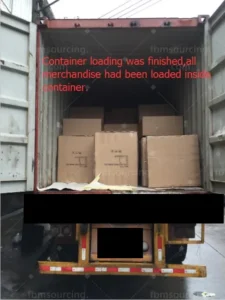
Shipping mode is a cost lever as large as any factory discount. Pre-assembled cabinets ship air: a built carcass is mostly empty volume, protected by corner packing, and a container of assembled kitchens cubes out quickly. Flat-pack cartons stack dense — as a working rule, flat-pack roughly doubles the kitchens per container versus assembled units, and on long routes that difference alone can move total landed cost by a meaningful margin. The offset is destination labour: someone assembles those cartons, and in high-wage markets that someone is expensive. The pattern we see on commercial programs: multifamily and student housing developers take flat-pack and feed it to site crews as a scheduled trade; hotel projects lean assembled or semi-assembled because finish tolerance and install speed at fit-out matter more than freight density. Either way, decide the mode before quoting, because it changes packing spec, QC checkpoints and even which factories belong on your shortlist.
What Compliance Do US, EU and Australian Projects Need in 2026?
Formaldehyde documentation is the universal layer: CARB Phase 2 / TSCA Title VI for the US, the REACH limit of 0.062 mg/m³ for furniture and wood-based articles placed on the EU market after 6 August 2026, and E1 (or specified E0) for most other markets — standards we unpack in our guide to formaldehyde standards for China cabinetry. Insist on board certificates plus finished-goods test reports traceable to your production batch; a certificate that predates your order proves nothing about your shipment. For the US specifically, trade measures on wooden cabinetry mean the quotation is only the start of the cost picture: duty exposure has to be assessed on the actual product, structure and program before you commit — the tariff rate on a headline is not your landed cost, and we run that landed-cost assessment as part of project quotation rather than leaving it to surprise at customs. Australian and European buyers face a lighter documentary load — board emission classes (and, for the EU, the REACH limit of 0.062 mg/m³ for furniture and wood-based articles placed on the EU market after 6 August 2026), hardware cycle standards, and increasingly project-specific sustainability documentation on institutional work.
How a Commercial Project Buys Cabinets from China: Workflow and Lead Times
The workflow that protects a cabinet program has not changed, only tightened: shop drawings translated and confirmed with the factory’s engineering desk; a sample door and finish panel signed before any board is cut; production booked at 30–45 days for custom scopes; and a pre-shipment inspection that checks carcass dimensions, edge-banding and hardware and opens cartons rather than counting them. As a furniture sourcing agent running cabinet packages inside larger building material programs, FBM Sourcing’s job in 2026 is increasingly documentary as much as physical: aligning board certificates, test reports and packing evidence so the file that lands with your freight matches what your contractor, certifier and customs broker each need to see. Cabinets rarely travel alone — on most of our projects they share containers with doors, wardrobes, stone and sanitary ware, which is where a china sourcing agent consolidating one program beats five factories shipping five part-loads.
Get a China Procurement Quote for Your Project
Send us your kitchen drawings or typical unit layouts, unit counts, board and finish preferences, destination port and program dates. FBM Sourcing will come back with a factory comparison across the custom and flat-pack models, compliance documentation mapped to your market, and a landed-cost view you can take to your budget meeting. Start with your BOQ on our project inquiry page.