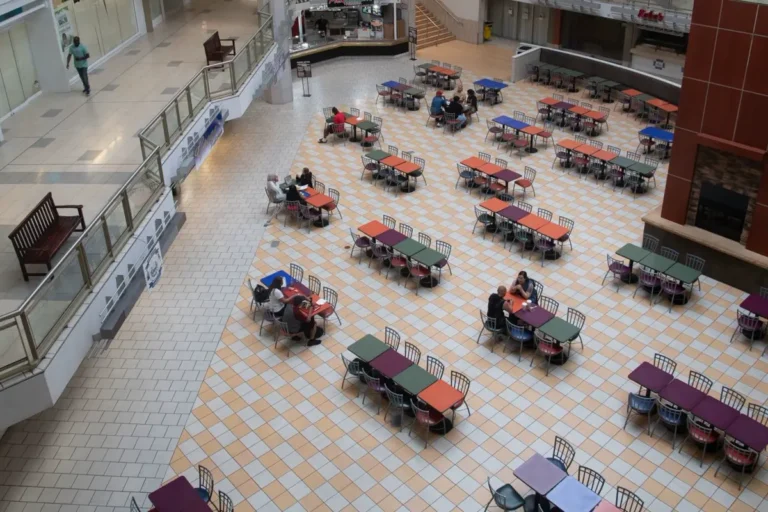
FF&E procurement for a food hall or food court centers on one coordination problem: a single shared kit of seating, kiosk shells, signage and finishes has to be specified once and then supplied consistently across many individual vendor stalls, rather than each vendor sourcing its own furniture separately. Whoever manages that shared kit — typically the landlord or master operator — ends up managing what is effectively a small-scale rollout program inside a single building, and it consolidates far more efficiently than the same number of standalone restaurants would.
Who Sources What in a Food Hall Project?
On most purpose-built food halls, the landlord or master operator specifies and procures the shared elements: communal seating and tables, standardized kiosk shells (counter, shelving and signage frame), shared flooring and wall finishes, and common-area lighting. Individual food vendors typically bring their own cooking and refrigeration equipment, which follows a separate food-service equipment procurement path with its own certification requirements. The furniture and fit-out materials package — the part a sourcing agent handles — covers everything guests see and sit on, not the kitchen equipment behind each stall.
What Is a Standardized Kiosk FF&E Kit?
Rather than each vendor choosing its own counter and shelving, most food halls specify one kiosk shell design — a fixed countertop height, shelving layout and signage frame — and supply it identically to every stall. This does two things: it keeps the venue looking like one coordinated space instead of a patchwork of mismatched stalls, and it turns what would otherwise be a dozen small, uncoordinated furniture orders into a single repeatable specification that can be produced and shipped as one consolidated program.
What Durability Standard Does Food Court Seating Need?
Food court and food hall seating sees continuous, high-turnover public use across a full service day, which is heavier daily cycling than typical hospitality lounge furniture is built for. Seating is generally specified in commercial-grade materials with cleanable, non-porous surfaces and a frame rated for that higher usage cycle, rather than furniture built to a standard restaurant-dining-room specification.
Sourcing this for a commercial project?
FBM Sourcing works with project owners, developers, main contractors and FF&E contractors on hotel, apartment, school, office and other commercial building projects. Send us your BOQ, drawings or product list — our team will review it and get back to you.
How Does Container Consolidation Work for a Food Hall’s FF&E Package?
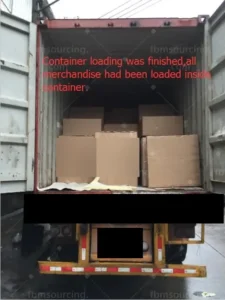
Sometimes, on a large project, the kiosk kits, communal seating and finishes alone fill full containers; sometimes the kiosk kits, communal seating and finishes share containers with the other product categories of the same project; and sometimes, in one batch, we combine a dozen or more product categories from several projects of the same client into a few containers — always full containers, and for us this is routine, well-practised work. Coordinating that schedule across factories and provinces is the kind of work a sourcing agent and sourcing partner handles day to day, rather than a project team managing it factory by factory on their own.
FBM Furniture
If your package is mainly public area and restaurant furniture, see public area and restaurant furniture on fbmfurniture.com, the site of FBM Furniture, the furniture sourcing line of FBM Sourcing Limited.
Frequently Asked Questions
Who is responsible for sourcing FF&E in a food hall — the landlord/operator or each individual vendor?
It varies by project, but on most purpose-built food halls the landlord or master operator specifies and procures the shared FF&E kit — communal seating, standard kiosk shells, signage substrate and shared finishes — so that the space reads as one coordinated venue rather than a row of mismatched stalls, while individual vendors typically bring their own cooking equipment.
What is a standardized kiosk FF&E kit?
A repeatable package of countertop, shelving, signage frame and seating specified once by the food hall operator and then supplied to every vendor stall in the same finish and dimensions, which is what makes a food hall’s furniture and fit-out package a consolidation opportunity rather than dozens of separate small orders.
What durability standard does food court seating need?
Commercial-grade, high-traffic seating built for continuous public use with cleanable, non-porous surfaces and frames rated for heavier daily cycling than typical hospitality lounge furniture, since food court seating turns over far more often through a service day.
Can a food hall’s kiosk kits and communal seating be consolidated into one shipment?
Yes — because the kiosk kits are standardized and repeat across many stalls, and the communal seating and shared finishes are ordered as one package, a food hall project typically consolidates more efficiently into containers than an equivalent number of independently operated restaurants would.
Related reading: How Does Procurement Work for Supermarket and Grocery Store Chain Projects?, FF&E Sourcing for Pub, Bar & Taproom Chain Projects and our full FF&E and OS&E sourcing guide. A sourcing agent and sourcing partner can specify the shared kit once and manage supply to every stall from there.
Planning a project that needs this sourced from China? Send us your BOQ and destination port and our team will review it.