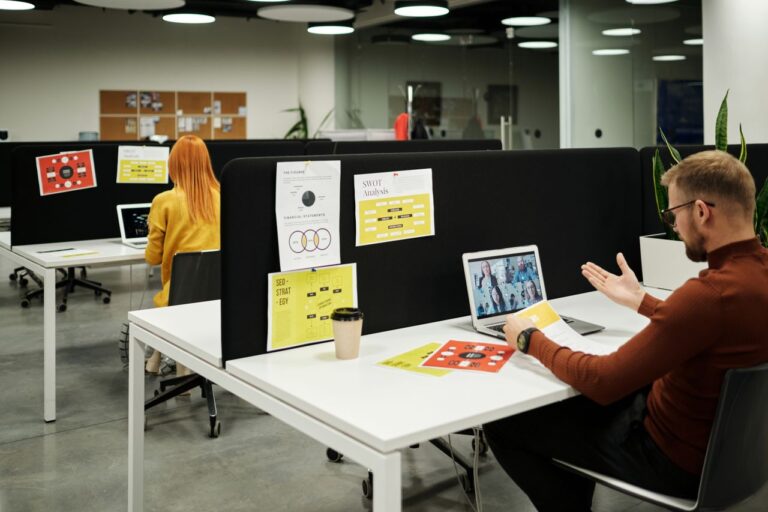
Office building fit-out procurement from China works by consolidating the full commercial interior package — workstations, task seating, meeting and reception furniture, glass partitions, raised flooring, carpet tiles, acoustic ceilings and joinery — from specialist factories into one QC-inspected, container-optimized shipment program managed by a china sourcing agent and sourcing partner. For a typical 3,000–10,000 m² office fit-out, that means several forty-foot containers, a production lead time confirmed by the factory in writing for each order and ocean transit confirmed by the carrier at booking, at landed costs commonly well below buying the same specification through dealers in the US, Australia or Europe. The model suits developers, main contractors and fit-out companies buying at project scale; it does not suit orders below roughly one container, where freight and inspection overheads eat the savings.
Quick Summary: Office Fit-Out Procurement at a Glance
| Issue | Our Judgment | Recommended Action |
|---|---|---|
| Minimum sensible scale | About one 40ft container | Consolidate categories into mixed containers to reach scale |
| Best-value categories | Workstations, task seating, glass partitions, joinery — labor-heavy, spec-driven products | Prioritize these for China; buy compressed-schedule commodity items locally if needed |
| Biggest schedule risk | Late design freeze — fabric, laminate and dimension changes after order confirmation | Lock finishes at sample approval; treat changes after that as new orders |
| Compliance | BIFMA, EN 1335, AS/NZS 4438/4688 and fire ratings vary by market | Put your market’s standards in the RFQ, require current test reports |
What a Full Office Fit-Out Package from China Includes
Commercial interior procurement for a new build office project is broader than furniture. Factories in Guangdong, Zhejiang and Hebei clusters cover, at project scale:
- Workstations and desking: bench systems, height-adjustable desks, executive desking, storage pedestals — custom sizes and finishes at no premium above catalog items at volume
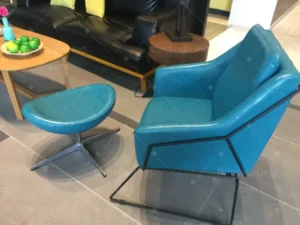
- Seating: task chairs (BIFMA X5.1 or EN 1335 tested), meeting, visitor, lounge and collaborative seating
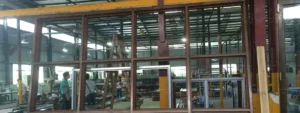
- Partitions and fronts: single/double-glazed aluminum-framed partition systems, acoustic-rated demountable walls, glazed doors with hardware
- Floors and ceilings: carpet tiles, LVT, raised access flooring, mineral fiber and metal acoustic ceiling systems
- Joinery and feature items: reception counters, tea points, phone booths, planters, wall paneling
The practical advantage of running these as one program through a furniture sourcing agent, rather than five separate import purchases, is consolidation: partitions and flooring from Foshan, seating from Anji, workstations from a second Guangdong factory can be combined into shared containers and one documentation set. Our note on consolidating multiple factories into one container covers how mixed loading is planned so trades receive goods in installation order.
Is Office Furniture from China Good Enough for Corporate Projects?
Asked plainly: yes at the specification you enforce, no at the specification you leave open. The same factory frequently runs an export line producing BIFMA-certified task chairs alongside a domestic budget line with thinner gas lifts, lighter bases and uncertified foam. Which line your order comes off is determined by your spec sheet and your inspection regime, not by the factory’s website. Enforce four things:
- Named standards in the purchase order — BIFMA X5.1 (US), EN 1335/EN 16139 (Europe/UK), AS/NZS 4438 (Australia) for seating; fire ratings for panels, fabrics and partitions to your market’s code
- Control samples signed off before production — one physical unit of each major item, retained as the QC benchmark
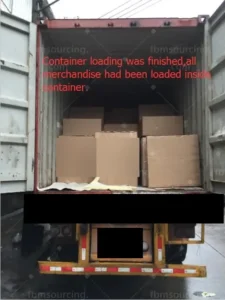
- Pre-shipment inspection to AQL 2.5 or tighter — with defect rework completed before containers are booked, never after — once goods are loaded, your leverage to get anything fixed is gone
Custom designs deserve one extra decision early: whether you are buying the factory’s existing design or commissioning your own. The cost and IP implications are different, and our comparison of OEM vs ODM custom-made project furniture sets out when each route makes sense for office programs.
Sourcing this for a commercial project?
FBM Sourcing works with project owners, developers, main contractors and FF&E contractors on hotel, apartment, school, office and other commercial building projects. Send us your BOQ, drawings or product list — our team will review it and get back to you.
Office Fit-Out Procurement Timeline: From Drawings to Delivery
The sequence that keeps fit-out programs on schedule
Working backwards from your practical completion date, a realistic office fit-out procurement timeline from China looks like this:
| Stage | Timing | At a Glance |
|---|---|---|
| RFQ to costed sourcing plan | Confirmed in writing once the scope is clear | Needs drawings, quantities, finishes schedule, destination port |
| Sampling and finish approval | Set by finish decisions and revision rounds | The stage most projects underestimate — freeze finishes here |
| Production | Confirmed by the factory in writing | Partitions and custom joinery sit at the long end |
| Inspection, rework, loading | Scheduled once production is finished | Pre-shipment inspection before container booking, not after |
| Ocean transit | Confirmed by the carrier at booking | Depends on destination port and routing |
Two timeline realities worth stating plainly. Height-adjustable desks and upholstered items carry the widest quality variance between factories, so their sampling stage cannot be compressed — a cycled gas-lift test or a foam-density check skipped in week three becomes a warranty problem in year two. And multi-tenant office developers running floor-by-floor fit-outs should sequence orders per tenancy rather than per building: three staggered two-container orders keep each tenancy’s finish selections open longer than one six-container order frozen on day one, at nearly identical freight cost.
On timing, please plan for about four months between deposit and shipment: the drawing stage usually takes around two months, because custom items go back and forth until you are happy with them, and production takes about another two months; ocean transit follows. Whether you ship full containers per category or mix loads is a cost decision covered in full container consolidation for building material projects — at fit-out scale, FCL mixed containers almost always win.
What project-scale delivery actually looks like
Numbers from delivered programs are more useful than claims. On one Melbourne office program we procured and shipped 3 x 40HQ containers of office furniture — workstations, seating and storage inspected and consolidated from multiple factories; a separate client shipped 10 x 40HQ containers of office chairs under the same inspect-then-load discipline. Both were new build fit-out programs delivered against fixed occupancy dates — the QC and consolidation sequence, not the unit price, is what made the dates hold. For a related decision, see bank branch and financial office rollout procurement.
Which Office Categories to Source from China — and Which to Leave Local
A disciplined fit-out program does not force every line item through the import route. The categories where China procurement consistently wins are the labor-heavy, specification-driven ones: workstation systems (custom sizes and finishes at volume without the catalog premium), task and meeting seating, glazed partition systems, reception and tea-point joinery, and phone booths. Carpet tiles, LVT and acoustic ceilings sit in the middle: strong value at full-container volume, marginal below it.
What generally stays local: anything on a compressed schedule that cannot absorb the China production and shipping pipeline, code-critical life-safety items your certifier requires from pre-approved local product lists, warranty-sensitive operable walls where the destination market demands local service coverage, and small-quantity feature pieces where freight per unit is punitive. The model many repeat clients settle into: the repetitive volume scope from China, the exceptions bought locally — and the two streams coordinated against one installation program so neither waits for the other. An experienced sourcing agent will tell you plainly which lines on your schedule belong in which stream; an inexperienced one will quote everything and let you discover the exceptions at the port.
Where the Money Goes: Cost Structure of a China Office Fit-Out Package
Developers comparing a China program against local dealer pricing should compare landed cost structures, not unit prices. On a consolidated office order, the landed cost is built up from the ex-factory product, export packing and inland haulage, ocean freight (volume-dependent — workstations ship efficiently, lounge furniture does not), insurance, destination port charges and delivery, and duties and taxes per your tariff schedule. Two consequences follow. First, dense products (chairs stacked knocked-down, flat-packed workstations) keep more of the factory-gate saving than bulky assembled items, which is why task seating and desking are the most reliably economic categories. Second, incoterm choice changes the comparison: an FOB quote leaves freight and clearance with you, a DDP-style quote bundles them — the mechanics are set out in FOB, CIF and DDP incoterms for building materials from China. Always compare quotes at the same incoterm and the same specification, or you are not comparing anything.
What to Send for an Accurate Office Fit-Out Quote
The difference between a two-round and a five-round quoting process is the completeness of the first package. For an office program, send: furniture and finishes schedules with quantities by floor, workstation typical drawings (or the design intent images plus dimensions), partition elevations with acoustic and fire ratings, the standards applicable in your market, destination port, and the fit-out program dates — particularly the date the site can receive goods. From a complete package, we confirm the timeline for a shortlist of matched factories and a costed sourcing plan in writing once the scope is clear. If the design is still fluid, quote the fixed scope first (seating, workstations) and hold the moving scope (feature joinery) for a second order — splitting beats waiting, because production slots for the fixed scope are secured while design completes.
Applied up front, those three questions eliminate most of the quoting noise before it costs your program any calendar time.
For the cost side of the same project type, see how much does an office fit-out from China cost? Cost structure breakdown for how the budget mix shifts between open-plan, executive and co-working fit-outs.
Get a China Procurement Quote for Your Project
FBM Sourcing manages office fit-out procurement from China end to end — factory selection, sampling, one quality inspection once production is finished (your own project team is welcome to attend it with us), consolidation and shipping — for developers, main contractors and fit-out companies. Send your drawings, furniture schedule or BOQ, quantities, destination port and program dates through our building materials and FF&E procurement page, and our team will review your requirements and get back to you.
Related reading: PET vs fabric-wrapped vs wood slat acoustic panels
Related reading: Top office furniture manufacturers in China
Phone booths and meeting pods are a category of their own, made by different kinds of factory from the workstations and partitions around them. Our guide to office phone booth and acoustic pod manufacturers in China sets out the five manufacturer types and the ISO 23351-1 speech level reduction report to request for each pod size.
Frequently Asked Questions
How many containers does a typical office fit-out from China need?
The container count depends on scope and how much of the package is furniture versus partitions and joinery, and is set in the load plan.
Is office furniture from China good enough for corporate projects?
Yes at the specification you enforce, no at the specification you leave open. The same factory often runs an export line producing BIFMA-certified chairs alongside a domestic budget line with uncertified foam, and named standards on the purchase order determine which line the order comes from.
Which office fit-out categories are the best value to source from China?
Workstation systems, task and meeting seating, glazed partition systems, and reception and joinery work – labor-heavy, specification-driven categories.