Yes, it is safe to buy building materials from China for a project when you control three things: who you pay, how quality is verified, and how the goods are shipped. The real risk is not “China” — it is buying blind: paying unverified accounts, skipping inspection, and having no recourse if goods arrive wrong. Using a buyer-side sourcing agent and sourcing partner, or at least a pre-shipment inspection and a verified payee, reduces that exposure.
What Are the Actual Risks?
- Payment fraud: being asked to pay a personal or third-party account
- Quality substitution: goods that don’t match the approved sample or spec
- Trading companies posing as factories: undisclosed markups and no factory control
- Missing certificates: materials without the fire, water or emissions compliance your market requires
- Shipping and clearance surprises: unclear Incoterms and hidden costs
How Do I Verify a Chinese Factory Is Legitimate?
- Confirm a registered business licence and that the bank account is in the company’s name
- Check whether you are dealing with the factory or a trading company reselling at a markup
- Ask for references, real project photos, and relevant certificates
- Insist on a pre-production sample and the right to inspect before shipment
Sourcing this for a commercial project?
FBM Sourcing works with project owners, developers, main contractors and FF&E contractors on hotel, apartment, school, office and other commercial building projects. Send us your BOQ, drawings or product list — our team will review it and get back to you.
How to Avoid Scams When Buying Building Materials from China
- Pay only the company named on your PI. Payments go only to the company account named on your PI — never to an individual, never to a factory.
- Get the right certificates in writing: fire, water/sanitary, formaldehyde or CE/UKCA as your market requires.
- Fix the Incoterm: agree FOB, CIF or DDP and who handles freight, duty and clearance.
- Keep everything on one disclosed contract rather than scattered chats.
Before You Pay: A Verification Checklist
This checklist lists what to confirm before money moves, and what evidence to ask the supplier for. Where an item is a public record, you can look it up yourself.
| Check | What to look for | Evidence to request |
|---|---|---|
| Company identity | The registered company name and its unified social credit code. Each organisation has one 18-character code. | A copy of the business licence, then look the name and code up on the official enterprise credit information publicity system (www.gsxt.gov.cn). |
| Public record | Operating status, shareholders, and whether the annual report has been published. A company that fails to publish it, or publishes false information, can be placed on the abnormal-operations list. | The registry page for the same name that appears on the quotation and the PI. |
| Registered scope vs the product | Whether the registered business scope covers your product, and whether the company makes it or buys it in. | Photos or a video walk-through of the production line making your product. |
| Who gets paid | The account name is the contracting company named on the quotation and PI, not an individual and not a different company. | A PI showing the company name and the account it names. |
| Certificates | Test reports or certifications that name your product and apply to your destination market. | Report copies showing the product, the model and the issuing body. |
| Specification | For custom products, drawings and a material list that you have signed off before production starts. | The signed drawings and material list. |
| Inspection | One inspection after bulk production is complete and before shipment, against the signed-off specification. | A written report with photos and video, and the right for your team to attend. |
| Terms on paper | Incoterm, warranty period and estimated dates stated on the PI, with one party issuing the quotations, invoices and shipping documents. | The PI. |
The registry rules behind the first two rows are set out in the State Council’s Interim Regulations on Enterprise Information Publicity (Order No. 654, in force since 1 October 2014), and the 18-character code in State Council Document No. 33 (2015). Both were read on 12 October 2026. A registry entry describes a company; it does not say which factory is producing your order, which is why the production-line row matters.
What You Can Ask FBM Sourcing For
If you buy through FBM Sourcing, this is the paperwork you should expect to see, and you can ask for any of it before you commit.
- A proforma invoice with full product details, prices, warranty period, Incoterm and estimated dates, issued by FBM Sourcing. All quotations, invoices and shipping documents come from FBM Sourcing; you deal with us, and we carry the responsibility.
- Confirmation of certifications before we quote. Our main markets are North America and Australia, so the first step in choosing a factory is checking that it holds the test reports or certifications for that specific product. Examples from our guide: aluminium windows and doors — NFRC in the US, Florida hurricane approvals for hurricane zones, AS 2047 in Australia; sanitary ware — cUPC in North America, WaterMark in Australia; fire-rated steel and wood doors — UL, for US-code markets.
- Signed-off drawings for custom products such as cabinets, aluminium doors and windows, railings and custom furniture: 2D drawings (3D for millwork) and a detailed material list, until you sign off before production.
- A QC report with photos and video from our own team’s inspection after bulk production is complete and before shipment. Your project team is welcome to attend. Goods that fail go back for rework and re-inspection until all pass.
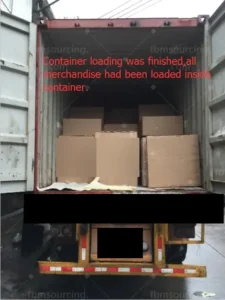
- A container loading report when the goods ship; see what the container loading report contains.
- After-sales terms. For products we source, the warranty period on the PI applies and you deal with FBM Sourcing, not the manufacturer. For suppliers you nominate, claims fall under the supplier’s own warranty and we can help you coordinate.
Before we work with a factory we look at its production line for the product we intend to buy. If it makes A and resells B, we use it for A only. How we tell the business types apart is covered in is that Chinese supplier a real factory, and the cost structure in how much a China sourcing agent costs.
Warning Signs: When to Stop and Ask Again
- The payee on the PI is an individual, or a company whose name differs from the contracting company.
- You are asked to pay before you have a written quotation or PI.
- The supplier will not say whether it makes your product or buys it in.
- Certificates do not name your product, your model or your destination market.
- Specifications or drawings are not confirmed in writing before production.
- There is no inspection after bulk production, or no report you can see.
Any one of these is a reason to pause and ask for the evidence in the checklist above, not proof of fraud.
Where to Start on Market Compliance
The certificates that matter depend on the product and the destination market. Our guides cover which certifications to ask for when importing building materials, window and door export certifications by market and sanitary ware certifications (cUPC, WaterMark, WRAS, CE). Send us your project location with your product list and we check the certifications your market requires before we quote.
How Does a Sourcing Agent Reduce the Risk?
A buyer-side sourcing agent carries the responsibility for what arrives, so it has no reason to hide defects. It looks at the factory’s production line for your product, has its own team inspect once after bulk production is complete and before shipment (your team is welcome to attend), runs quality control against your signed-off specification, checks that certificates match the product and market, and coordinates shipping — turning “buying blind” into a controlled process with recourse.
Buy from China Safely with FBM Sourcing
FBM Sourcing acts for the buyer: we vet factories, negotiate terms, inspect before shipment, verify certificates and consolidate shipping for building materials and FF&E projects. Submit your project requirements for a supplier shortlist with QC and compliance built in. See also how much a China sourcing agent costs.
Frequently Asked Questions
Is it safe to buy building materials from China?
Yes, when you control who you pay, how quality is verified and how goods ship. The risk is buying blind: unverified payees, no inspection and no recourse. A buyer-side sourcing agent, or at least a pre-shipment inspection and a verified payee, reduces that exposure.
How do I check that a Chinese supplier is a real company?
Ask for the business licence, then look up the registered name and unified social credit code on the official enterprise credit information publicity system (www.gsxt.gov.cn). Check the operating status, shareholders and annual-report filing, and compare the registered business scope with your product. The registry describes a company; it does not say which factory is producing your order, so also ask to see the production line for your product.
Who should I pay when buying from China through a sourcing agent?
Payments go only to the company account named on your PI — never to an individual, never to a factory.
Which certificates should I ask for before paying?
The test reports or certifications that name your specific product and apply to your destination market. Examples from the FBM Sourcing guide: NFRC, Florida hurricane approvals and AS 2047 for aluminium windows and doors; cUPC and WaterMark for sanitary ware; UL for fire-rated doors in US-code markets. Ask for report copies showing the product, the model and the issuing body.
What happens if goods arrive damaged?
For products FBM Sourcing sources, send us photos or videos so a claim can be raised with the carrier, insurer or factory; our client guide sets a window of 3 working days from arrival for this. Within the warranty period stated on the PI, we replace or compensate. For suppliers you nominate, claims fall under the supplier’s own warranty and we can help you coordinate.