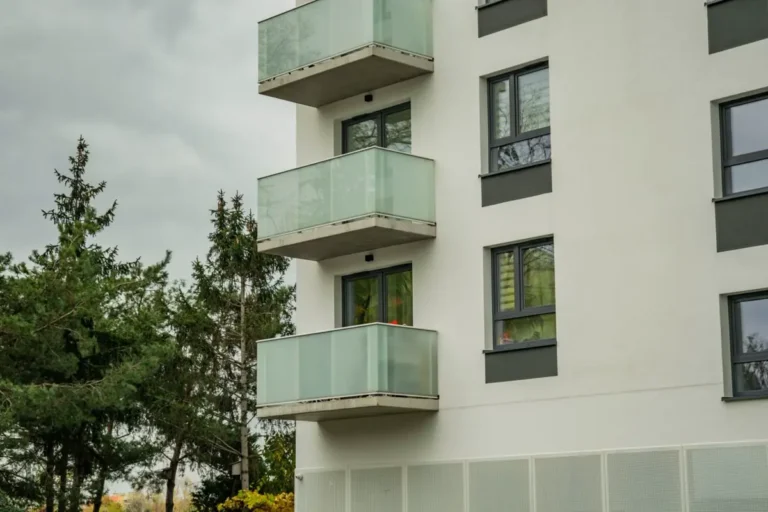
For a commercial building the choice comes down to what the barrier has to resist and who will maintain it. Glass balustrades give an uninterrupted view and are specified where the outlook is the asset — hotel terraces, atria, sea-facing balconies — but they carry the heaviest structural and glass-specification burden. Aluminum (and stainless) systems are the default for volume residential and apartment work: lighter, cheaper, easier to install to a repeat detail and simpler to repair. Cable balustrades suit low-rise, low-traffic and design-led applications, and they are the most frequently rejected of the three on code, because cable tension and the 100 mm sphere rule are hard to hold together over long spans. In every case the governing number is the same: a horizontal line load, typically 0.74 kN/m for residential balconies and 3.0 kN/m for crowd areas, applied at handrail height. FBM Sourcing works as your sourcing agent and sourcing partner throughout this process.
What Does the Code Actually Require?
Balustrade specification is a structural exercise dressed as a finishes decision. Five requirements appear in nearly every jurisdiction, with different numbers.
- Height: generally 1,000–1,100 mm for balconies and landings, with 1,100 mm common above a defined drop height and higher for some roof terraces.
- The sphere rule: no opening may pass a 100 mm sphere (a 4 in sphere in the US), including the gap below the bottom rail. This is what defeats most cable designs.
- Line load: BS 6180 and EN 1991-1-1 set 0.74 kN/m for domestic and residential balconies, 1.5 kN/m for areas with light crowd loading and 3.0 kN/m for assembly and crowd areas; AS 1170.1 and IBC use comparable values, with IBC also requiring a 200 lbf concentrated load.
- Infill loads: a separate uniformly distributed load and a point load applied to the panel itself, which is what sizes the glass rather than the posts.
- Climbability: many codes prohibit horizontal elements between roughly 150 mm and 760 mm above the floor where children may be present — a direct restriction on horizontal cable systems.
None of this is negotiable at the factory. It is decided by the designer, and a supplier’s job is to produce a system that demonstrably meets it — then to prove it with test evidence and calculations.
Glass, Aluminum or Cable: How Do They Compare in Service?
Glass balustrades
Frameless glass on a base channel or point-fixed spigots gives the clearest sightline and the highest specification burden. Structural interlayers are the deciding detail: laminated glass with an SGP interlayer retains far more post-breakage stiffness than PVB, which is why free-standing frameless designs generally require it. Typical build-ups run 17.5–21.5 mm laminated toughened for a channel-fixed 1,100 mm barrier, and heat-soak testing to EN 14179 is normal practice to reduce the risk of nickel sulphide inclusions causing spontaneous breakage in service. Maintenance is cleaning, and a lot of it. The detail-level requirements are set out in how to specify glass balustrades from China.
Aluminum and stainless systems
A posted system with glass, perforated or slat infill is the workhorse for apartment blocks, walkways and stairs. It is lighter, tolerant of construction inaccuracy, repairable panel by panel, and much easier to ship and install to a repeating detail across hundreds of balconies. Corrosion behaviour is a specification decision, not a material given: powder coating to a marine-grade pretreatment for coastal work, and 316 rather than 304 stainless within a few kilometres of salt water. Component-level guidance is in railing posts and hardware for a commercial balustrade order.
Cable balustrades
Stainless cable in tension between structural posts. It reads well in low-rise, terrace and mezzanine applications and is the lightest of the three, but the engineering is unforgiving: cables must be tensioned to keep deflection within the 100 mm sphere rule under load, which drives post spacing down to around 1.2 m and post sections up, and end posts take substantial tension that the structure has to resist. Re-tensioning is a scheduled maintenance item. Where children are present, the climbability restriction often rules the system out before any of that matters.
For surface indicators on paths and thresholds, see our guide to tactile paving manufacturers in China.
Sourcing this for a commercial project?
FBM Sourcing works with project owners, developers, main contractors and FF&E contractors on hotel, apartment, school, office and other commercial building projects. Send us your BOQ, drawings or product list — our team will review it and get back to you.
Which System Suits Which Building?
- Hotel and resort terraces, rooftop bars, atrium edges: frameless or minimally framed glass, laminated with a structural interlayer, heat-soak tested. The view is the product.
- Apartment and BTR balconies at volume: aluminum posted systems with glass or slat infill. Repeat detail, tolerant fixings, replaceable panels, sensible shipping volume.
- Schools, hospitals and public buildings: aluminum or steel with vertical infill, no climbable horizontals, and a coating specified for cleaning chemicals.
- Coastal and island projects: 316 stainless or marine-grade coated aluminum; galvanic separation between dissimilar metals at every fixing.
- Pool surrounds: a separate code question entirely, with gate self-closing and self-latching requirements — see pool fence railing sourcing.
- Stairs and internal landings: handrail continuity and graspable profile usually matter more than infill type; see handrail systems.
What Evidence Should Come With a Balustrade Package?
Balustrades are a life-safety element, so the paperwork is part of the product. On any project package the submission should include structural calculations for the specific configuration — span, height, fixing type and substrate — signed against the governing code; glass certificates covering toughening to EN 12150 or ANSI Z97.1, lamination and heat-soak testing; material certificates for the alloy or stainless grade; coating evidence such as coating thickness, adhesion and salt-spray hours; and fixing pull-out data against the actual substrate, because a system rated in a laboratory slab means little bolted into a thin nib or a rendered blockwork edge. Shop drawings should be approved before production — the cycle is described in how the shop drawing approval cycle works. For structural steel elements destined for the EU, EN 1090 CE marking applies to the fabrication, not just to the material.
How FBM Sourcing Handles Balustrades on a Project Package
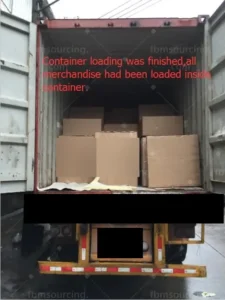
FBM Sourcing manages the entire China procurement package for overseas construction projects. On a hotel, apartment, school, office or retail package we take the balustrade from the architect’s elevations into a fabrication drawing that states span, fixing, substrate and load case, hold the calculations and certificates against the governing code for the destination, and check on site dimensions before cutting starts, because a balustrade is a made-to-measure product and a 20 mm error repeats across every balcony. Our own FBM Sourcing QC team inspects at the factory, as one inspection once bulk production is finished, before shipment covering weld quality, coating thickness, glass markings and dry assembly of a sample run. All quotations, invoices and shipping documents are issued by FBM Sourcing — you deal with us, and we carry the responsibility. For suppliers you nominate, we charge a 5% commission; for products we source for you, we quote a direct price. Sometimes, on a large project, the railings alone fill full containers; sometimes the railings share containers with the other product categories of the same project; and sometimes, in one batch, we combine a dozen or more product categories from several projects of the same client into a few containers — always full containers, and for us this is routine, well-practised work.
For the fabrication side of a railing package, see our roundup of top railing and balustrade manufacturers in China for commercial buildings.
If you have balustrade elevations to price, send us the drawings, the balcony or stair quantities, the governing code, the destination port and the required-on-site dates. Our team will review it and set out a quotation — use the quote button above or WhatsApp +86 135 6007 5057.