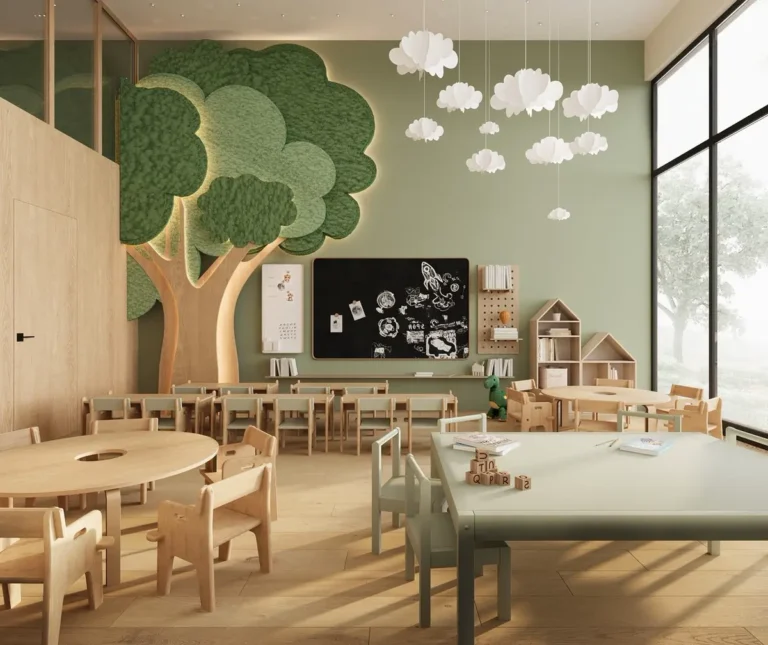
Childcare and kindergarten fit-out procurement works like any other commercial FF&E package with one difference that changes every decision: almost every item has to satisfy a child-safety standard before it satisfies a design intent. Furniture is sized by age band rather than by aesthetics, coatings and surfaces are tested for migratable heavy metals and formaldehyde, upholstery is tested for flammability, and playground equipment is governed by a separate impact-attenuation standard for the surface underneath it. On a multi-room centre or a chain rollout, the procurement package is therefore built standard-first: agree the evidence each category must carry, then select factories that can produce it. This kind of coordination is what a sourcing partner like FBM Sourcing is for.
Which Standards Govern Childcare Furniture and Fit-Out Materials?
These are the documents that decide whether a licensing inspector, a building surveyor or an insurer accepts the fit-out. They vary by destination market, so the specification should name the ones that apply rather than asking for “child-safe” materials.
- EN 1729-1 and EN 1729-2 — classroom chairs and tables: dimensional size marks 0 to 7 matched to child stature, plus strength, durability and stability requirements. Size mark 0 to 3 covers most nursery and kindergarten ranges.
- EN 71-3 — migration of 19 elements including lead, cadmium, chromium and barium from coatings and accessible materials, the standard normally applied to painted children’s furniture in Europe.
- ASTM F963 — US toy safety standard, applied to play items and often referenced for soft play and manipulatives; CPSIA sets the US total lead limits for children’s products.
- EPA TSCA Title VI / CARB Phase 2 — formaldehyde emission limits for composite wood panels used in casework, cubbies and storage on US projects; E1 or E0 grade is the equivalent reference in many other markets.
- CAL TB 117-2013 — smoulder resistance for upholstered seating in the US; BS 5852 for the UK contract market; AS/NZS 3744 and the relevant state regulation in Australia.
- EN 1176 and EN 1177 — playground equipment and impact-attenuating surfacing, with the surface tested to a critical fall height; ASTM F1487 and ASTM F1292 are the US equivalents.
- DIN 51130 (R-ratings) or AS 4586 slip resistance for wet areas — bathrooms, nappy change rooms and messy-play zones.
Two design rules sit alongside the standards and are worth writing into the specification as hard requirements: no gaps between 5 mm and 12 mm in accessible openings (the finger-entrapment band that EN 1176 addresses), and anti-tip restraint on every storage unit above roughly 600 mm in height. Both are cheap at the drawing stage and impossible to fix once the container lands.
How Is the Package Broken Down for a Childcare Centre?
A typical centre package divides into six scopes, and they do not share lead times, factories or approval routes — which is why treating the fit-out as one order is where schedules go wrong.
Room furniture by age band
Nursery, toddler and preschool rooms each need their own table and chair size mark, cots or sleep mats, low open shelving, book displays and soft seating. Quantities follow the licensed capacity per room, not the floor area, and most licensing regimes require a seat and a storage position per enrolled child plus spares.
Casework and joinery
Cubbies and bag racks, nappy change benches with integrated steps, staff-height sinks and low child sinks, kitchen servery joinery, and lockable medicine and cleaning storage above child reach. This is the scope that needs site dimensions and therefore drives the shop drawing approval cycle.
Floor, wall and acoustic finishes
Cushioned vinyl or rubber flooring with the slip rating the wet areas require, wall protection to child height, and acoustic treatment — the most under-specified item in the sector. Reverberation in a hard-surfaced play hall is a staffing problem as much as a comfort one, and acoustic panels are far cheaper to buy with the fit-out than to retrofit.
Outdoor play
Structures, shade, sand and water play, and the impact-attenuating surface, which must be specified against the critical fall height of the tallest structure rather than chosen by appearance.
Sanitary and utility
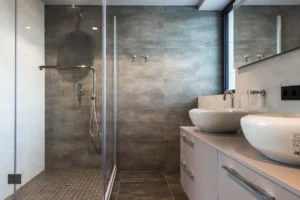
Child-height WCs and basins, anti-scald mixing valves, and nappy disposal. Anti-scald is a code requirement in most markets and should be evidenced, not assumed.
Loose equipment and soft furnishings
Mats, cushions, curtains, storage tubs and display. Small value, long tail, and the scope that most often gets forgotten until the week before opening.
What Does the Timeline Look Like for a Centre or a Rollout?
For a single centre, plan on specification and standards review first, then factory selection and quotation, then sample approval, then production for furniture and casework on the factories’ written lead times, a full inspection before shipment, and ocean transit confirmed by the carrier at booking, plus customs clearance and delivery. Working back from a licensing inspection date rather than an opening date is the discipline that matters, because most jurisdictions will not licence a centre until the fit-out is complete and compliant.
For an operator opening several centres, the package changes shape entirely. The efficient structure is a prototype centre — one fully specified, approved and photographed room set — converted into a repeatable kit per room type, then produced in waves against the opening calendar. Each centre receives its own labelled cartons, grouped as its own section of the container load, so nothing has to be re-sorted on arrival. Attic stock should be ordered in the same production run rather than reordered later, because a colour or fabric batch matched twelve months on is not the same batch; the mechanics are covered in matching existing finishes on a phase 2 FF&E order. Rollout sequencing across sites follows the same logic as other chain programmes — see restaurant chain furniture procurement for multi-site rollouts.
Sourcing this for a commercial project?
FBM Sourcing works with project owners, developers, main contractors and FF&E contractors on hotel, apartment, school, office and other commercial building projects. Send us your BOQ, drawings or product list — our team will review it and get back to you.
What Evidence Should You Ask For Before Placing the Order?
Ask for the document, not the adjective. For each category the package should carry a named standard, a test report or certificate against that standard covering the actual construction being supplied, and a statement of which component the report covers — a fabric certificate is not a seating certificate, and a coating report on one colour does not cover the whole range. Where a report is more than a couple of years old or refers to a superseded version of the standard, ask when it was issued and against which edition.
The distinction between a factory’s internal test data and testing carried out by an accredited laboratory matters more in this sector than in almost any other, because licensing bodies and insurers ask for the latter. It is set out in factory test reports versus accredited lab testing. For projects that also cover school-age facilities, our guides to sourcing dormitory and classroom furniture from China and the certifications school and hospital projects need cover the adjacent requirements.
How FBM Sourcing Runs a Childcare Fit-Out Package
FBM Sourcing manages the entire China procurement package for overseas construction projects. On a childcare or kindergarten fit-out that starts with reading the specification against the destination market’s standards and telling you, before any order is placed, which lines can be produced with the evidence required and which cannot — because a beautiful chair with no EN 1729 size marking is not a saving.
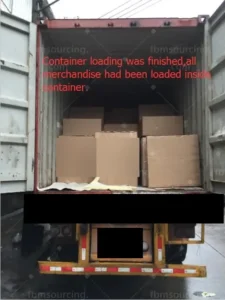
From there we hold the factories against the approved samples, manage size-mark and finish approvals room type by room type, and inspect once at the factory when bulk production is finished, before shipment recorded in photographs and video. Multiple factories — furniture, casework, flooring, play equipment, soft furnishings — are consolidated into full containers so a centre receives one delivery rather than six. All quotations, invoices and shipping documents are issued by FBM Sourcing — you deal with us, and we carry the responsibility. For suppliers you nominate, we charge a 5% commission; for products we source for you, we quote a direct price.
The furniture schedule should be separated by production line before pricing. Our guide to kindergarten furniture manufacturers in China covers classroom, storage, sleep, soft-seating, activity and outdoor source types.
Get a China Procurement Quote for Your Project
If you are fitting out a childcare centre, kindergarten or early-learning campus — one site or a rollout — send us the room schedule with licensed capacity per room, the drawings or BOQ, the standards your jurisdiction requires, the destination port and the licensing inspection date you are working back from. Our team will review the package and set out how each scope would be specified, evidenced, produced, inspected and shipped.
Use the quote button above or WhatsApp +86 135 6007 5057 to start the conversation.