On a commercial project package, sea freight is the default and air freight is a repair tool. A 40’ high cube from a South China port carries a full container load, and its sea transit time, confirmed by the carrier at booking, runs to weeks; air freight moves the same goods in days but is charged on chargeable weight, which for furniture and finishes is almost always the volumetric figure — and that is what makes it the wrong tool for a container-scale package and the right tool for a missing box of hinges. The decision is not really air versus sea. It is: which few items, if any, have to arrive before the next sailing can deliver them, and what does the programme lose if they do not. FBM Sourcing works as your sourcing agent and sourcing partner throughout this process.
How Is Air Freight Actually Charged on Project Goods?
Air freight is priced on chargeable weight, which is the greater of actual gross weight and volumetric weight. The industry volumetric divisor is 6,000 cm³ per kg (equivalently 1 m³ = 167 kg). Project goods are bulky and light, so the volumetric figure wins nearly every time, and the gap is the whole story.
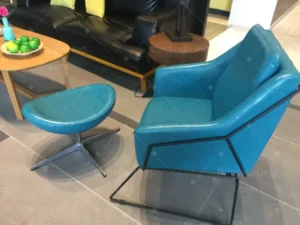
- One upholstered lounge chair, boxed at 0.9 m³ and 22 kg actual, is charged at about 150 kg — nearly seven times its real weight.
- A carton of door hardware, 0.04 m³ and 18 kg actual, is charged at 18 kg — dense goods are charged on real weight, which is why hardware, locks, fixings and electrical components are the natural air candidates.
- A 40’ high cube of hotel casegoods packed full would present a chargeable weight by air that sits in freighter charter territory, not in a project budget.
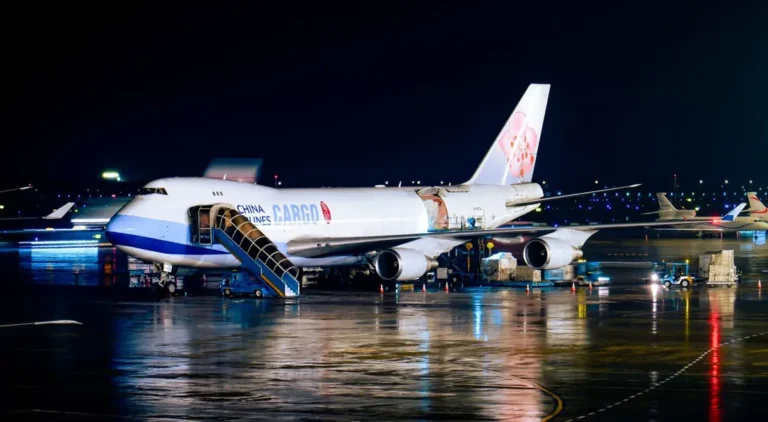
- Airline piece limits matter as much as cost: standard lower-deck holds on wide-body passenger aircraft take pieces up to roughly 1.60 m high, and main-deck freighters up to about 2.40 m. A 2,700 mm wardrobe does not fly, whatever the budget says.
- Lithium batteries and aerosols — motorised blinds, electric actuators, some smart locks — are dangerous goods by air and need UN 38.3 test reports and Class 9 packing, which adds days at origin, not hours.
Sea freight, by contrast, is charged per container, so the cost per item falls as the box fills. That single fact drives the packaging strategy on every project package we handle: knocked-down chairs, nested tables, stacked cartons and A-frames for slabs are all ways of paying for the same box once and moving more inside it.
When Does Air Freight Make Sense on a Construction Programme?
There are four situations where air is the right answer, and they have one thing in common: a small, dense, schedule-critical quantity.
Approval samples and mock-up items
A control sample, a fabric memo, a finish panel or a single guest-room set for a mock-up room typically presents 0.2–2 m³. Sending these by air in days rather than waiting weeks for a sailing pulls the whole approval chain forward, and approval is the true critical path on custom FF&E — see how the sample approval process works when sourcing from China and why a mock-up room before bulk FF&E production pays for itself.
Replacements for transit or handling damage
When a piece arrives damaged, the replacement is one item, not one container. Air is the only way to keep a phased handover on programme, and this is exactly the scenario that attic stock and spare quantities exist to avoid.
Late design changes and short-count remedies
A specification changed after the container sailed, or a short count discovered on site, produces a small, urgent quantity. Dense components — hardware sets, hinges, closers, cartridges, LED drivers, controllers — are cheap by air precisely because their actual weight beats the volumetric calculation.
Commissioning and snagging items
The last few items of an interior package often hold up the certificate: missing keys, a control module, a replacement glass panel, a batch of touch-up paint. These are air freight items by definition.
Sourcing this for a commercial project?
FBM Sourcing works with project owners, developers, main contractors and FF&E contractors on hotel, apartment, school, office and other commercial building projects. Send us your BOQ, drawings or product list — our team will review it and get back to you.
What Does the Real Timeline Difference Look Like?
Buyers compare days against weeks and conclude air saves most of the transit. On a project package it rarely saves that much, because the transit is only one segment of the chain.
- Production is unchanged by the mode: custom casegoods, joinery and aluminium windows need around two months on the factory floor after drawing approval as a planning allowance, and nothing about an air booking shortens that.
- Drawing approval takes time for every cycle, and more than one cycle is normal — on custom items the drawing stage usually takes around two months — see the shop drawing approval cycle with Chinese factories.
- Inspection and loading add a few days at origin either way; goods are checked on the factory floor before they leave.
- Air handling at both ends — export declaration, security screening, airline acceptance, arrival breakdown, customs, trucking — adds days to the flying time, and the forwarder confirms the door-to-door time at booking.
- Sea transit variability: port congestion, blank sailings and transhipment can add days or weeks, which is why a lead-time buffer in the construction schedule matters more than the headline transit figure.
Set against a full programme — drawings, approvals, production, inspection, transit, customs, delivery to site — switching a whole package to air compresses only the transit segment, at a cost multiple that no commercial project budget carries. Switching one carton to air saves the same transit time on the one item that is actually holding up the trade.
How Do You Design the Package So You Never Need Air Freight?
Air freight on a project package is usually the visible symptom of a planning decision taken months earlier. Five habits remove most of it.
- Order in the right sequence. Long-lead items — custom casegoods, stone, lifts, feature lighting — are released first.
- Buy attic stock with the main order. A small percentage of spare finishes, fabric, tiles and hardware ordered in the main production run costs a fraction of the same items flown later, and the colour batch matches. The reasoning is set out in how much attic stock you should order for hotel FF&E.
- Split the shipment by handover phase, not by factory. Phased projects can take deliveries in stages while still shipping complete container loads.
- Protect the goods properly. Most emergency air freight replaces items damaged in transit; export packing standards for sea freight and moisture control decide how much of that you ever face.
- Keep one small air allowance in the budget. A nominal provision for commissioning items is cheaper than a change order raised at the end of an installation programme.
Air, Sea or Both: How the Decision Is Usually Made
On most packages the answer is both, in a fixed ratio: essentially all of the volume by sea, and a short list of dense, schedule-critical items by air. A practical rule that survives contact with real projects: if the item is under roughly 0.05 m³ per piece, denser than about 167 kg/m³, and its absence stops a trade from working, it is an air candidate. Everything else waits for the box. Where goods have to move quickly and are neither small nor dense — a replacement reception desk, a run of balustrade — the honest answer is usually a re-sequenced installation programme rather than a freighter booking.
How FBM Sourcing Handles Air and Sea on a Project Package
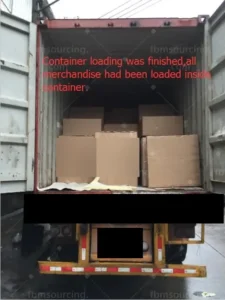
FBM Sourcing manages the entire China procurement package for overseas construction projects. On a hotel, apartment, school, office or retail package we plan the shipping mode at order stage rather than at crisis stage: long-lead items are released early, spares and attic stock are built into the main production run, and the loading plan is drawn so the package fills complete containers. Where a genuinely urgent, dense item has to fly, we handle the booking, the dangerous-goods paperwork where batteries or aerosols are involved, and the documents, and our own FBM Sourcing QC team checks the goods at the factory, as one inspection once bulk production is finished, before shipment. All quotations, invoices and shipping documents are issued by FBM Sourcing — you deal with us, and we carry the responsibility. For suppliers you nominate, we charge a 5% commission; for products we source for you, we quote a direct price. Sometimes, on a large project, the furniture alone fill full containers; sometimes the furniture share containers with the other product categories of the same project; and sometimes, in one batch, we combine a dozen or more product categories from several projects of the same client into a few containers — always full containers, and for us this is routine, well-practised work.
If you are weighing air against sea on a package that is already tight, send us the item list, the destination port or airport, and the required-on-site dates. Our team will review it and set out what genuinely needs to fly — use the quote button above or WhatsApp +86 135 6007 5057.