A buyer weighing up a China procurement package usually wants one thing before anything else: has this been done for a project like mine? It is the right question, and it is harder to answer than it looks, because the field that buyers instinctively match on — building type — is one of the weakest predictors of whether a delivered package actually resembles theirs.
This page sets out what our project records contain, which parts of them transfer to another project and which do not, and how to use them to find the closest comparable package to yours. It is about matching scope, not about testing anybody.
What is actually in one of our project records
Each delivered project we publish is written to the same shape, because those are the facts that determine whether the work is comparable:
- The destination market and the type of buyer. Not a company name — a description, such as a hospitality operator working through a local design consultant, or a main contractor on an apartment development. Who the buyer was determines how the order was run as much as what was in it.
- The category list, at specification level. Not “furniture” but the actual scope: button-tufted leather lounge seating, PE rattan outdoor dining sets with glass tops, illuminated bar furniture. The specification detail is the part that carries information; the category heading rarely does.
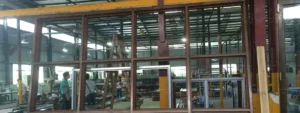
- How many factories were involved, and what kind. A leather upholstery workshop, an outdoor furniture plant, an illuminated furniture manufacturer — described by capability, never named.
- What was approved, and against what. Which samples were signed off and what they were checked against, because the approved sample is the reference every later argument runs back to.
- What was inspected, category by category. The checkpoints that matter differ by product, and the record says which ones were applied.
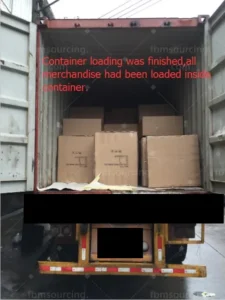
- How it was packed and consolidated. Protective wrapping, edge protection, separation of fragile components, and how the categories were combined into containers.
Written this way, a record is a description of the work rather than a photograph of a finished room. That is deliberate, and it is what makes it useful for comparison.
Which fields actually transfer, and which look like they do
This is the part worth spending time on, because matching on the wrong field is how a buyer concludes either that nothing comparable exists or that something comparable does when it does not.
Category mix transfers. Building type mostly does not. A restaurant interior package and a hotel lobby buy overlapping seating from overlapping factories with overlapping quality checkpoints. A hotel and an apartment block share a great deal of FF&E and almost none of the building envelope. If you are pricing loose furniture for a serviced-apartment scheme, a delivered restaurant furniture package tells you more than a delivered apartment window package does — even though the second one shares your building type. Match on what is being bought, not on what is being built.
The number of categories is the best available proxy for coordination difficulty. Three product categories generally means three factories, three sets of quality checkpoints, three production calendars and three packing problems to reconcile into one shipment. That reconciliation is the work, and it scales with the number of independent supply lines rather than with the value of the order. A large single-category order can be much simpler to run than a small package spanning eight categories.
Destination changes the evidence package, not the product. The same tile from the same factory is the same tile in Sydney, Riyadh and Miami. What changes is the conformity route it has to satisfy: NCC evidence in Australia, SASO and SABER in Saudi Arabia, a different scheme again in Kuwait or Oman, or a listing the authority having jurisdiction will accept in the United States. So a delivered package for another market is still a good scope match; it is the compliance work that has to be re-read against your destination. That difference is set out for the Gulf in what changes on a Middle East project compared with the US and Australia.
Order value transfers least of all. It moves with specification tier, currency, market and date, and two packages of similar value can involve completely different amounts of work.
Looking for a delivered package like yours?
FBM Sourcing works with project owners, developers, main contractors and FF&E contractors on hotel, apartment, school, office and other commercial building projects. Send us your BOQ, drawings or product list — our team will review it and get back to you.
What the records deliberately leave out
Our project records never name the project, the client or the factories. The reasoning is set out on our delivered projects page, and it is not a formality: a named development is searchable, and a competitor who can find the development can find the client.
What follows from that is worth being straightforward about. It means our published records cannot be checked against a public source by a reader on their own, and we would rather say that plainly than imply otherwise. What we can do is specific: bring us a project and we will talk you through the closest package we have run — the categories, the factory types, what was checked, what went wrong and what it cost in time — in a level of detail that a written record for public consumption cannot carry anyway.
How to use the records to find your comparable
In practice the fastest route is to work down this order:
- Start from your own category list, not your building type. If you have a bill of quantities, the category headings in it are the search terms. If you do not have one yet, the exercise of writing it is worth more than the comparison.
- Look for the package with the most category overlap, regardless of what kind of building it went into or which country it went to.
- Then read the destination separately. Take the compliance requirements from a page written for your market rather than from the delivered package, because that is the part that does not travel.
- Count the categories in the package against the categories in yours. If yours has substantially more independent supply lines, expect the coordination load to be the difference, and plan the programme accordingly rather than the budget.
Where a project spans several categories at once, the sequence in hotel FF&E procurement from China shows how the phases interact, and developer and contractor procurement paths covers how the same package is run differently depending on who is buying.
What a comparable package cannot tell you
Two limits are worth stating, because a comparison carried too far causes its own problems.
A delivered package is evidence that the categories can be produced, inspected and shipped as a coordinated order. It is not a price, and it should not be read as one: specification tier, quantity, finish and market move a figure far more than the category list does. It is also not a schedule. Programme depends on the specification being frozen, on sample approval, and on where the destination’s compliance work sits on the critical path — none of which is a property of the previous project.
The useful conclusion from a good match is narrower and more valuable than either: this combination of categories has been run before, by this team, with these controls, and here is what it took.
Where FBM Sourcing Fits
FBM Sourcing manages the entire China procurement package for overseas construction projects. Our project records exist to show how that work is actually run — which categories were matched to which kind of factory, what was approved against what, what was inspected, and how it was consolidated. Every order is inspected by our own team on the factory floor, with a full inspection before shipment and photographic and video records. Goods ship as full container loads: sometimes one product category alone fill full containers; sometimes that category share containers with the other product categories of the same project; and sometimes, in one batch, we combine a dozen or more product categories from several projects of the same client into a few containers.
We work mainly on commercial construction projects, with developers, general contractors, builders, commercial project owners, interior design and construction companies, and FF&E solution providers — we do not sell to individual homeowners.
About FBM Sourcing
Sourcing since 2014, FBM Sourcing has shipped 1,000+ containers of building materials and FF&E to more than 20 countries for hotels, apartment buildings, schools, offices and other commercial buildings. All quotations, invoices and shipping documents are issued by FBM Sourcing — you deal with us, and we carry the responsibility. For suppliers you nominate, we charge a 5% commission; for products we source for you, we quote a direct price.
Send us your category list, bill of quantities or drawings and we will point you at the closest package we have delivered and tell you where yours differs, at https://fbmsourcing.com/china-building-materials-ffe-procurement/.
Frequently asked questions
How do I find a delivered China procurement project similar to mine?
Match on the category list rather than the building type. A restaurant furniture package and a hotel lobby package overlap heavily in seating, factories and quality checkpoints, whereas a hotel and an apartment block share FF&E but almost none of the building envelope. Start from your own bill of quantities, find the delivered package with the most category overlap regardless of country or building type, then read the compliance requirements separately from a page written for your destination market.
Why don’t the project records name the project or the client?
A named development is searchable, and a competitor who can find the development can find the client. The reasoning is set out on our delivered projects page. The consequence we state plainly is that a reader cannot check a published record against a public source on their own; what we can do instead is talk a buyer through the closest package we have run in detail, including what went wrong and what it cost in time.
Does a delivered project in another country still tell me anything?
Yes, for scope. The same product from the same factory is the same product in any market; what changes is the conformity evidence it has to carry — NCC evidence in Australia, SASO and SABER in Saudi Arabia, a different national scheme again in Kuwait or Oman, or a listing the authority having jurisdiction accepts in the United States. So a delivered package for another market is a valid scope comparison, and the compliance work should be re-read against your own destination.
Can I use a delivered project to estimate my budget?
No, and it is worth being direct about that. Specification tier, quantity, finish, market and date move a figure far more than the category list does. A delivered package is evidence that a combination of categories can be produced, inspected and shipped as one coordinated order, and it indicates what the coordination took. It is not a price and it is not a schedule.
What makes one package harder to run than another?
The number of independent supply lines, more than the value. Three product categories generally means three factories, three sets of quality checkpoints, three production calendars and three packing problems to reconcile into one shipment. A large single-category order can be considerably simpler to run than a smaller package spanning eight categories.