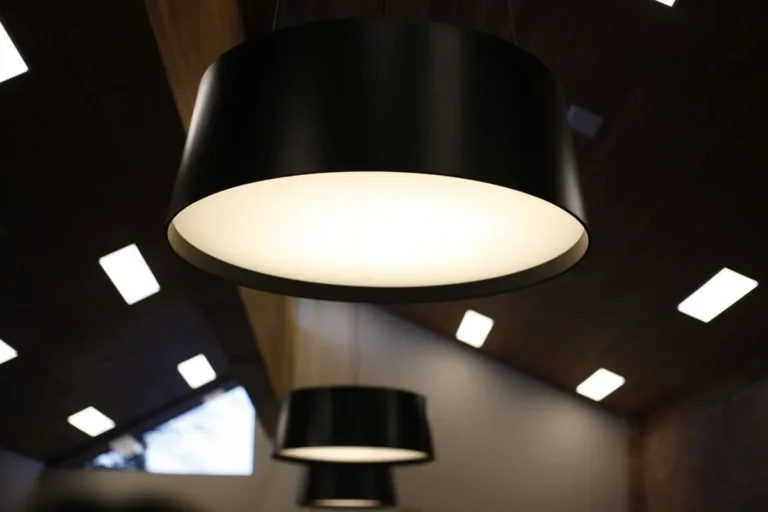
Lighting is the one FF&E category where a Chinese factory’s own certificate is almost never the document a US project actually needs. A US commercial project needs a listing from a Nationally Recognized Testing Laboratory that appears in that laboratory’s online directory, and on most energy-rebate and many code-driven jobs it also needs the exact model to appear on the DesignLights Consortium Qualified Products List. China does have a genuinely verifiable listed tier in lighting — five A-share companies with public disclosures — but listed status and a US listing are unrelated things, and confusing them is how a lighting package gets rejected at inspection.
Publicly listed Chinese lighting companies a project buyer can verify
We name only companies whose listing and disclosures are public and checkable. Everything else in this guide is written as a supplier type.
- Opple Lighting (欧普照明), Shanghai Stock Exchange: 603515. Listed on the SSE main board in August 2016, headquartered in Shanghai with manufacturing at Wujiang and Zhongshan; disclosed business spans LED and traditional lighting, luminaires and kitchen and bathroom electrical products. Evidence to request: which of its product families carry a US NRTL listing, and the listing file numbers.
- Foshan Electrical and Lighting (佛山照明), Shenzhen Stock Exchange: 000541. Established 1958 and listed since 1993, making it one of the oldest listed lighting companies in China. Evidence to request: whether the specific fixture family quoted is a domestic-market product or an export product with separate certification.
- Pak Corporation / Sanxiong Aurora (三雄极光), Shenzhen Stock Exchange ChiNext: 300625. Listed March 2017, headquartered in Guangzhou with production bases in Guangzhou, Zhaoqing and Chongqing; disclosed product lines include commercial, project, outdoor and intelligent lighting. Evidence to request: which base would produce your order, and the certification held by that base.
- Zhejiang Yankon Group (阳光照明), Shanghai Stock Exchange: 600261. Founded 1975, listed on the SSE main board in July 2000, with four large production bases and overseas subsidiaries across Europe and North America. Evidence to request: the North American entity that would invoice, and whether warranty is administered in the United States.
- Leedarson IoT Technology (立达信), Shanghai Stock Exchange: 605365. Listed July 2021, headquartered in Xiamen, with a disclosed business built on LED lighting and connected devices. Evidence to request: for any networked or controllable fixture, the control protocol supported and whether it is listed for the intended control system.
Listed status confirms scale and disclosure obligations. It tells you nothing about whether a given SKU carries a US listing, and it is not a substitute for the evidence set out below.
The supplier types that make up the rest of the market
- Own-brand lighting manufacturers. Design, tool, assemble and certify under their own brand. The route where you want a single warranty holder and a listing you can look up. Evidence to request: the NRTL listing file and the DLC listing under their own brand, not a component supplier’s.
- Contract manufacturers (ODM/OEM). Build to another brand’s specification and are frequently the actual plant behind a well-known name. Evidence to request: whose certification the product will ship under, and who holds warranty liability if it fails on site.
- Driver and LED module suppliers. The two components that determine both the failure rate and the dimming behaviour of the finished fixture. Evidence to request: driver brand, model and whether it is field-replaceable; LM-80 data for the LED package and TM-21 projection for the fixture.
- Trading intermediaries and catalogue sellers. Broker between buyer and plant without owning production. Evidence to request: the producing factory, and whether the intermediary will put its own name on the documents and carry responsibility.
- Decorative and architectural fabricators. Custom chandeliers, feature pendants and bespoke architectural pieces, typically low volume and highly labour-intensive. Evidence to request: whether the custom piece will be individually listed or field-evaluated, because a bespoke fixture usually cannot ride on a standard listing.
Sourcing this for a commercial project?
FBM Sourcing works with project owners, developers, main contractors and FF&E contractors on hotel, apartment, school, office and other commercial building projects. Send us your BOQ, drawings or product list — our team will review it and get back to you.
What US evidence must be in hand before you order lighting?
- NRTL listing, not “CE” and not a test report. OSHA maintains the list of recognized laboratories, and the UL and ETL listing marks are the two most commonly seen on US projects; the deliverable is a listing that appears in the laboratory’s public online directory under a file number you can search. The relevant product safety standards are UL 1598 for luminaires and UL 8750 for LED equipment. A CE declaration is a European document and carries no weight with a US inspector.
- The right listing category. Damp and wet location, suitable for damp locations, IP rating, and listing for the mounting condition all matter. A fixture listed dry-location only will fail in a hotel bathroom or a covered walkway.
- DLC Qualified Products List entry. Where a utility rebate is part of the project economics, or where a specification calls for DLC, the exact model number must appear on the DLC QPL. Networked lighting controls have their own separate DLC list. Confirm the model number, not the family.
- Photometric and lifetime data. An LM-79 report for the complete luminaire (not the LED chip), LM-80 data for the LED package and a TM-21 lifetime projection. Ask for the IES file used in the lighting design.
- FCC compliance for any fixture with a driver or wireless control, and the correct class for the environment.
- Energy code compliance. ASHRAE 90.1 or the state energy code sets the lighting power density and controls requirements; California adds Title 24 Part 6, including the JA8 requirements for certain sources. The code side of this is covered in what California Title 24 requires from lighting and glazing on China-sourced products.
- Warranty terms in writing, naming who administers a claim in the United States and what happens when a fixture fails in year three. A five-year warranty with no US administrator is a five-year shipping problem.
The listing question specifically is set out at length in do lighting fixtures from China need UL listing for US commercial projects, and the electrical side — voltage, frequency and plug or wiring conventions — in what voltage and electrical standards apply to lighting and appliances from China.
Which supplier route fits which US lighting package?
| Project scenario | Shortlist from this list | Why it fits | What would change the answer |
|---|---|---|---|
| Hotel guest rooms and corridors, repeating SKUs | Own-brand manufacturer with existing NRTL and DLC listings | Volume repeats reward a listed catalogue product with spares availability | A designer-specified decorative package that no catalogue covers |
| Office or warehouse retrofit driven by a utility rebate | Only models already on the DLC QPL | The rebate is paid against the model number, not the brand | Rebate withdrawn, which reopens the field to non-DLC products |
| Lobby and restaurant feature lighting | Decorative and architectural fabricator | Bespoke pieces are a fabrication problem, not a catalogue problem | An AHJ requiring individual listing or field evaluation of custom fixtures |
| Exterior, parking and site lighting | Own-brand manufacturer with wet-location listing | Ingress protection and surge withstand dominate failure rates outdoors | Dark-sky ordinance, which changes the optic before the supplier |
| Federally funded project | Supplier route confirmed against the project’s procurement rules first | Domestic-content and supply-chain restrictions can exclude an otherwise compliant product | A privately funded project with no such restriction |
On any federally funded or federally connected job, check the applicable domestic preference and supply-chain restrictions with the project’s counsel before shortlisting. These rules turn on the funding source and on named entity lists that change, so they are a legal question for the specific project, not a product question.
The commercial trap in lighting: the sample is not the shipment
Lighting is unusually easy to sample well and ship badly. A hand-built sample can use a premium driver and a binned LED array; the production run can quietly use neither, and the difference is invisible until the corridor shows visible colour variation between fixtures. Three controls deal with this:
- Fix the bill of materials in writing. Driver brand and model, LED package, CCT and CRI with tolerance, and binning tolerance expressed in MacAdam ellipses — a 3-step and a 5-step specification look identical on paper and different on a wall.
- Approve a production sample, not a pre-production one, and keep a retained sample against which the delivery can be checked.
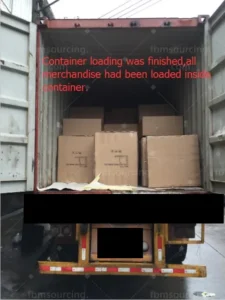
- Check before the container closes, not after. Verification against the approved sample belongs at the factory prior to shipment; once fixtures are on site, a colour mismatch becomes a replacement programme. What a pre-shipment record should contain is set out in what a container loading report should show for a commercial project, and what happens when goods do arrive damaged in what happens if hotel FF&E arrives damaged.
Before any of this can be priced consistently across suppliers, the brief itself has to be complete — what belongs in it is set out in what should be in a commercial lighting brief before you request a quote.
Why this list has no scores, ratings or supplier links
We publish no score column and no outbound links to the companies named. A score would imply we had audited every company against the same criteria in the same period, which we have not. What we do instead is state what is publicly verifiable, describe the supplier types honestly, and set out the evidence to request — the judgement stays with the project team, its electrical engineer and the authority having jurisdiction.
We also publish no prices for lighting. Fixture price moves with optic, driver, output, finish, control protocol and quantity, and a number published today would mislead a reader next year.
About FBM Sourcing
FBM Sourcing manages the entire China procurement package for overseas construction projects. Sourcing since 2014, we have shipped 1,000+ containers to project sites in 20+ countries, working with project owners, developers, main contractors and FF&E contractors on hotels, apartment buildings, schools, offices and other commercial buildings. All quotations, invoices and shipping documents are issued by FBM Sourcing — you deal with us, and we carry the responsibility. For suppliers you nominate, we charge a 5% commission; for products we source for you, we quote a direct price.
If you have a lighting package for a US project, send us the fixture schedule, the control intent and the state the project sits in at https://fbmsourcing.com/china-building-materials-ffe-procurement/.
Frequently asked questions
Are there listed Chinese LED lighting companies?
Yes. Opple Lighting (603515, Shanghai), Foshan Electrical and Lighting (000541, Shenzhen), Pak Corporation / Sanxiong Aurora (300625, Shenzhen ChiNext), Zhejiang Yankon Group (600261, Shanghai) and Leedarson IoT Technology (605365, Shanghai) are all listed with public disclosures. Listing does not mean a given model carries a US listing, which has to be checked separately.
Is a CE mark enough for lighting on a US project?
No. CE is a European declaration and carries no weight with a US authority having jurisdiction. US commercial projects require a listing from an OSHA-recognized Nationally Recognized Testing Laboratory, evidenced by a UL or ETL listing mark and verifiable by file number in that laboratory public online directory, against standards including UL 1598 for luminaires and UL 8750 for LED equipment.
What is the difference between a UL listing and DLC qualification?
They answer different questions. An NRTL listing is a product safety qualification required for installation and inspection. DLC qualification is an energy performance listing used by utilities to determine rebate eligibility and by some specifications as a performance benchmark. A project may need both, and each attaches to a specific model number.
How do I stop the delivered fixtures looking different from the sample?
Fix the bill of materials in the purchase order — driver brand and model, LED package, CCT and CRI with tolerances, and colour binning stated in MacAdam ellipses — approve a production sample rather than a hand-built one, keep a retained sample, and verify against it at the factory before the container is loaded.
What is the minimum order for lighting from China?
We do not handle loose freight. The practical minimum is a full container load consolidated for one client, and lighting is well suited to sharing a container with the other product categories of the same project.