If hotel FF&E arrives damaged, the sequence that protects your money is: photograph the damage before moving anything, note it on the delivery receipt (POD) before signing, and give written notice fast — under the Hague-Visby rules that govern most ocean bills of lading, apparent damage must be noted at delivery and concealed damage within 3 days, while marine cargo insurers expect prompt notification and any suit against the ocean carrier is time-barred after one year. Replacement then comes from two sources: the attic stock that shipped with the order for small damage, and a factory re-run for anything larger — which is why the realistic answer to “how fast can you replace it” is measured in months, and why prevention at the packing line is worth more than any claim. That is the role FBM Sourcing plays as a sourcing agent and sourcing partner on projects like this.
FBM Sourcing manages this end of the chain on every hotel, apartment and commercial package we consolidate as a sourcing agent for projects in the US, Australia, Europe and the Caribbean. This guide walks through the claim mechanics, the replacement timeline, and the two layers of protection — spare stock and packing discipline — that decide whether damage is a maintenance ticket or a program crisis.
- At unloading: photograph cartons and contents before moving them; keep all packaging.
- On the POD: annotate visible damage before signing — a clean signature is evidence against you.
- Notice windows: apparent damage at delivery; concealed damage within 3 days (Hague-Visby); one-year time bar on carrier suits.
- Insurance: all-risk cover at 110% of CIF value is the standard basis for project cargo.
- First response: attic stock shipped with the order covers small damage the same day.
What Should You Do in the First 48 Hours After a Damaged Delivery?
Everything a claims adjuster will later ask for is created — or lost — at the unloading dock. Photograph the container seal and doors before opening, then the stow as doors open, then each damaged carton in place, then the contents unwrapped. Cross-check what you unload against the packing list line by line and log damage by item code, because “six damaged cartons” is not a claim — “item GR-104 desk chair, 4 units, crushed left armrest” is.
The proof-of-delivery document matters more than most site teams realize. Under the Hague-Visby rules, goods signed for clean are presumed delivered in good order — so a receiver who signs first and inspects later has handed the carrier its defense. Write the exceptions on the POD before signing: carton counts short, visible crush, water staining. For damage discovered after unpacking — the common case with furniture, where the carton looks fine and the marble top inside is cracked — written notice to the carrier within 3 days of delivery preserves the presumption in your favor. Keep the damaged goods and their packaging until the insurer confirms disposal; discarding either can void the claim.
Run the tally against the packing list, not against memory. A hotel container carries hundreds of cartons across dozens of item codes, and the packing list — if it was written properly at origin — gives each carton a code, a room destination and a contents line. Receiving teams that check codes off as cartons come down the ramp produce a same-day exception report; teams that stack first and count later discover shortages a week after the trucks left, when the evidence trail has gone cold.
How Does a Marine Cargo Insurance Claim Actually Work?
Project FF&E should travel under all-risk marine cargo cover — Institute Cargo Clauses (A) — insured at the standard basis of 110% of CIF value, the extra 10% representing the cost of being without the goods. The claim file needs five documents: the insurance certificate, the bill of lading, the commercial invoice and packing list, the annotated POD, and the photo record from unloading. With a clean file, cargo claims settle in weeks; with a signed-clean POD and no photos, they stall or fail.
Two exclusions matter for furniture buyers. First, insufficient packing: if the insurer’s surveyor attributes the damage to inadequate export packaging, the claim fails — which quietly transfers the packing question back up the chain to whoever supervised the factory. Second, ordinary wear such as minor scuffing usually falls below deductibles and is exactly what spare components exist for. Note also what insurance does not do: it pays money, it does not produce a matching replacement wardrobe. The production problem remains yours, which is why the claim and the replacement plan must start on the same day, and why defects should be intercepted before the container ships from China rather than argued about after it lands.
Sourcing this for a commercial project?
FBM Sourcing works with project owners, developers, main contractors and FF&E contractors on hotel, apartment, school, office and other commercial building projects. Send us your BOQ, drawings or product list — our team will review it and get back to you.
Who Owns the Claim — the Owner, the Forwarder or the Sourcing Agent?
Responsibility for FF&E damage claims follows the Incoterms on the purchase order and the name on the insurance certificate. Under FOB terms the buyer’s side arranged the freight and the cover, so the buyer’s side files; under CIF or DDP the seller or procuring party holds the policy through to the agreed handover point. What catches project teams out is expecting the ocean carrier to make them whole instead: carrier liability is capped by statute — US COGSA limits it to US$500 per package, and Hague-Visby jurisdictions apply comparably low weight-based limits — amounts that bear no relation to the value of a crate of custom casegoods. The practical consequence is simple: cargo insurance is the remedy; the carrier claim is a formality run in parallel to preserve rights.
A furniture sourcing agent’s role in the claim is the origin half of the evidence file. The annotated POD and unloading photos prove condition at destination; the packing specification, pre-shipment inspection record and photographed container loading prove condition at origin — and a claim with both ends documented leaves the insurer nothing to dispute except quantum. On FBM Sourcing projects that origin file exists for every container as standard practice, which is also what lets replacement production start immediately: the same records identify the exact item code, finish batch and shop drawing the re-run must match.
How Long Does a Replacement Take — and What Bridges the Gap?
Here is the timeline nobody enjoys reading. A replacement casegoods run needs 30–45 days in production once materials are confirmed, upholstered seating a similar window, and custom lighting or stone tops can run longer; sea freight then adds 18–40 days depending on destination, plus clearance and delivery. Door to door, a factory replacement is realistically a 2–3 month event — and if the original fabric dye lot or veneer batch is exhausted, the “same” item will not match its neighbors, a manufacturing reality that no contract clause overrides.
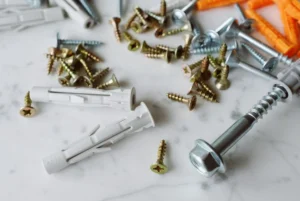
That timeline is exactly why attic stock is the first line of defense rather than an accounting nicety. The working allowance — 2–3% on soft goods, 1–2% spare components on casegoods and seating, 3–5% spare shades and drivers on lighting — ships in the same containers as the main order and turns a torn headboard panel or a crushed lampshade into a same-day back-of-house swap instead of a trans-Pacific re-order. The full category-by-category math is in our hotel FF&E attic stock guide. For genuine losses beyond spares — a flooded carton stack, a dropped crate of mirrors — the insurance payout funds the re-run, and a sourcing agent holding the original shop drawings, control samples and factory relationships restarts production in days rather than re-tendering from zero.
Why Do Full Containers Arrive in Better Condition Than Loose Freight?
Where damage happens is not random. A full container (FCL) is loaded once at the factory or consolidation warehouse, sealed, and opened at destination; loose cargo is handled repeatedly — trucked to a consolidation depot, deconsolidated and re-stowed with strangers’ cargo at both ends. Every additional touch is a damage opportunity, which is one reason project furniture essentially always ships FCL: at 4.5–6 m³ per hotel key, just 4–5 rooms’ worth of furniture already fills the roughly 20 m³ threshold where a dedicated container makes sense. The container math for a full package — and the point where a dedicated container takes over — is covered in hotel FF&E container planning.
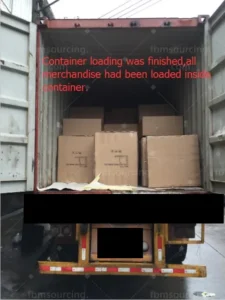
Inside the container, the loading plan is the last controllable variable: heavy casegoods low and forward, cartons braced so nothing shifts in a seaway, no void columns for stacks to collapse into, upholstery never load-bearing. A photographed loading sequence — standard practice on FBM Sourcing projects — doubles as claim evidence, because it proves the stow was sound when the doors closed.
How Is Damage Prevented Before the Container Ever Ships?
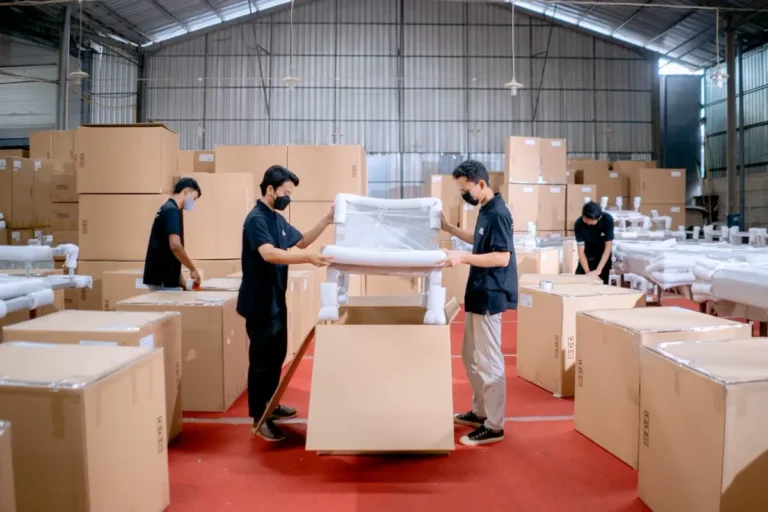
The cheapest damaged chair is the one that never leaves the factory. Pre-shipment inspection exists to catch both product defects and packing failures while the factory can still fix them — on our projects, all inspections are performed by FBM Sourcing’s own QC team at the factory, documented in photos and video and checked against the approved control sample and the packing specification. The packing spec itself is written into the purchase order, not left to factory habit: double-wall export cartons, EPE foam wrapping, rigid corner protection on casegoods, glass and stone tops crated or edge-protected, and carton markings matched to the packing list item codes.
Done properly, prevention changes the arithmetic of arrival: on a well-packed, well-stowed FCL shipment, transit damage typically involves fewer pieces than the 1–2% component spare allowance already on site is designed to absorb — meaning the claims process this article describes becomes the exception path, not the plan. What should be inside that well-packed container in the first place is set out in our guide to the complete hotel FF&E package from China.
Get a China Procurement Quote for Your Project
If you are budgeting or shipping an FF&E package for a hotel, apartment or other commercial building project, FBM Sourcing builds the whole protection stack into the order — packing specifications on every purchase order, in-factory inspection by our own team, photographed container loading, insured shipping, and an attic stock schedule so day-one damage never becomes a program delay. Submit your drawings or FF&E schedule, quantities, destination port and timeline through our China procurement inquiry page, and our team will review your requirements and get back to you.