Windows from China can meet AS 2047, and many do — but compliance is not a property of the country or the factory, it is a property of a tested configuration backed by a test report and a durable compliance label on each unit. AS 2047 sets performance requirements for windows and external glazed doors in buildings, verified by testing to the AS 4420.1 methods, covering resistance to water penetration, air infiltration, structural adequacy under serviceability and ultimate design wind pressures, and operating force. The practical question on an Australian project is never “does this factory do AS 2047”; it is whether the specific size, glazing make-up and hardware you have specified sits inside the range of a valid test report, and whether the units will arrive labelled with the serviceability rating the certifier expects to see. FBM Sourcing is your sourcing partner in China: it holds no inventory and has no product range of its own.
What Does AS 2047 Actually Require?
AS 2047 is called up by the National Construction Code, which is why it is a compliance requirement rather than a preference. It is a performance standard: it says what the window must achieve and how that is demonstrated, not how it must be built.
- Water penetration resistance tested at a pressure derived from the serviceability limit state design wind pressure for the location, with no water passing to the interior during the test sequence.
- Air infiltration limited to 5 L/s per square metre of window area at a test pressure of 75 Pa.
- Structural adequacy at both serviceability limit state (deflection limits, so glass and seals are not overstressed in service) and ultimate limit state (no failure or loss of glass under the design event pressure).
- Operating force limits for sashes and hardware, so a compliant window is also a usable one.
- Compliance marking on every unit: a durable label identifying the manufacturer, the reference to AS 2047, and the SLS design wind pressure rating the unit is certified to, together with glazing selected and installed to AS 1288.
That final point is the one imported packages most often fail on, and it fails at handover rather than at the factory. A certifier is looking for a label on the frame. A test report in a folder, however good, is not a substitute for it.
How Is the Required Wind Pressure Rating Determined?
The rating a window has to carry is a site calculation, not a product choice, and it has to be done before the windows are ordered because it drives frame depth, reinforcement, glass thickness and hardware.
For most commercial buildings the wind actions come from AS/NZS 1170.2, giving serviceability and ultimate design wind pressures for each facade and each level of the building. For housing and low-rise residential within its scope, AS 4055 gives simplified wind classifications — N1 to N6 in non-cyclonic regions and C1 to C4 in cyclonic regions — and the window rating is matched to the class. Two structural consequences follow directly:
- Pressure rises with height and exposure. On a multi-storey building the upper floors and the corner zones frequently need a higher rating than the typical floor, which means one window schedule can contain two or three different structural specifications for what looks like the same window.
- Cyclonic regions change the test, not just the number. In cyclonic wind regions the assessment includes cyclic pressure loading, so a unit tested only under static pressure is not evidence for a cyclonic site regardless of how high its static rating is.
Bushfire-prone sites add a further layer: AS 3959 bushfire attack levels drive frame material, screen mesh and glazing requirements independently of the wind rating, so a window can satisfy AS 2047 and still not be acceptable for a BAL-rated site. And glass selection itself is governed by AS 1288, which covers thickness, type and whether safety glazing is required by location — a separate determination from the structural rating of the frame.
Where AS 2047 Stops: Curtain Walls and Large Facade Elements
This is a scope boundary that costs Australian projects real money when it is missed. AS 2047 applies to windows and external glazed doors. Once an element becomes a facade system — a curtain wall, a window wall spanning slab to slab, a structurally glazed assembly, or a unit outside the size limits of the standard — the demonstration route changes to AS/NZS 4284 facade testing, typically as a project-specific test on a representative mock-up rather than a product-range test report.
The commercial implications are significant: a project-specific facade test has to be programmed, a mock-up has to be built and shipped or built locally, and the result belongs to that project. Our comparison of curtain wall versus window wall on high-rise projects covers where that boundary usually falls, and specifying fixed glass curtain wall panels from China covers what has to be defined for a facade package before pricing.
Sourcing this for a commercial project?
FBM Sourcing works with project owners, developers, main contractors and FF&E contractors on hotel, apartment, school, office and other commercial building projects. Send us your BOQ, drawings or product list — our team will review it and get back to you.
How Do You Verify a Chinese Factory’s AS 2047 Evidence?
The document a factory offers first is usually a test report. Whether that report is evidence for your project depends on five checks, and any one of them failing means the report does not cover your window.
- Does the tested system match the specified system? The report names a series — a specific extrusion profile set, a specific thermal-break arrangement, a specific corner construction. A different series from the same factory is a different product.
- Does the tested size envelope your size? Performance falls as a panel grows. A report on a modest test specimen does not automatically support a large opening, and the extrapolation rules are limited. Compare the tested overall dimensions and the tested sash dimensions with your largest unit, not your average one.
- Does the tested glazing match your glazing? Glass thickness, whether the make-up is laminated or an insulating glass unit, and the cavity dimension all affect deflection and load transfer. Substituting glass after testing invalidates the evidence.
- Does the tested hardware match? Locking points, hinge type and their spacing carry the load in an operable sash. Hardware substitution to save cost is one of the most common ways a compliant design becomes a non-compliant product.
- Is the rating high enough, and is it the right kind? The SLS rating on the report has to meet or exceed the SLS design wind pressure for the specific facade and level, and for cyclonic sites the report has to include cyclic loading.
Two further practical points. First, testing to Australian methods normally has to be carried out at a laboratory whose reports the Australian market accepts, which is a different question from whether a factory holds a test report of some kind — the distinction between a factory’s own data and accredited laboratory testing is set out in factory test reports versus accredited lab testing. Second, membership of an industry association is not what the NCC requires; the requirement is compliant performance, evidence and marking, and a manufacturer outside any scheme can satisfy it while a member with a mismatched report cannot.
Energy performance is assessed separately again. Under the NCC’s energy provisions, window U-value and solar heat gain coefficient feed the building’s thermal calculation, so a window can be structurally compliant and still fail the energy assessment — which is why the glazing make-up should be resolved against both requirements at the same time.
What Should Be Specified in an Australian Window Package from China?
The specification that produces compliant windows is longer than a schedule of sizes, and every line of it exists because it has been got wrong somewhere.
- Per-unit SLS and ULS design wind pressures by facade and level, not a single figure for the building.
- Frame series and thermal-break arrangement named, and locked against substitution.
- Glazing make-up per AS 1288, including safety glazing locations, thickness, and whether laminated or IGU, with the interlayer or cavity specified.
- Hardware schedule with locking points and hinge type, and a written no-substitution clause.
- Test report references for each system, with the tested sizes stated, so the submittal can be assembled before production rather than after.
- Compliance labelling requirement stated explicitly: durable label on every unit, with the content AS 2047 requires.
- Installation interface — reveal type, flashing, sill support and the sealant specification — because a compliant window in a non-compliant opening still leaks.
For projects that are also weighing frame material, our comparison of aluminium versus uPVC windows from China covers where each is realistic on an Australian commercial programme, and aluminium window and door manufacturers in China for Australian projects sets out the shortlist logic and the evidence to request.
How FBM Sourcing Handles AS 2047 Compliance on an Australian Package
FBM Sourcing manages the entire China procurement package for overseas construction projects, and on an Australian window package the compliance chain is treated as part of the scope rather than as a document request at the end. Before purchase orders are issued we take the window schedule with its per-facade design pressures, match each specified system to a test report, and check the five points above — system, size envelope, glazing, hardware and rating type — so gaps are identified while there is still time to change the system or add a test rather than at submittal.
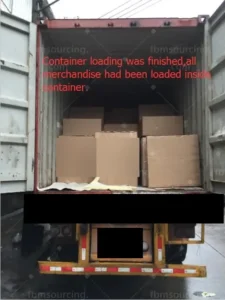
Substitution control is where most of the value sits. The frame series, glazing make-up and hardware are written into the order as no-substitution items, and one inspection is carried out by FBM Sourcing’s own team at the factory once bulk production is finished, with photo and video records delivered before shipment — including verification that the profiles, glass make-up and hardware on the finished units are the ones the report covers, and that compliance labels are applied before the units are packed. Where a project needs an element that falls outside AS 2047 into AS/NZS 4284 facade testing, we say so early, because that changes the programme rather than the price.
All quotations, invoices and shipping documents are issued by FBM Sourcing — you deal with us, and we carry the responsibility. For suppliers you nominate, we charge a 5% commission; for products we source for you, we quote a direct price. Windows are ordered and shipped by full container, either as a dedicated container run for the window scope or consolidated with the other building materials for the same project, so a facade programme is not waiting on a part-load.
AS 2047 is one line of a much longer Australian compliance map; see can building materials from China comply with the NCC/BCA for the standards and evidence category by category.
If the project is in Queensland, the Northern Territory or northern Western Australia, the wind class on the drawings may be C1 to C4 rather than an N class, and an N-rated report will not cover it. Our guide to cyclone rated windows in Australia and the Region C wind classes explains what changes for imported windows and doors.
Get a China Procurement Quote for Your Australian Project
If you have an apartment, hotel, student accommodation, school or commercial building in Australia and need a window package that will satisfy a certifier, send us the window schedule with the per-facade design wind pressures, the glazing requirements, the destination port and the required-on-site dates. Our team will match each system to test evidence, flag any line where the tested envelope does not cover your sizes, and set out the quotation.
Use the quote button above or WhatsApp +86 135 6007 5057 to start the conversation.
Sourcing windows for a New Zealand project instead? NZS 4211 is a separate standard from AS 2047 — see our New Zealand-specific guide to NZS 4211 and council approval.
Sourcing windows or doors for a market outside Australia? See our comparison of window and door export certifications by market, covering CE, UKCA, AAMA/NFRC, AS 2047 and SASO.