Hotel FF&E cost per room is not a single number — it is a ratio structure. The per-room figure is driven by four levers: the composition of the guest-room package (casegoods alone typically absorb 30–40% of package value), the brand tier (upper-upscale and luxury packages commonly run 2–4x a midscale package on identical room counts), the landed-cost layers added on top of ex-works pricing, and how efficiently the packages fill containers. Understand those ratios and you can build a defensible FF&E budget for any room count before a single quote arrives.
This guide breaks down the cost structure the way an FF&E contractor or owner’s rep would model it: component shares, tier multipliers, budget ratios, container math and the landed-cost stack. We work with these numbers daily as a china sourcing agent handling full FF&E procurement packages for hotel and apartment projects shipping to the US, Australia, the UK, the Middle East and the Caribbean.
Before any spreadsheet work, fix these five reference ratios:
- Casegoods share: 30–40% of a typical guest-room package value — the single largest block
- Brand-tier multiplier: upper-upscale/luxury packages typically 2–4x midscale on the same room count
- FF&E planning ratio: commonly budgeted as a single-digit to low-teens percentage of hard construction cost
- Container yield: a 40HQ gives 65–68 CBM usable, typically 8–12 guest-room packages per container
- Attic stock: 2–5% of key items ordered above the installed quantity
What Does a Hotel Guest-Room FF&E Package Include?
A guest-room FF&E package covers everything movable or decorative inside the room, as distinct from FF&E in public areas and from OS&E (linens, glassware, small operating equipment). A standard king-room package runs 25–40 line items across seven component families, and a full breakdown of the scope is in our guide to what a hotel FF&E package from China includes.
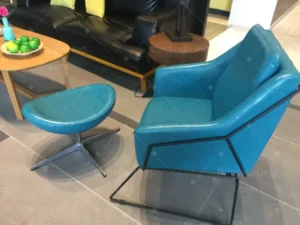
The seven families are: casegoods (headboard, bed base, nightstands, desk, dresser or wardrobe, minibar cabinet, luggage bench frame); upholstered seating (lounge chair, ottoman, desk chair, sometimes a sofa bed in suites); mattress and top-of-bed; decorative lighting (floor, table, wall and pendant fixtures); window treatments (sheer, blackout, hardware); artwork and mirrors; and carpet or area rugs. Each family behaves differently on cost, lead time and container volume, which is exactly why per-room cost is a structure rather than a price.
FF&E Cost Structure: Typical Share of a Guest-Room Package
Across midscale to upper-upscale projects, guest-room package value distributes in remarkably consistent bands. Casegoods take 30–40% of package value in most schemes, which is why casegoods specification decisions move the total per-room number more than any other line.
| Component family | Typical share of package value | Notes |
|---|---|---|
| Casegoods | 30–40% | Largest single block; driven by material build-up (veneer vs HPL vs painted MDF) and joinery complexity |
| Upholstered seating | 12–18% | Fabric grade and fire-performance requirements (e.g. CAL 117 compliance in the US) set the band |
| Mattress & top-of-bed | 10–15% | Brand-mandated mattress specs push this to the top of the range |
| Decorative lighting | 8–12% | Certification for the destination market (UL/ETL, CE, SAA) is part of the cost, not an extra |
| Drapery & soft goods | 8–12% | Blackout + sheer + hardware; motorisation moves it up a band |
| Carpet / area rugs | 6–10% | Axminster vs tufted vs machine-woven is the main driver |
| Artwork, mirrors & accessories | 4–8% | Framed art programs are cheap per piece but add up across hundreds of rooms |
Two practical uses for this table. First, sanity-checking quotes: if a factory package quote shows casegoods at 55% of value, either the casegoods are over-specified or everything else is under-specified. Second, value engineering: cutting 10% out of the casegoods line moves the whole package roughly 3–4%, while cutting 10% out of artwork moves it well under 1% — so effort should follow the shares.
Sourcing this for a commercial project?
FBM Sourcing works with project owners, developers, main contractors and FF&E contractors on hotel, apartment, school, office and other commercial building projects. Send us your BOQ, drawings or product list — our team will review it and get back to you.
How Does Brand Tier Change FF&E Cost per Room?
Tier works as a multiplier on the whole package, not as a different cost structure. On identical room counts, an upper-upscale or luxury guest-room package typically lands at 2–4x the value of a midscale package, while the component shares in the table above stay broadly stable. The multiplier comes from material upgrades stacked across every family at once: solid timber and premium veneer casegoods instead of laminate, higher fabric grades, Axminster carpet instead of tufted, custom decorative lighting instead of catalogue fixtures.
Economy and select-service packages sit below midscale, mainly because casegoods simplify to fewer pieces with HPL or thermofoil surfaces and the seating count per room drops. Brand-mandated projects add a second effect: brand standards fix minimum specs for mattresses, fire performance and durability testing, which sets a floor under the package regardless of how hard you negotiate. Our note on Chinese factories producing to hotel brand standards covers how those spec floors are met at the factory level.
The practical takeaway for budgeting: establish your midscale-equivalent baseline from the cost structure, then apply the tier multiplier — not the other way round. Owners who budget luxury projects bottom-up from catalogue prices consistently under-budget soft goods and lighting, the two families where tier inflation is steepest.
FF&E as a Share of the Total Project Budget
At the project level, FF&E is commonly planned as a single-digit to low-teens percentage of hard construction cost, with select-service hotels at the bottom of that range and design-led boutique and luxury properties at the top. This ratio is the first sanity check a lender or owner’s rep applies to an FF&E budget line, so it pays to know where your project sits before quotes are in.
Within the FF&E budget itself, guest rooms typically carry 60–75% of total FF&E value, with public areas — lobby, F&B outlets, meeting rooms, corridors, fitness — taking the remaining 25–40%. Boutique and lifestyle properties skew toward the public-area end because the lobby and F&B spaces are the brand statement; limited-service properties skew heavily to guest rooms. Corridor carpet, by the way, belongs to the public-area budget but is procured with the guest-room carpet package for dye-lot consistency.
For worked examples at real project scale, see our breakdowns of the cost structure to furnish a 100-room hotel from China and the cost to furnish a 50-unit apartment building — the same ratio logic applies to serviced apartments and build-to-rent, with a heavier kitchen/appliance share replacing some of the hotel soft-goods share.
Container Math: How Many Rooms Fit in a 40HQ?
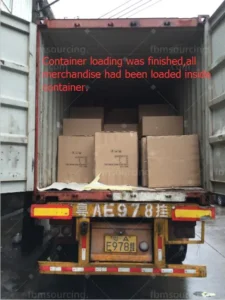
Freight is the layer where package design quietly changes your per-room cost. A 40ft high-cube container offers 65–68 CBM of usable volume, and a complete guest-room FF&E package typically stows at 5.5–8 CBM depending on casegoods size and how much of the package can be flat-packed — which puts most projects at 8–12 guest-room packages per container.
That spread matters at scale. A 100-room hotel at 12 rooms per container ships in roughly 9 containers; the same hotel at 8 rooms per container needs 13. The difference comes almost entirely from casegoods engineering: knock-down construction with site assembly can cut casegoods volume 30–50% versus fully assembled pieces, while mattresses compress-roll and drapery, artwork and rugs pack into the voids. Fully upholstered items compress least, which is another reason seating-heavy suite mixes cost more per room to move.
When planning the freight line, model containers — not CBM totals — because you pay per box, not per cubic metre. Sailing times bracket the schedule: roughly 18–25 days from South China to the US West Coast, 30–40 days to the US East Coast or Northern Europe, and 25–35 days to the Caribbean via transshipment.
Landed Cost Layers and Attic Stock
The ex-works package value is only the base of the per-room number. On top sit the landed-cost layers: inland haulage and export handling, ocean freight, marine insurance, destination-country duty and taxes, port and delivery charges, and the sourcing agent’s fee — at FBM Sourcing a transparent 5–8% of order value, covering factory sourcing, price negotiation, order and production management, our own team’s pre-shipment inspection on the factory floor with full photo and video records, and shipping coordination. What that fee covers line by line is detailed in our guide to china sourcing agent fees.
Duty varies enormously by product family and destination — furniture, lighting and textiles frequently carry different rates within one project — so a per-room landed cost is really a weighted blend of several duty treatments. Budget each layer as a percentage of ex-works value for your specific destination rather than borrowing a blanket uplift from another project.
Attic stock is the final structural line owners forget: 2–5% of key items — fabric by the roll, carpet, casegoods hardware, lighting, tiles if in scope — ordered with the main production run so future replacements match dye lot and finish batch. Ordering it later means new minimums, new lead times and visible mismatch; our guide to hotel FF&E attic stock quantities covers the per-category percentages.
Where Per-Room Cost Is Legitimately Reduced
Three levers reduce per-room cost without degrading the product, and none of them is squeezing factory margin. First, consolidation: procuring the full package through one coordinated program instead of 15–20 separate vendor relationships eliminates duplicated freight, duplicated minimums and duplicated management overhead — a 100-room package that consolidates into 9–10 containers instead of fragmented LCL shipments changes the freight line materially.
Second, spec rationalization. Reducing a scheme from six casegoods finishes to three, standardising drawer boxes and hardware across room types, and aligning fabric selections to fewer base cloths cuts tooling, sampling and changeover cost across the whole run. This is engineering the specification, not cheapening it — the guest never sees the difference between six internal drawer constructions and one.
Third, a mock-up room before mass production. Building one complete room — typically adding 3–5 weeks before the main run — catches dimension clashes, finish mismatches and quality gaps when correcting them costs one room, not three hundred. Every experienced FF&E contractor treats the model room as insurance on the entire package value, and factory production for the balance only releases after sign-off.
Get a China Procurement Quote for Your Project
FBM Sourcing manages the entire China procurement package for overseas construction projects. If you are budgeting a hotel, serviced apartment or multi-unit residential project, send us your room mix, drawings or BOQ, target quantities, destination port and project timeline — we will build the package quote around your actual specification rather than a generic per-room guess.
Use the quote button above or message us on WhatsApp with your project outline. The earlier the cost structure is modelled — ideally at concept design, before specifications are frozen — the more of the consolidation and rationalization savings described here are still available to your project.
Written by Spring Dan · Founder, FBM Sourcing
Sourcing building materials and FF&E in China for commercial construction projects since 2008. About Spring · LinkedIn