The honest answer is that no single headline number covers it: the cost to furnish a 100-room hotel from China is set almost entirely by your specification tier, and the only budget worth relying on is a per-key model built from your actual FF&E schedule. What stays consistent from project to project is the structure of that budget: guest rooms usually absorb the largest share of total FF&E spend, public areas add a meaningful share on top of the guest-room subtotal, OS&E runs as its own separate line, and freight, duty and inspection stack on top of ex-factory value. Working with a furniture sourcing agent and sourcing partner, hotel developers use that structure to build the budget bottom-up from real factory quotations against their own drawings and finish schedule — which is the only version of this number that survives contact with a real project.
This guide walks through how the budget is actually assembled — what sits inside each line, what moves the cost up or down, and the sequence that turns a design package into a bankable per-key figure.
What Goes Into the FF&E Cost Per Hotel Room?
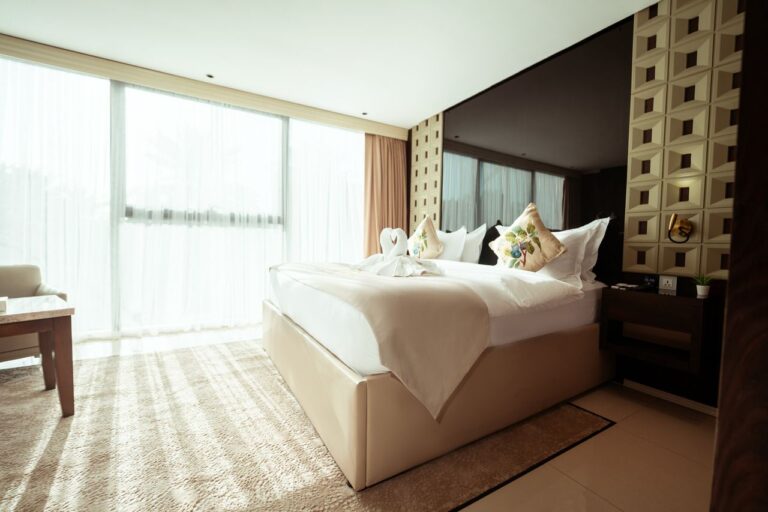
The guest room package is the volume driver of the whole program. A complete per-key package is priced from these components:
- Casegoods — bed base, headboard, nightstands, wardrobe/closet, desk, luggage bench, TV panel. The largest single line; cost is driven by board grade, veneer vs laminate, and the amount of custom joinery in the designer’s package.
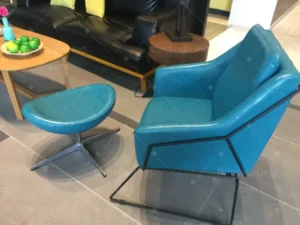
- Seating — lounge chair, desk chair, ottoman. Driven by frame construction, foam density and upholstery grade.
- Mattress and bedding base — specification band (spring system, comfort layers, fire-barrier standard) moves this line more than size does.
- Lighting — typically 4–6 fixtures per room; decorative custom fixtures price very differently from standard catalog items.
- Soft goods — drapery, sheers, cushions; blackout performance and motorization are the big variables.
- Artwork, mirrors and accessories — small individually, meaningful across 100 keys.
Two rooms that look identical in renderings can carry very different per-key costs depending on contract-grade construction: commercial foam densities, reinforced frames, moisture-resistant finishes and fire-certified materials are what separate hotel-duty furniture from consumer lookalikes, and they are non-negotiable for hotel duty cycles. Our guide to hotel room furniture costs, lead times and QC details those construction standards.
Public Areas, OS&E and the Rest of the Budget
Public areas — lobby, reception, restaurant, bar, corridors, meeting rooms — typically add a meaningful share on top of the guest-room subtotal for a midscale property, and proportionally more for food-and-beverage-heavy upscale hotels where custom millwork, stone tables and statement lighting concentrate. Restaurant and café seating is priced per cover; the full FF&E list by area is mapped in our types of hotel furniture guide.
OS&E — linens, towels, crockery, glassware, housekeeping carts, bins, hairdryers — is a separate budget line that owners chronically forget until opening quarter, and it follows a different procurement rhythm than FF&E (FF&E vs OS&E explained here). Budget it as its own per-key line from day one rather than an afterthought inside the FF&E number.
Sourcing this for a commercial project?
FBM Sourcing works with project owners, developers, main contractors and FF&E contractors on hotel, apartment, school, office and other commercial building projects. Send us your BOQ, drawings or product list — our team will review it and get back to you.
What Sits Between Ex-Factory and Landed Cost?
Landed cost is where China budgets are won or lost, and it is built from four stacked layers on top of ex-factory value:
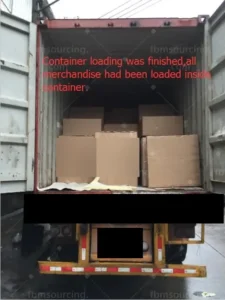
- Ocean freight — the number of 40ft high-cube containers for a 100-room hotel package is set in the load plan and depends on how much of the package is knocked down. Freight is a live market rate that moves with route and season — price it at booking time, not from an article.
- Duty and import taxes — the largest variable and entirely destination-specific. Model duty on the actual HS codes of your product list before committing the budget — never as a flat percentage guess, especially for US destinations where furniture tariff treatment changes.
- Agent fee — for suppliers you nominate, we charge a 5% commission; for products we source for you, we quote a direct price; fee models and what they cover are explained in our sourcing agent cost guide.
Ask for every quotation in two columns — ex-factory and estimated landed — so the comparison against domestic supply chains is honest. Comparing a China ex-factory price against a local delivered price flatters the saving; comparing landed-to-delivered at the same specification is the number a development budget can actually use.
What Timeline Should a 100-Room Program Plan For?
Money is only half the answer the owner needs; the other half is the calendar. A realistic 100-room program runs through specification freeze and factory quotations, sampling and model-room approval, production across the factory pool, consolidation and inspection, and ocean transit — please plan for about four months between deposit and shipment (the drawing stage usually takes around two months and production about another two months), then the carrier’s transit time, before local delivery and installation. The model room is the control point: approve it physically before releasing bulk production, because it converts the budget’s assumptions into a contractual quality reference. The step-by-step sequence is covered in our guide to furnishing an entire hotel from China.
Get a China Procurement Quote for Your Project
Generic numbers do not price hotels — factory quotations against your drawings do. FBM Sourcing builds complete per-key budget models for hotel FF&E packages from audited Chinese factories: guest rooms, public areas and OS&E, with consolidation, QC and shipping priced to your destination port. Send your room count, design intent or FF&E schedule with destination and timeline through our building materials and FF&E procurement page, and our team will review it and get back to you.
Frequently Asked Questions
What share of FF&E budget do guest rooms typically absorb in a 100-room hotel?
Guest rooms usually absorb the largest share of total FF&E spend, with public areas adding a meaningful share on top of the guest-room subtotal and OS&E running as its own separate line.
How many containers does a 100-room hotel FF&E package typically need?
The number of forty-foot high-cube containers is set in the load plan and depends on how much of the package is knocked down for shipping efficiency.
What timeline should a 100-room hotel program plan for?
Please plan for about four months between deposit and shipment – the drawing stage usually takes around two months and production about another two months – plus ocean transit confirmed by the carrier at booking.