
The cost to furnish an apartment building from China depends almost entirely on specification level and degree of customisation, so no single figure answers the question honestly — but the cost structure does. Every 50-unit package is built from the same seven landed-cost blocks and the same handful of category weightings inside the FF&E budget, and once you understand those proportions you can frame a defensible budget for your own configuration in an afternoon. This guide breaks down that structure the way we build it for developers: landed-cost blocks first, then category weightings, then the six levers that move the total up or down. FBM Sourcing acts as your sourcing partner from specification through to shipment.
What Actually Makes Up the Landed Cost?
“Landed cost” means everything it takes to get the goods from the production line to your building — and treating it as one number is where most first-time project buyers go wrong. It decomposes into seven blocks:
| Cost block | Relative share of landed cost | What drives it |
|---|---|---|
| Ex-works goods value | The largest share | Spec level, customisation, quantity |
| Ocean freight + marine insurance | A meaningful share | Route, season, container utilisation |
| Import duty & taxes | Per destination tariff schedule | HS codes, trade agreements, country of import |
| Destination port & clearance | A smaller share | Port charges, broker, handling |
| Inland transport to site | A smaller share | Distance from port, site access |
| Installation & placement | Budgeted separately | Local labour, assembly scope |
Two working rules fall out of this table. First, whatever moves the ex-works block moves the whole budget, because it is the dominant share — spec decisions matter far more than freight negotiations. Second, ocean freight plus insurance being a meaningful share of landed cost means container utilisation is a genuine cost lever, not a logistics detail; we return to that below. Duty is deliberately shown without a percentage: it runs from zero to significant depending on your country’s tariff schedule and applicable trade agreements, and any guide quoting you one number for it is guessing.
Inside the FF&E Package: Category Weightings for 50 Units
Within the goods value itself, a 50-unit apartment package splits into category shares that follow the specification. A typical pattern across build-to-rent and serviced apartment FF&E packages where units include full kitchens and fitted wardrobes:
- Casegoods (kitchen cabinets, wardrobes, vanities, fitted storage): usually the largest single line of package goods value
- Upholstered and soft furniture (sofas, armchairs, headboards): a meaningful share
- Beds, mattresses and bedroom furniture: a smaller share
- Lighting (decorative and architectural): a smaller share
- Window treatments, mirrors, artwork and accessories: the remainder
The practical takeaway: cabinetry is the centre of gravity. Because casegoods are usually the largest line in the package, the decisions you make on kitchen cabinet sourcing — door material, carcass board grade, hardware brand tier — shift the total budget more than every accessory decision combined. It is also why apartment packages reward a manufacturing cluster like Foshan, where cabinet, wardrobe and furniture production sit within the same industrial belt: one region can produce the categories that make up the large majority of the package value.
Note what this structure shares with hotels and where it differs: a hotel package is bedroom-led while an apartment package is kitchen-led, so the weightings shift even when the unit counts look similar. If you are comparing asset types, our companion piece on the cost to furnish a 100-room hotel walks through the hospitality version of the same exercise.
How Many Containers Does a 50-Unit Package Fill?
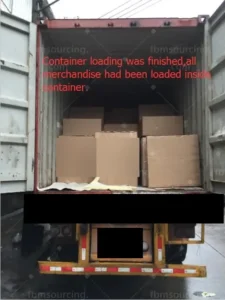
Volume is the number you can actually estimate early, and it anchors the freight block. A 40HQ container is the usual planning unit for mixed furniture cargo. A one- or two-bedroom apartment with full furniture plus flat-packed kitchen cabinets and wardrobes generates a packed volume that depends on the furniture scope and on whether kitchen cabinets and wardrobes ship flat-packed, so the number of 40HQ containers for 50 units is set in the load plan for your configuration.
What pushes the container count down or up:
Fewer containers
Knocked-down casegoods, vacuum-compressed mattresses, nested seating, and disciplined carton engineering. Flat-packing cabinetry alone cuts its shipped volume substantially versus pre-assembled units.
More containers
Pre-assembled wardrobes and vanities (often chosen to cut site labour), generous lounge pieces, and low-density items like floor lamps and artwork that occupy cube without adding weight. Neither end is “wrong” — pre-assembly trades ocean freight for installation speed, and on projects in high-labour-cost markets that trade sometimes pays. The point is to make it consciously. Our guide to FF&E container planning covers the estimation method in more detail.
Sourcing this for a commercial project?
FBM Sourcing works with project owners, developers, main contractors and FF&E contractors on hotel, apartment, school, office and other commercial building projects. Send us your BOQ, drawings or product list — our team will review it and get back to you.
What Drives the Cost to Furnish an Apartment Building from China? Six Levers
Once the structure is on the table, budget conversations become lever conversations. Six variables account for nearly all of the spread between a lean package and a premium one:
1. Degree of customisation. Modified standard products — a factory’s existing wardrobe range in your laminate colour — sit far below fully bespoke joinery cut to your architect’s drawings. Custom work adds tooling, sampling rounds and slower production, and every sampling round adds calendar time as well as cost.
2. Material grade. Within a single cabinet design, the ladder from melamine-faced board to lacquered MDF to timber veneer changes the ex-works block materially — and since casegoods dominate the package, this lever compounds across all 50 units.
3. Quantity and MOQ steps. Factory pricing moves in steps, not curves. Fifty identical kitchens is a strong run for any cabinet factory, which is why standardising unit types across the building — two kitchen layouts instead of five — buys real money. Repetition is the cheapest specification decision available to a developer.
4. Container utilisation. A package whose final container is well filled ships meaningfully cheaper per unit of goods than one that ships an extra container mostly empty. Carton design and load planning are where this is won.
5. Cluster-based consolidation. Buying cabinets, wardrobes, sofas and lighting within one industrial region — the Foshan belt being the obvious example for this product mix — means fewer long trucking legs to port, fewer coordination handoffs, and easier combined loading. Scattering the same categories across distant provinces adds drayage and complexity that never shows up on a unit price but always shows up in the landed total.
6. Delivery window. Compressed timelines force air-adjacent decisions: premium freight, split shipments, overtime production. A package with a realistic window — production for a mixed apartment package runs on the factories’ written lead times after drawing approval, plus the ocean leg — avoids every one of those premiums. Schedule slack is a cost lever wearing a programme disguise.
Where the Sourcing Agent Fee Fits
One more line belongs in the structure: professional management. A china sourcing agent — in our case a furniture sourcing agent and building material sourcing agent combined, since apartment packages span both — works this way: for suppliers you nominate, we charge a 5% commission; for products we source for you, we quote a direct price. Either way the agent runs supplier selection across every category above, manages drawings and control samples, follows production, consolidates multiple factories into shared containers, and inspects the goods before shipment with our own team, keeping photo and video records for the project file. On a multi-category package with dozens of production lines feeding one delivery date, that coordination layer is usually the difference between the container plan working and not.
Set against the structure above, the fee also has a quiet offset: better container utilisation, cluster consolidation and MOQ-aware specification are exactly the levers a competent agent pulls as routine work.
Turning the Structure into Your Number
Here is the honest sequence for getting from this article to a real budget. Fix your unit mix and count. Choose a specification tier per category — even provisional choices anchor the ex-works block. Apply the category weightings to sanity-check any quotation you receive: if cabinetry is priced as a minor line of a full package, something is mis-scoped. Estimate packed volume per unit type and pressure-test the freight assumptions. Then get duty advice for your own tariff schedule rather than accepting a generic figure. A developer who walks through those five steps holds a budget frame that survives contact with real quotations — which is more than any single headline number can offer. For the wider process around apartment projects, see our page on apartment development furniture and building materials procurement.
Get a China Procurement Quote for Your Project
The fastest way to convert this structure into project-level numbers is to let us build the frame around your actual building. Send your BOQ, floor plans or unit schedule with quantities, destination port and target timeline via our building materials and FF&E procurement page, and our team will map your configuration against the cost blocks above and come back with a project-specific proposal.