Yes — Chinese factories can and routinely do produce FF&E to hotel brand standards, provided you hand over the complete brand standards package and every requirement is translated item by item into production specifications. What the factory cannot do is grant approval: under every major franchise system, sign-off on hotel brand standards FF&E submissions stays with the brand’s design review team and the owner. The workable model is simple — the brand writes the performance spec, the factory builds to it, and the owner runs the approval process in between. As your China sourcing partner, FBM Sourcing manages this end-to-end.
This article walks through what those brand documents actually require, how a spec book becomes factory production, and where franchise owners in the US and Middle East have room to self-procure — written from the position of a china sourcing agent that manages this document chain for commercial projects.
What Hotel Brand Standards FF&E Documents Actually Specify
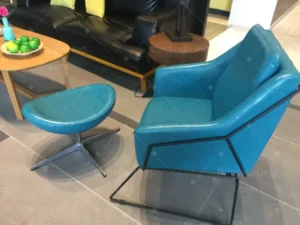
Marriott, Hilton, IHG, Wyndham and the other major flag systems all publish brand standards and prototype design packages for their franchise properties. These are not mood boards — they are performance specifications, and they read like engineering documents. A typical casegoods or seating spec in a select-service prototype package covers:
- Fabric performance: upholstery rated to 100,000+ double rubs (Wyzenbeek) for guest room and public area seating, plus colorfastness and pilling requirements
- Flammability: upholstered furniture compliant with California TB 117-2013; drapery and bedding to the relevant NFPA standards
- Construction and durability: commercial-grade joinery, moisture-resistant tops in wet areas, and seating tested to ANSI/BIFMA standards
- Finishes: exact laminate, veneer and metal finish references tied to the approved design scheme, verified against physical control samples
- Warranty: manufacturer warranty terms, commonly 3-5 years on casegoods frames and construction in hospitality packages
Beyond furniture, the same packages reach into lighting and soft goods. For US properties, guest room and public-area lighting is specified as UL Listed as a matter of course, and decorative fixtures produced in China ship with the UL or ETL certification mark on the product itself — a routine requirement for export lighting factories, but one that must be stated on the purchase order rather than assumed. Drapery packages carry blackout performance and flammability call-outs; mattress specs reference federal flammability requirements under 16 CFR 1633 for the US market. Each of these is a line item in the spec book with a document trail behind it, and each needs a factory that produces to the certification, not just to the drawing.
None of this is exotic for a factory that lives in the hospitality export trade. The 100,000 double-rub fabric, the TB 117-2013 foam, the BIFMA-tested chair frame — these are stock requirements a competent hotel furniture factory prices every week. The risk is never that the requirement is impossible; it is that a line item gets skipped in translation between an American spec book and a Chinese production floor. That is exactly the gap a procurement team exists to close.
How a Brand Standards Package Becomes Factory Production
The sequence that keeps a franchise project inside brand compliance runs in one direction: documents first, production last.
Step 1: Assemble the complete spec package
Before anything is quoted, the factory side needs the full FF&E spec book, the approved finish and fabric schedules, and the room matrix showing quantities by room type. Partial packages are the single most common cause of failed design reviews — a quote built on the guest room pages alone will miss the public-area and corridor requirements that the brand reviews with equal weight.
Step 2: Shop drawings and counter-samples
The factory converts each spec item into shop drawings — dimensioned production drawings with materials, hardware and joinery called out. Experienced hotel factories turn a full guest room casegoods set into shop drawings, with the timing confirmed by the factory. These drawings, together with physical finish samples and fabric cuttings, are what the owner submits into the brand’s design review. The shop drawing approval cycle is where document translation errors get caught, so it deserves real attention rather than a rubber stamp.
Step 3: Mock-up room before bulk
Most brand programs expect a model room or mock-up review before volume production. One complete guest room set — casegoods, seating, lighting, soft goods — is produced and assembled for inspection, with the sample-set production time confirmed by the factory. Approve the mock-up, and it becomes the physical quality benchmark every production batch is measured against. We covered the mechanics in detail in our guide to building a hotel mock-up room before bulk FF&E production.
Step 4: Bulk production and pre-shipment control
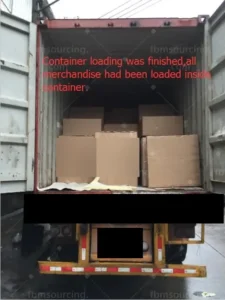
Only after mock-up sign-off does bulk production start, with the lead time for a full property’s FF&E package confirmed by the factory in writing for each order, depending on quantities and customization depth. Every order is inspected before shipment by our own team, with photo and video records checked against the approved shop drawings and mock-up benchmark, so what leaves the factory matches what the brand reviewed.
Sourcing this for a commercial project?
FBM Sourcing works with project owners, developers, main contractors and FF&E contractors on hotel, apartment, school, office and other commercial building projects. Send us your BOQ, drawings or product list — our team will review it and get back to you.
Do You Need Brand Approval Before Ordering FF&E from China?
Yes — order sequencing matters, and the safe rule is: never release bulk production before the brand’s design review has cleared your submissions. The approval itself attaches to the product and the design scheme, not to the factory. Brands generally do not “approve factories” in the sense franchise owners sometimes imagine; they approve what you propose to install, reviewed against their published standards. That means no factory — in China or anywhere else — can honestly market itself as a brand’s official supplier for your project on the strength of having produced for that flag before. Past production for a brand’s properties is useful evidence of capability; it is not a shortcut around your own design review.
The distinction has a direct commercial consequence. Because approval attaches to the submission rather than the source, a franchise owner is free to have identical spec-compliant product made where it is made best and priced at factory level — the brand’s interest is protected by the review gate, not by restricting where you buy. It also means responsibility for compliance sits with the owner’s side of the table: if a submission is rejected, it is the drawings, samples or test documents that failed, and they can be corrected and resubmitted. Treat the review as a quality instrument working in your favor rather than an obstacle, and the China route loses most of its perceived risk.
Practically, the owner’s team submits shop drawings, finish samples, fabric cuttings and (where required) test reports through the brand’s review channel. Fabric mills and foam converters supply the supporting documents — abrasion test results, TB 117-2013 compliance certificates, BIFMA test reports from accredited laboratories — and these should be collected at counter-sample stage, not chased after containers are already on the water. A hotel package ships as multiple 40HQ containers, so the cost of discovering a compliance gap after loading is measured in whole containers, not single items.
Franchise Self-Procurement vs Brand-Nominated Supply
Franchise structures are precisely why this question matters. In managed properties the operator often controls procurement directly. In franchised properties — the majority of US select-service and a large share of Middle East development — the owner typically holds the procurement decision, subject to the product meeting brand standards and passing review. Self-procurement from China is a normal, established route under this model; owners should simply confirm the procurement clauses in their own franchise agreement, since programs differ on mandatory items.
| Factor | Brand-nominated / program supply | Owner self-procurement from China |
|---|---|---|
| Compliance path | Pre-vetted against standards; least review friction | Owner submits drawings, samples and test documents through normal design review |
| Cost control | Catalog pricing, limited negotiation room | A direct price per line for products it sources; 5% commission for suppliers you nominate |
| Customization | Limited to program options | Full custom to the prototype scheme, sized to your room mix |
| Owner workload | Low | Higher — document translation, sampling, logistics; typically delegated to a sourcing agent |
On budget structure, casegoods are usually the largest single line in a guest room FF&E package, with seating, lighting, soft goods and artwork sharing the rest — which is why owners who self-procure focus their spec-compliance effort on the casegoods line first. Boutique and soft-brand projects, where the design scheme is property-specific rather than prototype-driven, follow the same document logic with more design freedom; see our note on boutique hotel FF&E procurement from China for how that differs.
Where Chinese Factories Are Strong — and What to Watch
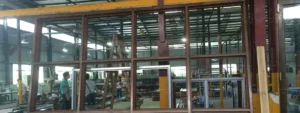
The genuine strengths are consistency at volume and customization depth. A hospitality-focused factory cluster can hold finish and dimension tolerances across a 300-room order in a way that mixed-batch buying from catalog vendors cannot, and building to a prototype room design is standard work rather than a special request — the established hotel furniture manufacturing base in China runs on exactly this kind of specification-driven export production. Order a small allowance of spare units on volume items in the same production batch, agreed at order stage, so site damage during installation never stalls opening.
Consolidating FF&E with building materials in one program
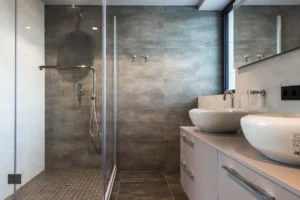
A second structural advantage for franchise owners on new-build projects: the same production regions that build hotel casegoods also produce the fit-out materials the construction side needs — doors and doorframes, stone and tile, sanitary ware, aluminum windows. Where the brand’s design package covers both interior architecture and FF&E, running the two scopes through one consolidated procurement program means shared containers, one document standard and one inspection regime instead of two parallel supply chains. For a franchise property on a fixed opening date, that consolidation matters less for cost than for control: the FF&E arriving in the same planning framework as the fit-out materials removes one of the classic causes of hotel opening slippage, which is furniture and finishes tracking on separate, uncoordinated schedules.
The watch-items: documentary, not technical
The failure modes worth engineering against are all about paperwork discipline:
- Spec translation: every performance line (double rubs, flammability standard, warranty term) must appear on the factory’s shop drawings in writing — verbal confirmation is worth nothing at design review
- Test documents: collect fabric abrasion results and TB 117-2013 / BIFMA reports from accredited laboratories at sample stage, filed against each spec item number
- Control samples: hold sealed, signed finish and fabric samples on both sides so bulk production is judged against a physical benchmark, not a screen
- Sequencing discipline: mock-up approval before bulk release, pre-shipment inspection before loading — skipping either step converts small errors into container-sized ones
Handled this way, the question stops being whether Chinese factories can meet hotel brand standards — they can — and becomes whether your document chain is tight enough to prove it at every review gate. Sailing time is the other planning constant, confirmed by the carrier at booking, so FF&E production for a franchise opening should be released against the construction schedule with those windows built in.
When the brand specification arrives as part of a property improvement plan, the order also has to fit the brand’s completion date and the lender’s funding conditions. We cover that in sequencing China-made casegoods against a hotel PIP deadline.
FBM Furniture
If your package is mainly hotel guestroom furniture, see hotel guestroom furniture on fbmfurniture.com, the site of FBM Furniture, the furniture sourcing line of FBM Sourcing Limited.
Get a China Procurement Quote for Your Project
If you hold a franchise agreement and a brand standards package for a new-build hotel, we can take it from spec book to approved mock-up to loaded containers. Submit your drawings or FF&E spec book, quantities by room type, destination port and target timeline, and our team will map the package against factory production and come back with a structured proposal. Use the quote form, or WhatsApp us directly — reference your project stage so the right specialist picks it up.