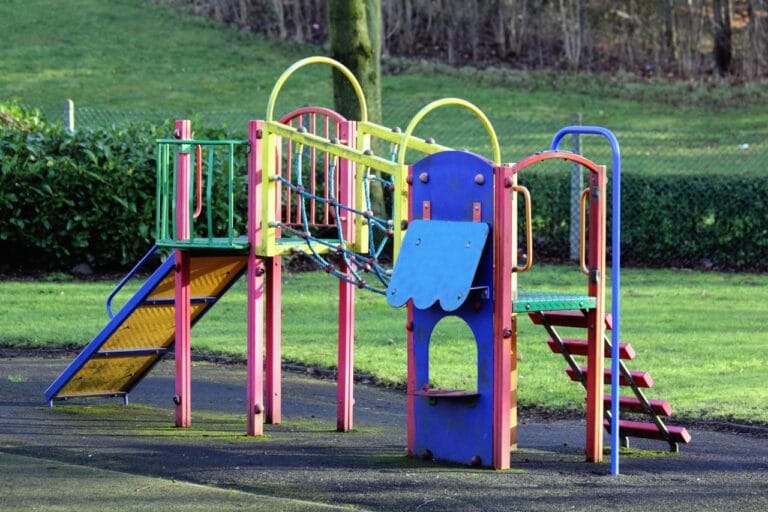
Playground equipment is the only category on a school project where the product standard governs the ground as much as the equipment. A compliant play structure installed over a non-compliant surface is a non-compliant playground, and the surfacing is usually a separate package under a separate contractor. Buyers who procure the equipment and the safety surfacing as two unrelated packages discover the relationship at inspection, which is the most expensive moment to discover it.
This guide is for school districts, education developers, main contractors and landscape contractors sourcing play structures, outdoor fitness equipment and recreation furniture from China. It covers how the supply base is organised, which standard applies where, and the verification steps that actually determine whether an installation will pass sign-off in the destination country.
Why this article does not publish a ranked list of company names
This category has an unusually wide gap between marketing visibility and manufacturing capability. A large share of Chinese suppliers presenting themselves as playground manufacturers are assemblers or traders buying posts, panels, slides and fixings from specialist component makers. Ranking companies by web presence would systematically favour that group, because selling is what they do.
More importantly, the thing a buyer needs to verify in this category is not company identity at all — it is whether the specific structure being quoted has been tested and certified to the standard that governs the destination country, and whether the quoted safety surfacing has the critical fall height to match. A supplier list cannot answer that. The typology and verification sequence below can.
Which standard governs your project, and why it changes everything
Play equipment is regulated by different, non-interchangeable standards in different markets, and the specification consequence is significant.
European and many international projects work to the EN 1176 series for play equipment and EN 1177 for impact-attenuating surfacing. EN 1176 covers the structure itself — entrapment, fall heights, structural integrity — while EN 1177 sets out how the surfacing is tested for critical fall height. The two are designed to be used together, which is precisely why the equipment and the surfacing cannot be sourced as independent decisions.
United States projects work to the ASTM F1487 standard for public playground equipment, alongside the CPSC public playground safety handbook, with ASTM F1292 governing impact attenuation of surfacing and ASTM F1951 governing accessibility of the surface. Accessibility requirements under the ADA apply to the route and the play components, not only to the surface.
Australian projects work to the AS 4685 series, which parallels EN 1176 in structure but is not identical, with AS/NZS 4422 for surfacing.
The practical consequence is this: certification issued against one standard does not demonstrate compliance with another, and a supplier offering a single certificate as universal evidence has misunderstood the requirement. Ask which standard the evidence is against, and confirm it is the one named in your project specification. Our broader guide to certifications when importing building materials from China covers how to read this evidence, and export certifications compared by market shows the same market-by-market logic in an adjacent category.
Sourcing this for a commercial project?
FBM Sourcing works with project owners, developers, main contractors and FF&E contractors on hotel, apartment, school, office and other commercial building projects. Send us your BOQ, drawings or product list — our team will review it and get back to you.
The supplier types in this category
Integrated structure manufacturers
Plants that fabricate the posts, decks, panels and slides and assemble complete structures. They hold the tooling for rotationally moulded components, run their own powder coating line for the metalwork, and can produce test evidence against a named standard for structures they have had assessed. They are the appropriate choice where the specification names a standard and the structure is bespoke to a site layout.
Component specialists
Makers of a single element — rotomoulded slides, HDPE panels, steel posts, climbing nets, rubber tiles. They supply the integrators. A buyer occasionally encounters them directly on a replacement-parts enquiry, which is a legitimate use, but a full structure assembled from separately sourced components does not inherit anyone’s certification.
Assemblers and traders
Companies that configure catalogue structures from bought-in parts. Many are competent, and for standard catalogue structures with existing certification this can be an efficient route. The risk appears when a structure is modified — a different deck height, an added component, a changed layout — because a modified structure is outside the scope of the certification held for the original.
Surfacing manufacturers
A separate industry: rubber tiles, wet-pour EPDM, bonded rubber mulch and artificial grass systems. Critical fall height performance is a property of the system thickness and construction, not of the product name, which is why the surfacing specification has to be matched to the highest free fall height in the structure being installed above it. Our comparison of outdoor surface materials for commercial projects covers hard-surface areas of the same landscape package.
How do you verify a playground supplier before ordering?
Five checks, in this order:
- Ask which standard the certification is against and for the certificate covering the exact structure code being quoted. Structure certification is model-specific. A certificate for a different configuration from the same catalogue is not evidence for yours.
- Ask for the free fall height of the quoted structure, then match the surfacing specification to it. This is the single most common compliance failure in the category, and it is entirely preventable at quotation stage by asking two numbers to agree.
- Ask what changes if the layout is modified. Any modification to a certified structure puts it outside the certification scope. A supplier who says a change makes no difference is either not working to a standard or has not understood it.
- Ask for the corrosion protection specification on the metalwork. Coastal and high-humidity sites destroy under-specified steel quickly. Galvanising before powder coating, coating thickness and the fixings’ material are what determine service life. Our comparison of powder coating versus anodised aluminium for commercial projects sets out the trade-offs.
- Ask for the installation and inspection documentation. Compliant play equipment comes with installation instructions, a post-installation inspection requirement and a routine inspection regime. A supplier who cannot provide these has not supplied a compliant playground, whatever the structure is made of.
What school buyers get wrong most often
Treating surfacing as a finish. It is a safety component with a tested performance value. Substituting a cheaper surfacing after the equipment is ordered can invalidate the compliance of the whole installation.
Buying to a photograph. Play structures look similar across a huge range of build quality. Post wall thickness, deck construction, fixing type and coating system are invisible in an image and are what separate a five-year installation from a twenty-year one.
Forgetting the use zone. Every structure requires a clear area around it, sized by the standard, free of obstructions. Site layouts drawn before the equipment is selected frequently do not have room for the use zones of the equipment eventually chosen, and the equipment gets value-engineered down to fit rather than the layout being corrected.
Ignoring inclusive play requirements. Many jurisdictions now require accessible routes into and through the play area and a proportion of ground-level play components. This is a design requirement that has to be present from the start; it cannot be retrofitted by adding a ramp.
For the wider campus package that typically accompanies outdoor works, see our guides to sourcing building materials for school construction and school furniture manufacturers for education projects.
Programme and shipping realities
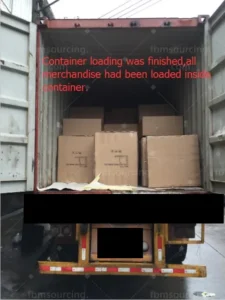
Play structures are bulky and light, which makes them expensive to ship relative to their value and highly sensitive to how well they are packed. Posts, decks and panels nest efficiently when a supplier has thought about it and waste enormous volume when they have not. Ask how a structure is packed before comparing delivered costs between suppliers, because the difference between a well-packed and a badly-packed structure can exceed the difference in ex-works price.
Surfacing has the opposite profile: rubber tiles are dense and heavy, and a surfacing package can fill a container’s weight allowance long before its volume. This makes equipment and surfacing natural consolidation partners, one filling the volume and the other the weight. Our note on mixed container consolidation covers how this is planned in practice.
On programme, the sequencing constraint is that surfacing installation usually follows equipment installation, and both follow the completion of the sub-base — which is civil works, not landscape. A play area that is late is almost always late because the sub-base was late, not because the equipment was.
Sourcing this for a commercial project?
FBM Sourcing works with project owners, developers, main contractors and FF&E contractors on hotel, apartment, school, office and other commercial building projects. Send us your BOQ, drawings or product list — our team will review it and get back to you.
Frequently asked questions
Does playground equipment from China meet EN 1176 or ASTM F1487?
Some does and some does not, and it is a per-structure question rather than a per-country one. Chinese manufacturers routinely produce equipment certified against these standards for export markets, but certification is held for specific structures in specific configurations. Ask for the certificate covering the structure code on your quotation and check the standard named on it matches your project specification.
Can I buy the play structure from China and use local safety surfacing?
Yes, and it is often the practical arrangement because surfacing is heavy to ship. What must not be separated is the decision: the surfacing specified locally has to have a tested critical fall height at or above the free fall height of the structure being installed. Get the free fall height figure from the equipment supplier in writing before the surfacing is procured.
What is the typical service life of Chinese playground equipment?
It is determined by the corrosion protection specification and the site environment rather than by country of origin. Hot-dip galvanised steel with a quality powder coat in an inland location behaves very differently from lightly coated steel on a coastal site. Specify the coating system and the fixings material, and ask for the coating thickness.
Who is responsible for post-installation inspection?
The project, not the manufacturer. Compliant playgrounds require a post-installation inspection before the area is opened, and a routine inspection regime afterwards. The manufacturer supplies the installation instructions and inspection requirements; arranging the inspection and maintaining the records is the operator’s duty and should be allocated before handover.
How do outdoor fitness and recreation items differ from play equipment?
They are governed by different standards and are designed for a different user group, so they cannot be certified or specified interchangeably with children’s play equipment. If a project includes both, they should be treated as two specification packages even where a single supplier provides them.
Working with FBM Sourcing on a playground package
FBM Sourcing has been sourcing building materials and FF&E from China since 2014, and has shipped more than 1,000 containers for project buyers in over 20 countries. On playground and outdoor recreation packages our role is to confirm that certification actually covers the structures being quoted, hold the relationship between free fall height and surfacing specification, check the corrosion protection against the site environment, and inspect before shipment.
If you have a school playground or outdoor recreation package coming up, send the site layout, the specification and the governing standard through our project procurement enquiry page and we will review it and come back to you.